
Glass Railings
Laminated Glass vs Toughened Glass for Balcony Railings: Safety & Durability Comparison
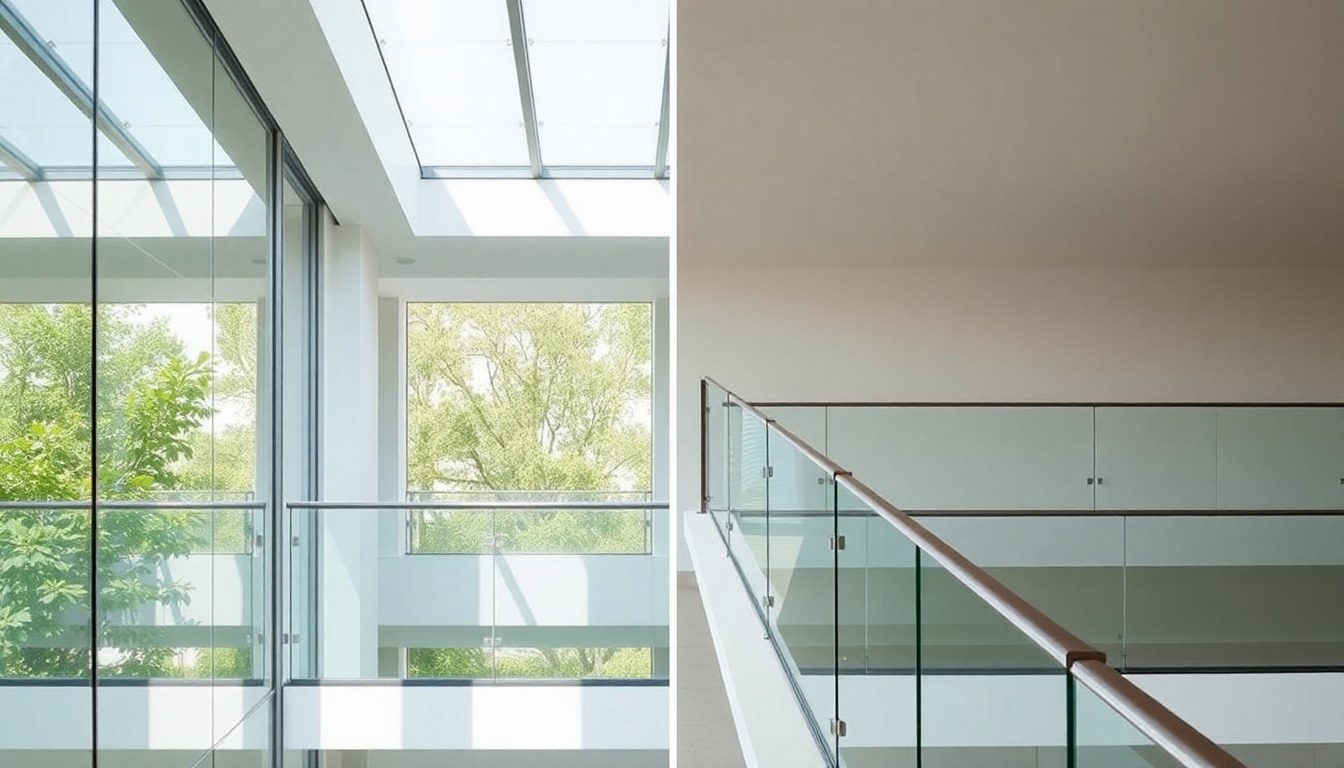
When it comes to balcony railings, the choice between laminated and toughened glass can make a significant difference in safety, maintenance, and long-term durability. Both materials offer distinct advantages, but they behave very differently when subjected to impact, temperature fluctuations, and the challenging Indian climate. Understanding these differences will help you make an informed decision that protects your family while standing the test of time.
Understanding Laminated Glass
Laminated glass consists of two or more glass panes bonded together with a polyvinyl butyral (PVB) interlayer. This construction creates a composite material that holds together even when broken, much like a car windshield. The interlayer acts as an adhesive, preventing the glass from shattering into dangerous fragments when subjected to force.
The manufacturing process involves heating and pressing the glass panes with the interlayer under controlled conditions. This creates a strong bond that maintains the structural integrity of the panel. For balcony railings, laminated glass typically comes in thicknesses ranging from 6mm to 12mm, depending on the height of the balcony and local building codes.
How Laminated Glass Behaves Under Impact
When laminated glass receives a hard impact, it may crack, but the pieces remain adhered to the interlayer. This spider-web cracking pattern is visible but safe—the glass won't fall out of the frame or create sharp projectiles. The interlayer absorbs the energy from the impact, distributing force across the entire panel rather than concentrating it at a single point.
Understanding Toughened Glass
Toughened glass, also called tempered glass, is created by heating ordinary glass to extremely high temperatures (around 700°C) and then rapidly cooling it. This thermal treatment creates internal stress patterns that make the glass much stronger than annealed glass. When toughened glass breaks, it shatters into small, relatively harmless granular pieces rather than sharp shards.
For balcony applications, toughened glass offers superior strength and rigidity. It can withstand higher impacts and temperature differentials compared to ordinary glass. Typical thicknesses for balcony railings range from 8mm to 12mm, with 10mm being the most common choice in Indian residential buildings.
How Toughened Glass Behaves Under Impact
When toughened glass breaks, it disintegrates into small cubes with relatively dull edges. While this is safer than sharp shards, the entire panel loses its integrity immediately. All the glass falls away, leaving an open gap in the railing. This characteristic makes toughened glass excellent for preventing injuries from sharp glass but potentially problematic if you need the railing to remain physically intact after breakage.
Safety Comparison for Balcony Railings
Both laminated and toughened glass meet Indian building safety standards, but they offer different types of protection. The choice depends on your priorities and the specific risks you want to mitigate.
Injury Prevention
Toughened glass excels at preventing laceration injuries. When it breaks, the small granular pieces have minimal sharp edges, making cuts and puncture wounds unlikely. Laminated glass, while not shattering into dangerous shards, can still have some sharp edges where cracks form. However, the interlayer prevents these pieces from becoming projectiles or falling onto people below.
Structural Integrity After Breakage
Laminated glass maintains its position in the frame even after breaking. This is crucial for balcony safety because it prevents accidental falls or the complete loss of the barrier. If a child leans against a broken laminated glass panel, the glass will hold, and the interlayer will support the weight. Toughened glass, conversely, provides zero barrier function once broken—the entire panel becomes useless as a safety device.
Impact Resistance Before Breakage
Toughened glass is significantly more resistant to impact before it breaks. It requires substantially more force to fracture than laminated glass. This makes it ideal for areas prone to accidental collisions or where children play near the railing. Laminated glass, while reasonably strong, can crack more easily under moderate impact.
Durability and Performance in Indian Climates
India's diverse climates—from humid coastal regions to dry northern plains and heavy monsoon areas—present unique challenges for balcony materials. Both glass types have different durability profiles under these conditions.
Temperature Fluctuations and Thermal Stress
Toughened glass handles rapid temperature changes better than laminated glass. The internal stress distribution in tempered glass allows it to withstand greater thermal differentials without cracking. In cities like Delhi, where temperature swings between 5°C in winter and 45°C in summer are common, toughened glass is more reliable. Laminated glass, particularly with cheaper interlayers, can sometimes develop delamination issues over time when subjected to extreme temperature cycling.
Moisture and Humidity Resistance
Coastal cities like Mumbai, Goa, and Chennai experience high humidity and salt spray, which can degrade the interlayer in laminated glass over 10-15 years. The PVB interlayer can absorb moisture, leading to yellowing, clouding, or eventual separation of the glass layers. Toughened glass is unaffected by humidity since it's a single solid material with no adhesive interfaces. For high-humidity regions, toughened glass offers superior longevity.
UV and Sunlight Exposure
Prolonged UV exposure can degrade the interlayer in laminated glass, particularly cheaper varieties. Over 8-10 years, you might notice browning or weakening of the adhesive bond. Toughened glass is completely immune to UV degradation since there's no organic material to break down. This is especially important for west-facing or south-facing balconies that receive intense afternoon sun.
Maintenance and Cleaning
Both glass types are equally easy to clean and maintain. Standard glass cleaners work on both. However, laminated glass can show dust and debris more visibly along the interlayer edge, requiring slightly more frequent cleaning for aesthetic reasons. Toughened glass remains crystal clear indefinitely without any visual degradation.
Cost Comparison and Value for Money
Pricing varies by location and supplier, but laminated glass typically costs 15-25% less than toughened glass for the same thickness and area in India. A 10mm laminated glass panel might cost ₹800-₹1,200 per square meter, while toughened glass of the same specification costs ₹1,000-₹1,500 per square meter.
However, long-term value must be considered. Laminated glass may require interlayer replacement or full panel replacement after 12-15 years in harsh climates, while toughened glass can last 20+ years without degradation. For a 20-year perspective, toughened glass often proves more economical despite higher initial investment.
Building codes in different Indian cities also influence choices. Some municipal corporations mandate specific glass types for balcony railings based on building height and occupancy. Always check local regulations before finalizing your choice.
Which Should You Choose?
Your decision should balance safety priorities, climate conditions, and budget:
- Choose Laminated Glass if: You prioritize post-breakage structural integrity, live in a mild climate with minimal temperature fluctuations, have budget constraints, and prefer the safety benefit of the glass remaining in place after impact.
- Choose Toughened Glass if: You live in coastal areas or regions with extreme temperature swings, want maximum durability and minimal maintenance, prioritize injury prevention from sharp glass, and can afford the higher initial cost for long-term savings.
- Hybrid Approach: Some architects recommend using toughened glass for the lower sections (below 1 meter) where impact is more likely, and laminated glass for upper sections, balancing cost and safety.
Frequently Asked Questions
Can laminated glass and toughened glass be combined in the same railing?
Yes, and this is actually a smart approach used by many builders in India. Combining both materials allows you to leverage the strengths of each—toughened glass in high-impact areas and laminated glass where structural continuity after breakage is critical. However, ensure proper framing and sealing at the junction to prevent water ingress and maintain structural integrity.
How long does laminated glass last in Indian climates?
In mild climates, laminated glass can last 15-20 years. In coastal or high-temperature regions with extreme fluctuations, the interlayer may degrade within 10-12 years, requiring replacement. Regular maintenance and using high-quality interlayers (like EVA or SentryGlas instead of basic PVB) can extend lifespan significantly.
Is toughened glass safe for balcony railings if it shatters completely?
Yes, toughened glass is safe because it breaks into small, granular pieces with minimal sharp edges. However, once broken, it provides zero physical barrier. For this reason, building codes often specify that balcony railings must withstand a minimum horizontal load without breaking. Toughened glass is chosen for its impact resistance before breakage, not for post-breakage safety.
Which glass type is better for homes with children?
Laminated glass is generally preferred for homes with young children because it remains structurally intact after breakage, preventing accidental falls. Toughened glass is better if your concern is preventing laceration injuries from broken glass. Many parents choose laminated glass for the added security of a maintained barrier, though both are safe when properly installed.
Do I need to replace the entire railing if one glass panel breaks?
No. Individual glass panels can be replaced without dismantling the entire railing frame. Replacement costs are typically ₹1,500-₹3,500 per panel depending on size and type. Laminated glass panels are slightly cheaper to replace than toughened glass panels. Always hire a professional installer to ensure proper sealing and safety compliance.
Make the Right Choice for Your Balcony
Both laminated and toughened glass offer excellent safety and durability for balcony railings when properly installed. Laminated glass provides superior structural integrity after breakage and lower initial costs, making it ideal for moderate climates and budget-conscious homeowners. Toughened glass excels in harsh climates, offers superior impact resistance, and delivers better long-term value with minimal maintenance. Assess your local climate, building codes, safety priorities, and budget to make the best decision. For expert guidance on glass selection and installation, explore verified glass suppliers and installers in your city on Glassy.in, India's most trusted glass business directory.