
Glass Railings
Laminated Glass vs Toughened Glass for Balcony Railings: Safety & Durability
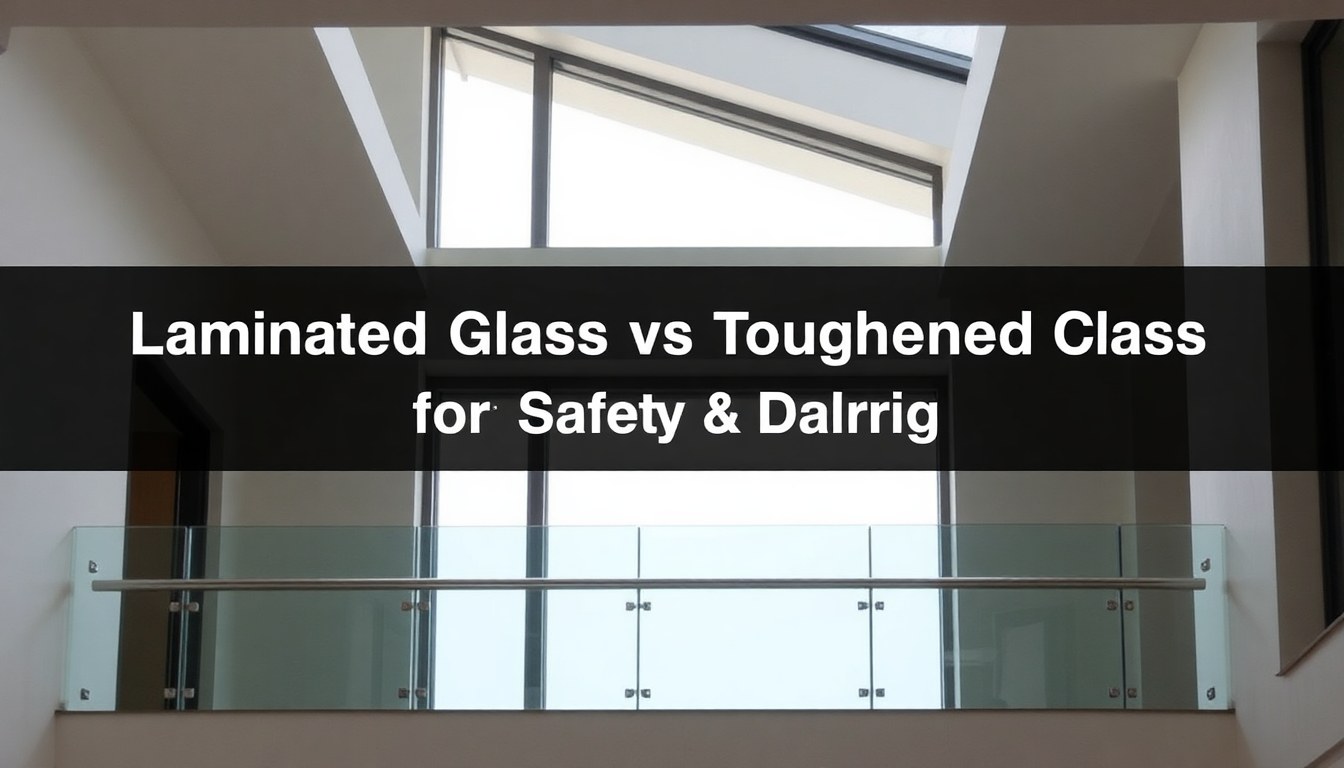
Balcony railings are a critical safety feature in any home, and the choice between laminated and toughened glass can significantly impact both protection and longevity. Both materials offer distinct advantages for different situations, but understanding their properties, safety performance, and compliance with Indian building standards is essential for making an informed decision that protects your family while meeting regulatory requirements.
Understanding Laminated Glass for Balcony Railings
Laminated glass consists of two or more glass panes bonded together with a polyvinyl butyral (PVB) interlayer. This construction creates a composite material that holds together even when shattered, similar to a car windshield. The interlayer acts as a shock absorber, distributing impact forces across a wider area and preventing the glass from fragmenting into dangerous shards.
The primary advantage of laminated glass is its safety profile. When struck with significant force, the glass may crack but remains intact within the PVB layer, preventing sharp pieces from falling or scattering. This characteristic makes it particularly valuable for balcony railings in high-rise buildings where falling debris poses a serious hazard to people below. Additionally, laminated glass provides sound insulation, which is beneficial if your balcony faces a busy street or construction area.
Safety Features of Laminated Glass
- Remains intact after impact, reducing injury risk from sharp fragments
- Provides UV protection, blocking up to 99% of harmful rays
- Offers acoustic insulation, reducing external noise
- Difficult to break through, providing enhanced security against intrusion
- Splinter-free performance, making it ideal for households with children
Understanding Toughened Glass for Balcony Railings
Toughened glass, also called tempered glass, undergoes a specialized heating and rapid cooling process that increases its strength compared to standard annealed glass. This process creates internal stress within the glass, making it approximately four to five times stronger than ordinary glass of the same thickness. When toughened glass does break, it shatters into small, relatively harmless granules rather than sharp, jagged pieces.
Toughened glass is widely used in balcony railings because of its superior strength and thermal resistance. It can withstand temperature fluctuations without cracking, making it suitable for Indian climates where balconies experience intense sun exposure and seasonal temperature variations. The granular breakage pattern, while different from laminated glass, still provides a measure of safety since the small pieces are less likely to cause serious lacerations.
Strength and Durability of Toughened Glass
- Four to five times stronger than annealed glass
- Resistant to thermal stress and temperature fluctuations
- Shatters into small, blunt granules rather than sharp shards
- Excellent for high-impact areas and weather-exposed locations
- Cannot be cut or modified after tempering process
Safety Comparison: Impact Resistance and Breakage Patterns
When comparing safety performance, the critical difference lies in how each glass type responds to impact. Laminated glass may develop cracks but maintains structural integrity, keeping the entire panel in place. This is particularly important in balcony railings where a panel breaking loose could create a falling hazard for people on lower floors. Toughened glass, when broken, disintegrates into small granules, which is safer for people in immediate proximity but doesn't prevent the loss of the barrier function.
For balcony railings specifically, laminated glass offers superior safety in high-rise situations because it prevents the entire panel from detaching and falling. However, toughened glass excels in situations where the primary concern is preventing cuts and lacerations from broken glass. Indian building codes, particularly the National Building Code (NBC) and local municipal regulations, often specify minimum safety standards for balcony railings. Most modern specifications in metropolitan areas like Mumbai, Delhi, Bangalore, and Pune increasingly recommend laminated glass for balconies above the second floor.
Compliance with Indian Building Standards
The National Building Code of India specifies that balcony railings must be designed to withstand a horizontal load of 1.5 kN/m (kilonewtons per meter). Both laminated and toughened glass can meet this requirement, but the type recommended often depends on building height and local municipal bylaws. Many state building codes now mandate laminated glass for residential buildings above four stories to minimize the risk of falling glass panels during accidents or extreme weather events.
Maintenance and Long-Term Durability
Maintenance requirements for both glass types are relatively straightforward, but there are subtle differences. Laminated glass requires regular cleaning to maintain visibility and prevent algae or mineral buildup, which is common in Indian climates. The PVB interlayer can occasionally develop minor discoloration over 15-20 years of exposure to intense UV radiation, though this doesn't affect functionality. If a laminated glass panel is damaged, it must be replaced entirely since the interlayer cannot be repaired.
Toughened glass is equally easy to maintain and doesn't suffer from interlayer degradation. However, once toughened glass is installed, any repairs or modifications require complete panel replacement because the tempering process cannot be reversed. Both types resist corrosion and weathering well in Indian climates, though coastal areas with salt spray exposure may see slightly faster degradation of aluminum or steel frames. Regular cleaning every 3-4 weeks and annual inspection of frame seals will extend the lifespan of either option to 20-25 years or more.
Maintenance Tips for Longevity
- Clean glass panels monthly with mild soap and soft cloth to prevent mineral deposits
- Inspect frame seals annually for gaps or water infiltration
- Address minor cracks in laminated glass immediately to prevent interlayer separation
- Check hardware and fasteners every six months, especially in coastal areas
- Apply protective sealant to aluminum frames every 2-3 years in high-pollution areas
Cost Comparison and Installation Considerations
Cost is often a deciding factor for homeowners. Toughened glass is generally less expensive, with prices ranging from ₹500 to ₹1,200 per square foot depending on thickness and supplier, plus installation costs of ₹200-₹400 per square foot. Laminated glass costs more, typically ranging from ₹800 to ₹1,800 per square foot for basic specifications, with installation costs of ₹300-₹500 per square foot. For a typical 100-square-foot balcony railing, expect to pay ₹70,000-₹1,20,000 for toughened glass and ₹1,10,000-₹2,30,000 for laminated glass, including installation.
Installation quality matters significantly for both types. Improper installation can compromise safety regardless of glass quality. Choose certified installers with experience in balcony railings, particularly in your region. Many glass suppliers in major Indian cities offer free site surveys and quotations. If your building is in an area prone to earthquakes or high winds, the slightly higher cost of laminated glass is often justified by the enhanced safety it provides.
Price Factors Affecting Your Choice
- Glass thickness (6mm, 8mm, 10mm) — thicker glass costs more but provides better strength
- Interlayer quality in laminated glass — premium PVB costs more than standard options
- Frame material (aluminum, stainless steel, or powder-coated) — stainless steel is costlier but lasts longer
- Installation complexity — curved railings or custom designs increase labor costs
- Local supplier availability — prices vary significantly between cities and regions
Which Option Is Right for Your Home?
Choose laminated glass if your home is in a high-rise building (above 4 stories), if your balcony faces public areas where falling glass could endanger people, if you live in an earthquake-prone zone, or if local building codes mandate it. Laminated glass is also the better choice if you prioritize maximum safety and don't mind the higher upfront cost. Families with young children who might throw objects at railings may also prefer laminated glass for its superior impact containment.
Choose toughened glass if your home is in a low-rise building (1-3 stories), if budget is a primary concern, if your balcony is in a private area with minimal fall hazard to others, or if your main concern is preventing cuts from broken glass. Toughened glass is also suitable if your balcony experiences extreme temperature fluctuations, as it handles thermal stress better than laminated options.
Frequently Asked Questions
Can laminated glass be used in all types of balcony railings?
Yes, laminated glass can be used in virtually any balcony railing configuration, including curved railings, frameless designs, and custom shapes. However, it requires proper installation with adequate support structures. The main limitation is that it's heavier than toughened glass, so the frame and support system must be designed to handle the additional weight. Always consult with a structural engineer or experienced installer before finalizing your design.
How long does each type of glass last?
Both laminated and toughened glass typically last 20-25 years or longer with proper maintenance. The lifespan depends more on environmental factors, frame quality, and maintenance practices than on the glass type itself. In coastal areas with salt spray, the frame and hardware may deteriorate faster than the glass. Regular cleaning and inspection can extend the life of either option significantly.
Is toughened glass safe if it suddenly breaks?
Yes, toughened glass is designed to break safely. When it shatters, it breaks into small, relatively harmless granules with few sharp edges. However, the primary concern with balcony railings isn't personal injury from the glass itself but the loss of the barrier function. If a toughened glass panel shatters completely, the railing temporarily loses its protective function until repairs are made.
Do Indian building codes require laminated or toughened glass?
The National Building Code of India doesn't mandate a specific type but specifies safety performance standards. Local municipal corporations in cities like Mumbai, Bangalore, and Delhi have increasingly recommended or required laminated glass for residential buildings above four stories. Check with your local municipal corporation or building approval authority for specific requirements in your area before making a final decision.
Can laminated glass be repaired if it cracks?
Minor surface cracks in laminated glass can sometimes be sealed with specialized resin to prevent water infiltration, but the structural integrity is compromised. For safety-critical applications like balcony railings, a cracked laminated glass panel should be replaced entirely. Attempting to repair a damaged railing glass is not recommended as it could fail under stress.
Make Your Balcony Safer Today
Whether you choose laminated or toughened glass, investing in quality balcony railings protects your family and complies with safety standards. Connect with certified glass suppliers and installers through the Glassy.in directory to find trusted professionals in your city who can assess your specific needs, provide detailed quotations, and deliver expert installation for your balcony railing project.