
Glass Railings
Laminated Glass vs Tempered Glass for Balcony Railings
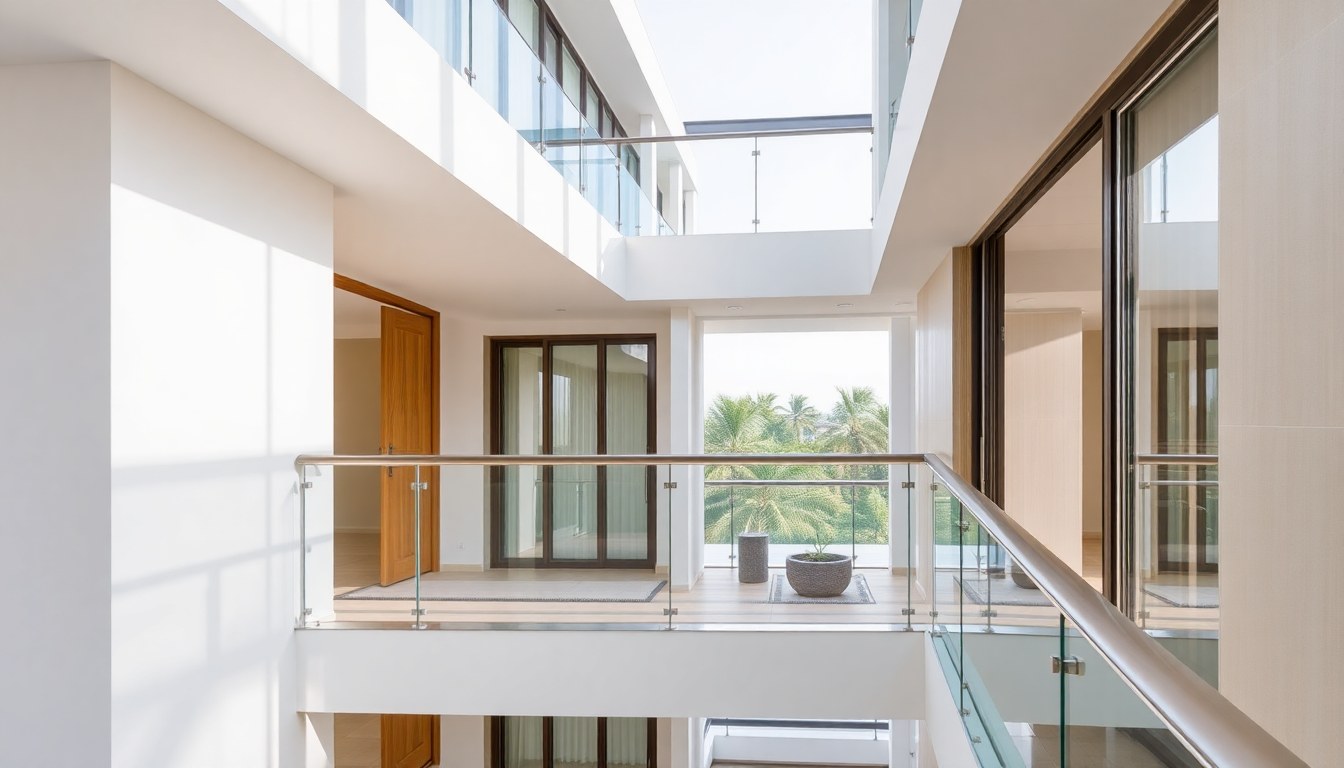
When selecting glass for balcony railings, safety is non-negotiable. Both laminated and tempered glass offer distinct advantages, but they behave very differently when subjected to impact or breakage. Understanding these differences helps you make an informed choice that meets Indian building codes and protects your family.
What is Tempered Glass?
Tempered glass is ordinary annealed glass that has been heat-treated to increase its strength. The glass is heated to approximately 620°C and then rapidly cooled. This process creates internal compressive stress on the surface and tensile stress in the core, making the glass significantly stronger than untreated glass.
When tempered glass breaks, it shatters into small, relatively harmless granules rather than sharp shards. This characteristic makes it a popular choice for safety applications across India, from shopping malls to residential buildings. Tempered glass is typically 4-5 times stronger than annealed glass of the same thickness.
- Strength: 4-5 times stronger than annealed glass
- Breakage pattern: Small, blunt granules
- Cost: Generally more affordable than laminated glass
- Installation: Requires no special handling after tempering
What is Laminated Glass?
Laminated glass consists of two or more glass panes bonded together with a polyvinyl butyral (PVB) interlayer. When laminated glass breaks, the glass fragments adhere to the interlayer, keeping the pane intact like a windshield. This prevents sharp pieces from scattering and maintains structural integrity even after impact.
The interlayer also provides sound insulation and blocks ultraviolet (UV) rays, offering benefits beyond safety. Laminated glass is commonly used in banks, jewelry stores, and high-security applications throughout Indian cities. The thickness of the interlayer and number of glass plies determine the overall strength and security level.
- Composition: Two or more glass panes with PVB interlayer
- Breakage pattern: Glass fragments held by interlayer
- Cost: Higher initial investment than tempered glass
- Additional benefits: UV protection, sound insulation
Safety Performance: Breakage Behavior
Tempered Glass Breakage
Tempered glass's safety advantage lies in its breakage pattern. When struck with sufficient force, the entire pane disintegrates into small, relatively harmless cubes with minimal sharp edges. This dramatically reduces the risk of serious cuts or lacerations. However, once tempered glass breaks, it loses all structural integrity immediately.
For balcony railings, this means that if someone or something impacts the glass with enough force to break it, the railing loses its protective function instantaneously. The person or object could potentially fall through the opening.
Laminated Glass Breakage
Laminated glass maintains its structural integrity even after breaking. The interlayer holds the glass fragments in place, preventing them from scattering. Even with a significant impact, the laminated pane remains in the frame, continuing to provide a barrier. This is particularly valuable for balcony railings, where maintaining the barrier function is critical for safety.
The trade-off is that laminated glass can develop visible cracks and may require replacement sooner than tempered glass would in normal conditions. However, it continues to function as a safety barrier even while damaged.
Indian Building Codes and Compliance
India's National Building Code (NBC) and various state building regulations specify requirements for balcony railings. The code mandates that railings must be at least 1.2 meters high for residential buildings and capable of withstanding specific horizontal loads.
For glass railings, the code typically requires either tempered glass or laminated glass, with laminated glass often preferred in high-rise buildings and commercial spaces. The minimum thickness usually ranges from 8mm to 12mm, depending on the height of the building and the span of the railing. Always verify with your local municipal corporation or building authority before installation.
- Minimum height: 1.2 meters for residential buildings
- Minimum thickness: 8-12mm (varies by building height and location)
- Both tempered and laminated glass are acceptable
- Laminated glass often preferred for buildings above 15 stories
- Verification with local authorities is mandatory
Cost Comparison and Installation
Initial Investment
Tempered glass typically costs ₹400-₹800 per square meter, while laminated glass ranges from ₹800-₹1,500 per square meter, depending on the quality and thickness. For a standard balcony railing of 20 square meters, you might spend ₹8,000-₹16,000 for tempered glass versus ₹16,000-₹30,000 for laminated glass.
This significant price difference makes tempered glass attractive for budget-conscious homeowners. However, the long-term durability and safety benefits of laminated glass often justify the higher initial cost, particularly in high-rise buildings or areas prone to extreme weather.
Installation Considerations
Tempered glass cannot be cut, drilled, or modified after tempering. All necessary cuts and holes must be made before the tempering process. This can increase manufacturing time and cost if custom dimensions are required.
Laminated glass can be cut and drilled after manufacturing, offering greater flexibility for custom installations. Both types require professional installation with appropriate framing systems and weatherproofing to ensure longevity and safety compliance.
Which Should You Choose for Your Balcony?
The choice between laminated and tempered glass depends on several factors specific to your situation. For low-rise residential buildings (up to 5-6 stories) in moderate climates, tempered glass offers excellent safety performance at a reasonable cost. For high-rise apartments, commercial buildings, or areas with severe weather conditions, laminated glass provides superior protection and is often mandated by building codes.
Consider these factors when making your decision:
- Building height: Laminated glass is safer for buildings above 15 stories
- Climate: Laminated glass better withstands extreme weather and UV exposure
- Budget: Tempered glass is more economical upfront
- Customization needs: Laminated glass allows post-manufacturing modifications
- Local regulations: Check your municipal building code requirements
- Maintenance preferences: Tempered glass requires less maintenance
Many architects and builders in India recommend laminated glass for balcony railings in residential complexes, particularly in metropolitan areas like Mumbai, Bangalore, and Delhi, where building codes are strictly enforced and high-rise construction is common. However, tempered glass remains a viable and cost-effective option for many applications when properly specified and installed.
Frequently Asked Questions
Can tempered glass be used for balcony railings in India?
Yes, tempered glass is approved by Indian building codes for balcony railings. It is widely used in residential and commercial buildings across the country. However, specific requirements regarding thickness, height, and load-bearing capacity must be met. Always consult your local building authority to ensure compliance with municipal regulations in your area.
Which glass type is safer: tempered or laminated?
Both are safe when properly installed, but they offer different types of safety. Tempered glass is safer if someone accidentally touches the railing because it breaks into harmless granules. Laminated glass is safer for the railing's structural integrity because it maintains the barrier even after breaking, preventing falls. For balcony railings specifically, laminated glass's ability to maintain structural integrity makes it the safer choice in impact scenarios.
How long does laminated glass last on balcony railings?
High-quality laminated glass can last 15-20 years or more on balcony railings with proper maintenance. The lifespan depends on climate conditions, maintenance practices, and the quality of the PVB interlayer. In harsh coastal environments or areas with extreme temperature fluctuations, the interlayer may degrade faster, requiring replacement sooner. Regular cleaning and inspection help extend the life of laminated glass railings.
Is tempered glass more affordable than laminated glass?
Yes, tempered glass typically costs 40-50% less than laminated glass. For a 20 square meter balcony railing, tempered glass might cost ₹8,000-₹16,000 while laminated glass could cost ₹16,000-₹30,000. However, the higher initial cost of laminated glass is often offset by better durability, lower maintenance requirements, and superior safety performance in high-rise buildings.
What thickness of glass is required for balcony railings in India?
Indian building codes typically require 8mm to 12mm thick glass for balcony railings, depending on the building height and the span of the railing panel. Buildings up to 5 stories may use 8-10mm glass, while high-rise buildings often require 10-12mm or thicker. Always verify the specific requirements with your local municipal corporation or building authority before purchasing and installing balcony railing glass.
Choosing the right glass for your balcony railing is an investment in safety and durability. Whether you select tempered or laminated glass, ensure it meets Indian building codes and is installed by certified professionals. Browse verified glass suppliers, manufacturers, and installation experts on glassy.in to find trusted partners for your balcony railing project.