
Glass Railings
Laminated Glass vs Tempered Glass for Balcony Railings: Safety Standards Explained
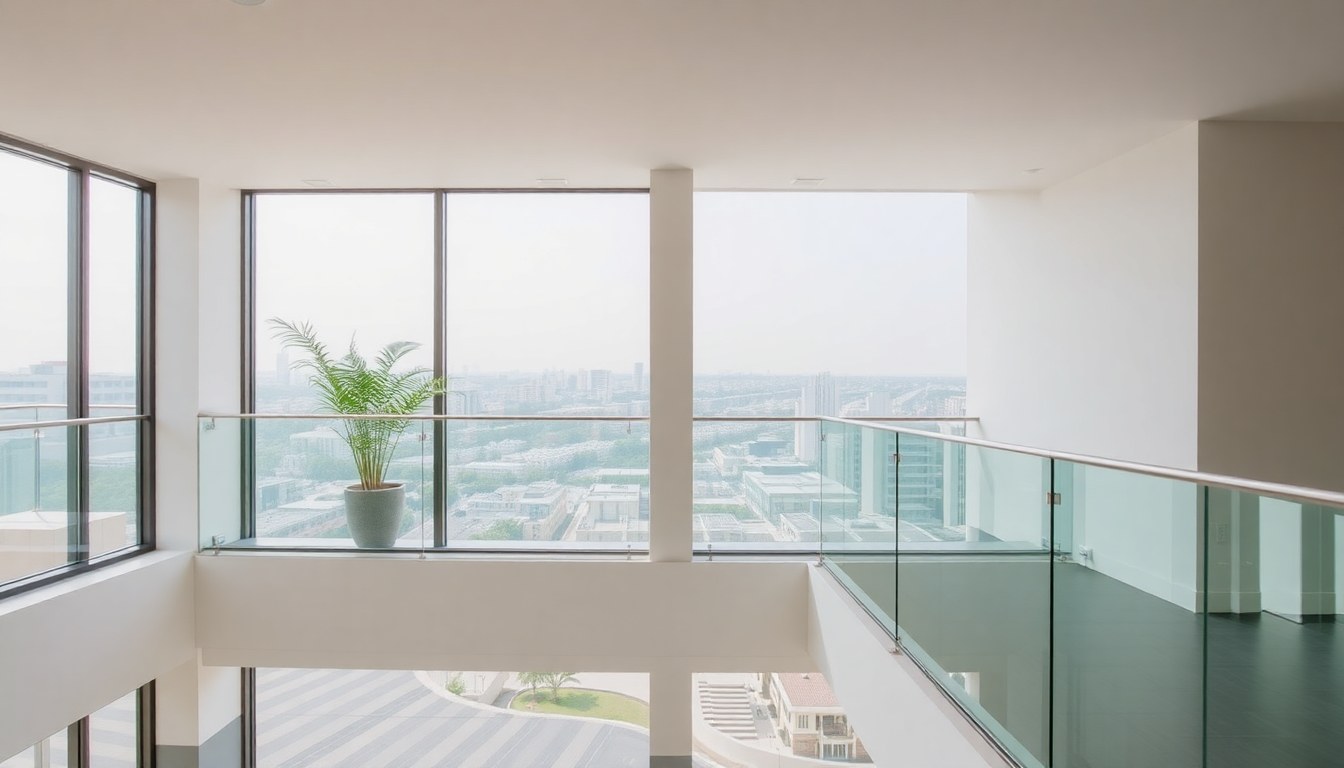
When selecting glass for balcony railings, safety is non-negotiable. Both laminated and tempered glass meet Indian safety codes, but they perform differently under impact and break in fundamentally different ways. Understanding these differences helps you choose the right material for your specific needs, building regulations, and risk profile.
What Is Tempered Glass and How Does It Work?
Tempered glass is annealed glass that undergoes a controlled heating and rapid cooling process. This thermal treatment creates compressive stress on the glass surface and tensile stress in the core, making it significantly stronger than ordinary glass. When tempered glass breaks, it shatters into small, relatively harmless granular pieces rather than sharp shards.
The manufacturing process involves heating glass to approximately 620°C and then cooling it rapidly with air jets. This process increases its strength by 4 to 5 times compared to annealed glass of the same thickness. For balcony railings, tempered glass typically ranges from 8mm to 12mm in thickness and is often used as a single-pane solution.
Advantages of Tempered Glass for Railings
- High impact resistance suitable for residential and commercial balconies
- Breaks into small, non-sharp granules, reducing injury risk
- Excellent clarity and aesthetic appeal
- Cost-effective compared to laminated alternatives
- Easier installation with standard hardware
- Better thermal performance in extreme temperatures
Limitations of Tempered Glass
- Once broken, the entire panel must be replaced—no structural integrity remains
- Cannot be cut, drilled, or modified after tempering
- Susceptible to nickel sulfide inclusions, which can cause spontaneous breakage in rare cases
- Provides no sound dampening or UV protection
What Is Laminated Glass and Its Safety Benefits?
Laminated glass consists of two or more glass panes bonded together with a polyvinyl butyral (PVB) or ethylene-vinyl acetate (EVA) interlayer. When broken, the interlayer holds the glass fragments together, preventing them from falling or scattering. This characteristic makes laminated glass particularly valuable for safety-critical applications like balcony railings.
For balcony railings in India, laminated glass typically combines 6mm or 8mm glass panes with a 0.76mm interlayer, resulting in a combined thickness of 12.76mm or 16.76mm respectively. The interlayer is the key safety feature—it absorbs impact energy and maintains the structural integrity of the panel even after breakage.
Advantages of Laminated Glass for Railings
- Holds together when broken, preventing glass fragments from falling
- Excellent protection against accidental impact and intentional attacks
- Provides sound insulation, reducing noise transmission
- UV protection available with special interlayers
- Can be partially damaged without complete panel failure
- Better security properties for high-rise buildings
Limitations of Laminated Glass
- Higher initial cost, typically 40-60% more than tempered glass
- Slightly reduced optical clarity due to interlayer visibility
- Longer manufacturing time
- Requires specialized installation and hardware
- Interlayer can yellow over time in UV-exposed applications
Indian Safety Standards and Building Codes
India's glass railing safety requirements are governed by the National Building Code of India (NBC) and Indian Standards (IS) codes. The most relevant standard is IS 6262:2015, which specifies safety requirements for glass in buildings. This code mandates that all balcony railings use either tempered glass, laminated glass, or a combination of both to ensure public safety.
According to NBC guidelines, balcony railings must withstand a horizontal load of 1.5 kN/m (kilonewton per meter) without permanent deformation. Both tempered and laminated glass can meet this requirement when properly installed with appropriate framing systems. However, the choice between them depends on the building's classification, occupancy type, and local municipal bylaws.
Specific Code Requirements
- IS 6262:2015: Specifies safety glass for buildings, requiring impact resistance testing
- NBC Section 5: Mandates safety railings for balconies in residential and commercial buildings
- IS 2553: Covers tempered glass specifications and quality assurance
- IS 2553-1:2006: Defines laminated safety glass requirements and performance testing
- Local Municipal Bylaws: Many cities like Mumbai, Delhi, and Bangalore have additional requirements for high-rise buildings
Most urban local bodies require third-party certification from agencies like the Bureau of Indian Standards (BIS) or equivalent. Manufacturers must provide test certificates confirming compliance with IS codes, including impact resistance, breakage behavior, and durability testing.
Impact Resistance and Breakage Behavior Comparison
The way glass breaks under impact is crucial for balcony safety. Tempered glass shatters into small, relatively blunt pieces because the internal stress is released uniformly. Laminated glass, conversely, may crack or spiderweb but remains held together by the interlayer, preventing fragments from falling onto people or property below.
For balcony railings specifically, the risk scenario is different from windows. A person leaning against or falling into a railing requires glass that either resists the impact entirely or, if it breaks, contains the fragments safely. Laminated glass excels in this scenario because it maintains structural integrity even after breakage, whereas tempered glass loses all strength once the first crack appears.
Impact Testing Standards
Both glass types undergo rigorous impact testing under IS codes. The tests typically include:
- Drop Ball Test: A steel ball is dropped from specific heights to simulate impact. Tempered glass must not break, while laminated glass may crack but must hold fragments.
- Pendulum Impact Test: Measures resistance to swinging impact, relevant for railing applications where people might fall against the glass.
- Load Testing: Horizontal and vertical loads are applied to ensure the railing system (glass plus frame) meets the 1.5 kN/m requirement.
- Durability Testing: Glass is exposed to temperature cycling and humidity to ensure long-term performance.
Cost Comparison and Long-Term Value
Tempered glass railings typically cost between ₹800 to ₹1,500 per square meter, depending on thickness and frame material. Laminated glass railings generally range from ₹1,200 to ₹2,500 per square meter for comparable dimensions. For a standard 5-meter balcony railing (approximately 10-12 square meters), the difference can be ₹4,000 to ₹12,000 or more.
However, long-term value extends beyond initial purchase price. Laminated glass offers better durability, lower maintenance costs, and superior safety performance in high-traffic or high-risk areas. Tempered glass is more economical for lower-rise residential buildings where the risk of falling glass is minimal and building codes permit its use.
Factors Affecting Total Cost
- Glass thickness and quality grade
- Interlayer type (PVB, EVA, or specialized acoustic interlayers)
- Frame material (aluminum, steel, or stainless steel)
- Installation complexity and labor costs in your region
- Certification and testing requirements
- Customization needs (tinting, frosting, or special coatings)
Which Glass Type Should You Choose?
The choice between laminated and tempered glass depends on several factors specific to your building and location. For residential buildings up to 10 floors in low-density areas, tempered glass is often sufficient and cost-effective. For high-rise residential buildings, commercial spaces, or buildings in densely populated areas, laminated glass is the safer and more prudent choice despite higher costs.
Consider these decision points: If your balcony faces a public area, street, or pedestrian zone, laminated glass is strongly recommended because falling glass fragments pose a risk to people below. If your balcony is in a gated community or faces a private area, tempered glass may be acceptable. Always verify your local municipal building bylaws, as some cities mandate laminated glass for all buildings above a certain height or in specific zones.
Recommendation by Building Type
- Low-Rise Residential (1-5 floors): Tempered glass acceptable; verify local codes
- Mid-Rise Residential (6-15 floors): Laminated glass recommended for safety and liability protection
- High-Rise Residential (16+ floors): Laminated glass mandatory in most Indian cities
- Commercial/Office Buildings: Laminated glass strongly recommended for public safety
- Hospitality (Hotels, Resorts): Laminated glass preferred for guest safety and liability
- Healthcare Facilities: Laminated glass mandatory for patient and visitor safety
Installation and Maintenance Considerations
Both glass types require professional installation by certified contractors familiar with Indian safety standards. Tempered glass installation is straightforward—it simply requires standard aluminum or steel framing with appropriate fasteners. Laminated glass installation is more involved because the interlayer requires careful handling to avoid delamination, and the frame must accommodate the slightly thicker panels.
Maintenance for both types is minimal. Regular cleaning with mild soap and water keeps glass clear and attractive. Tempered glass is slightly more forgiving during cleaning because minor scratches don't compromise safety. Laminated glass should be cleaned gently to avoid stressing the interlayer, though modern PVB interlayers are quite durable.
Inspection is important for both types. Check framing annually for corrosion or looseness, especially in coastal areas or regions with high humidity. If tempered glass breaks, the entire panel must be replaced immediately because it has no residual strength. Laminated glass can remain in place temporarily if cracked but should be replaced within a reasonable timeframe to maintain full safety performance.
Frequently Asked Questions
Is tempered glass safe for balcony railings in high-rise buildings?
Tempered glass is technically safe in high-rise buildings in terms of impact resistance, but it poses a significant safety hazard if broken because the entire panel loses structural integrity and fragments fall freely. Most Indian building codes and municipal authorities recommend or mandate laminated glass for buildings above 10-15 floors to prevent falling glass from injuring pedestrians below. Always check your local building bylaws before choosing tempered glass for high-rise applications.
Can laminated glass be cut or modified after manufacturing?
Unlike tempered glass, laminated glass can be cut and drilled after manufacturing because the interlayer holds fragments in place. However, cutting or drilling should only be done by professionals with proper equipment to prevent delamination. Tempering cannot be reversed, so tempered glass cannot be modified after the thermal treatment process. If you anticipate needing modifications, laminated glass is the more flexible choice.
How long does laminated glass typically last in Indian weather conditions?
High-quality laminated glass with UV-protective interlayers can last 20-30 years or more in Indian weather conditions. The durability depends on the interlayer material—PVB interlayers are standard and durable, while EVA interlayers offer slightly better UV resistance. Coastal areas with salt spray and high humidity may see interlayer yellowing after 15-20 years, but structural integrity typically remains intact. Regular maintenance and cleaning extend lifespan significantly.
What is the difference between PVB and EVA interlayers in laminated glass?
PVB (polyvinyl butyral) is the most common and cost-effective interlayer material, offering excellent impact resistance and safety performance. EVA (ethylene-vinyl acetate) interlayers provide superior UV resistance and clarity but are more expensive. For balcony railings in India, PVB is adequate for most applications, but EVA is worth considering if the railing receives intense direct sunlight or you want minimal yellowing over time. Both meet Indian safety standards when properly manufactured.
Do I need BIS certification for glass railings installed in my home?
BIS (Bureau of Indian Standards) certification is mandatory for glass used in public buildings and high-rise residential buildings above a certain height, which varies by city. For individual residential properties, certification requirements depend on your local municipal building bylaws. It's highly recommended to use BIS-certified glass regardless because it ensures quality, safety, and compliance with national standards. When purchasing glass, always ask the supplier for valid BIS certificates or equivalent third-party testing reports.
Conclusion and Next Steps
Choosing between laminated and tempered glass for balcony railings is a decision that impacts both safety and cost. Tempered glass offers affordability and good impact resistance, making it suitable for low-rise residential buildings where local codes permit. Laminated glass provides superior safety through fragment containment, making it the preferred choice for high-rise buildings, commercial spaces, and areas where falling glass poses a risk to people below.
Before making your decision, verify your local building bylaws and consult with certified glass contractors who understand Indian safety codes. Both materials, when properly installed and maintained, provide reliable safety performance. The key is matching the glass type to your building's specific risk profile and regulatory requirements.
Ready to find the right glass railing solution for your project? Browse certified glass suppliers and contractors in your city on glassy.in, India's largest glass-business directory. Connect with experienced professionals who understand Indian safety standards and can guide you through the selection and installation process.