
Mirrors
How to Choose the Right Mirror Thickness for Wardrobe and Bathroom Applications
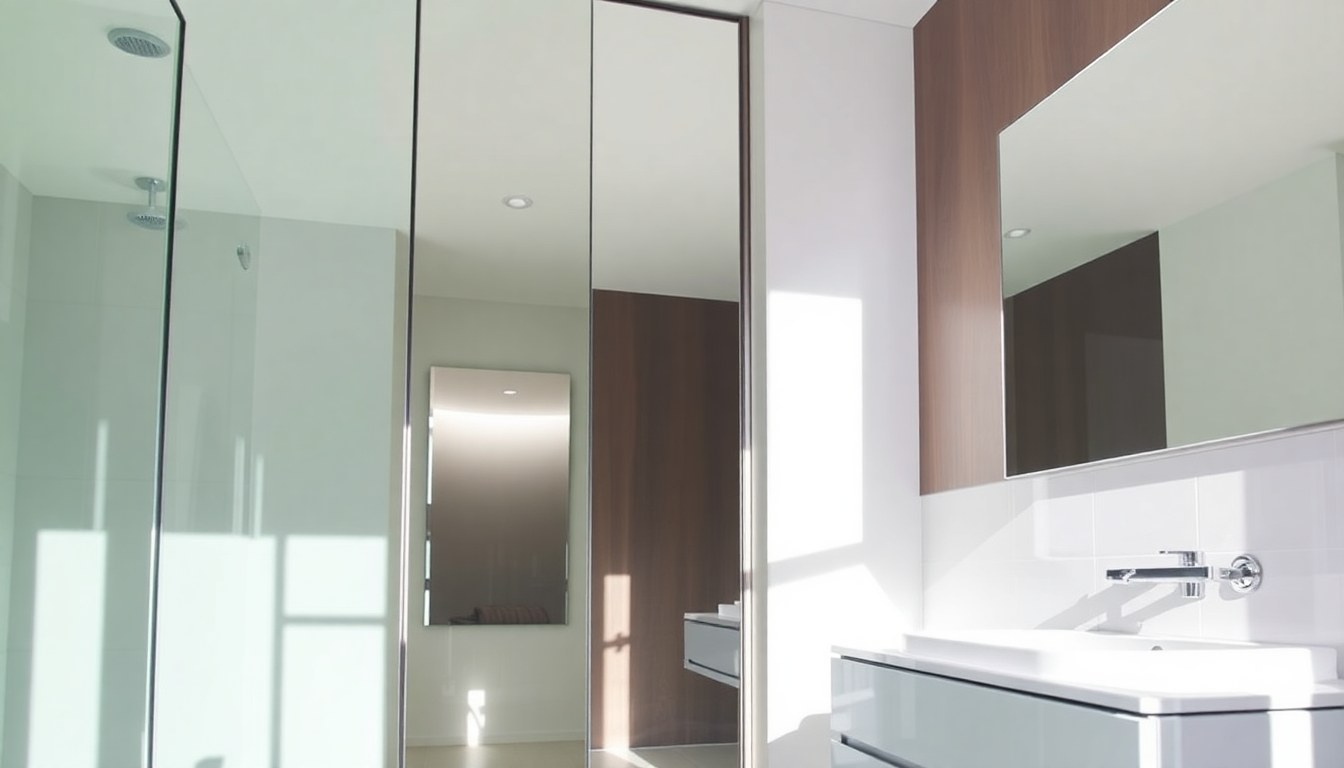
Selecting the correct mirror thickness is crucial for ensuring safety, preventing distortion, and achieving a professional finish in your wardrobe or bathroom. While 4mm and 6mm are the most common thicknesses available in India, each serves different purposes depending on the size of the mirror, mounting method, and application. This comprehensive guide will help you make an informed decision that balances cost, durability, and visual quality.
Understanding Mirror Thickness Standards in India
Mirror thickness in India typically ranges from 3mm to 6mm for residential applications, with 4mm and 6mm being the industry standards. The thickness you choose directly impacts the mirror's weight, structural integrity, and resistance to distortion. Thinner mirrors are lighter and more economical, while thicker mirrors offer superior durability and reduced waviness, especially in larger installations.
The thickness is measured for the glass substrate itself, before the reflective coating is applied. Indian manufacturers follow IS 2835 standards for silvered glass mirrors, which specify quality parameters including thickness tolerances. When purchasing mirrors, always verify the actual thickness as some suppliers may round up measurements for marketing purposes.
For most home applications, you will encounter these options:
- 3mm mirrors: Primarily used for small decorative purposes and framed mirrors under 2 feet
- 4mm mirrors: The most common choice for wardrobe doors, medium-sized bathroom mirrors, and wall-mounted applications
- 5mm mirrors: Less common in India but occasionally used for premium installations
- 6mm mirrors: Preferred for large bathroom mirrors, full-length installations, and high-end wardrobe applications
4mm vs 6mm: Which Thickness for Wardrobe Mirrors
Wardrobe mirrors present unique challenges because they are often large, mounted on sliding or hinged doors, and subject to regular movement. The right thickness depends on the wardrobe door dimensions, mounting mechanism, and your budget constraints.
When 4mm Mirror Thickness Works Best
A 4mm mirror is suitable for wardrobe applications when the mirror size is relatively moderate—typically up to 6 feet in height and 2 feet in width. This thickness provides adequate structural integrity while keeping the door weight manageable, which is important for sliding mechanisms and hinges. Most ready-made wardrobes in India come with 4mm mirrors as standard because they balance cost and functionality effectively.
The lighter weight of 4mm mirrors reduces stress on wardrobe hardware, extending the lifespan of sliding tracks and hinges. For bedroom wardrobes where the mirror is well-protected from impact and moisture is minimal, 4mm thickness with proper safety backing is perfectly adequate. The cost difference between 4mm and 6mm can be substantial—typically 30-40% more for 6mm glass—making 4mm an economical choice for budget-conscious projects.
When to Upgrade to 6mm Mirror Thickness
Choose 6mm mirrors for wardrobe applications when you are installing larger panels—particularly those exceeding 6 feet in height or 2.5 feet in width. The additional thickness significantly reduces the risk of visible distortion or waviness that can occur with large, thin mirrors. High-end modular wardrobes and custom carpentry work often specify 6mm mirrors to ensure a premium finish.
If your wardrobe is in a high-humidity environment or a room that experiences temperature fluctuations, the extra rigidity of 6mm glass provides better dimensional stability. The thicker substrate also allows for more secure mounting options and can better withstand accidental impacts from hangers, doors, or daily use. For luxury homes and premium interior projects, 6mm mirrors are considered the standard for their superior optical quality and longevity.
Bathroom Mirror Thickness Considerations
Bathrooms present a more challenging environment for mirrors due to constant humidity, temperature changes, and potential water splashes. The thickness you choose must account for these factors alongside the mirror size and mounting method.
For small to medium bathroom mirrors (up to 3 feet x 2 feet), 4mm thickness is generally sufficient, provided the mirror has proper copper-free or safety backing to prevent moisture damage. Wall-mounted bathroom mirrors benefit from the lighter weight of 4mm glass, which simplifies installation and reduces the load on wall anchors. Ensure that 4mm bathroom mirrors are mounted with adequate support along all edges rather than just corner brackets.
Large bathroom mirrors, vanity wall installations, or floor-to-ceiling mirror panels should use 6mm thickness. The additional rigidity prevents sagging and distortion over time, especially important in bathrooms where humidity can weaken adhesives and mounting systems. Frameless 6mm mirrors create a sleek, modern aesthetic popular in contemporary Indian bathroom designs. The extra thickness also provides better sound dampening and a more substantial, luxurious feel when you tap or touch the mirror surface.
Safety Backing and Edge Treatment Options
Regardless of thickness, all wardrobe and bathroom mirrors should include safety backing to prevent dangerous shards if the mirror breaks. This is especially critical in homes with children or in earthquake-prone areas of India.
Types of Safety Backing
Safety backing films are applied to the rear of the mirror and come in various grades. Standard vinyl backing provides basic shatter resistance and is included with most quality mirrors at minimal additional cost. For high-traffic areas or children's rooms, consider upgrading to premium safety backing that meets international safety standards, holding glass fragments together even under significant impact.
Copper-free or lead-free backing is essential for bathroom applications, as traditional silver backing can deteriorate when exposed to moisture. This specialized backing costs slightly more but dramatically extends mirror life in humid environments. Many reputable mirror suppliers in Mumbai, Delhi, and Bangalore now offer copper-free options as standard for bathroom mirrors.
Edge Finishing for Safety and Aesthetics
Mirror edges should always be finished to prevent injury and improve appearance. Beveled edges create an elegant frame effect and are popular for bathroom mirrors, though they add to the cost. For wardrobe mirrors, polished or seamed edges provide safety without the decorative bevel, keeping costs reasonable while ensuring smooth, safe edges that won't chip or cut.
Preventing Distortion in Large Mirror Installations
Distortion—the wavy, funhouse effect that makes reflections appear uneven—is one of the most common complaints with large mirrors. Thickness plays a crucial role in preventing this issue, but installation quality matters equally.
Thinner mirrors are more prone to distortion because they can flex slightly when mounted, especially if the wall surface is not perfectly flat. A 4mm mirror mounted on an uneven wall will telegraph those irregularities into visible waves in the reflection. Before installing any mirror, ensure the mounting surface is perfectly flat, using a straight edge to check for bumps or depressions. Wall preparation often makes the difference between a professional-looking installation and a disappointing one.
For 6mm mirrors, the increased rigidity naturally resists flexing and distortion. However, proper support is still essential. Large mirrors should be supported along the bottom edge with a J-channel or mounting clips, not just adhered with mirror adhesive alone. Distribute adhesive evenly across the back surface rather than using spot application, which can create pressure points that induce distortion. Allow adhesive to cure fully before removing temporary supports—typically 24-48 hours depending on the product.
Cost Considerations and Where to Save
Mirror pricing in India varies significantly based on thickness, size, backing type, and edge finishing. As a general guideline, expect 4mm mirrors to cost between ₹80-150 per square foot for standard quality, while 6mm mirrors range from ₹120-220 per square foot. Premium options with copper-free backing and beveled edges can exceed ₹300 per square foot.
You can optimize costs without compromising quality by using 4mm mirrors for smaller applications and reserving 6mm for large installations where distortion would be noticeable. For wardrobe projects, consider using 6mm for the main central panel and 4mm for smaller side panels. In bathrooms, a 6mm vanity mirror makes sense, while smaller decorative mirrors can be 4mm.
Always request samples before committing to large orders, especially for custom wardrobe projects. Reputable suppliers will provide small samples that let you compare thickness, backing quality, and reflective clarity. Check the mirror from an angle under good lighting to spot any distortion or imperfections before installation. Investing time in supplier selection and quality verification prevents costly replacements and ensures satisfaction with your mirror installations.
Frequently Asked Questions
Is 4mm mirror thick enough for a sliding wardrobe door?
Yes, 4mm mirror thickness is adequate for most sliding wardrobe doors up to 6 feet in height and 2 feet in width. Ensure the mirror has safety backing and that the sliding mechanism is rated for the mirror's weight. For larger doors or premium installations, consider upgrading to 6mm for better rigidity and reduced distortion risk.
What is the best mirror thickness for a bathroom vanity?
For bathroom vanity mirrors up to 3 feet wide, 4mm thickness with copper-free backing works well. For larger vanity mirrors or wall-to-wall installations, 6mm thickness is recommended to prevent distortion and ensure longevity in the humid bathroom environment. Always use moisture-resistant backing regardless of thickness.
Will a 6mm mirror be too heavy for my bathroom wall?
A 6mm mirror weighs approximately 15 kg per square meter, which standard wall anchors and adhesives can easily support when properly installed. Ensure you use appropriate mounting hardware rated for the mirror's weight and install anchors into solid wall material or studs rather than just plaster. Professional installation is recommended for mirrors larger than 4 feet in any dimension.
Can I use 3mm mirror for wardrobe to save money?
Using 3mm mirror for wardrobe doors is not recommended except for very small decorative panels. The thin glass is prone to distortion, breakage, and does not provide adequate durability for regular wardrobe use. The minimal cost savings are outweighed by the risk of replacement and poor visual quality. Stick with 4mm as the minimum thickness for wardrobe applications.
How do I know if my mirror has safety backing?
Safety backing appears as a film or coating on the rear of the mirror, usually white, grey, or green in color. You can verify its presence by examining the back surface—it should have a smooth, uniform coating rather than exposed silver backing. Reputable suppliers will specify safety backing in their product descriptions and can provide certification if requested. Always insist on safety backing for any mirror in living spaces.
Choosing the right mirror thickness ensures your wardrobe and bathroom installations look professional and last for years. Whether you select 4mm for cost-effectiveness or 6mm for premium quality, prioritize safety backing and proper installation. For sourcing quality mirrors and connecting with verified suppliers across India, visit the glassy.in directory to find trusted glass and mirror professionals in your city.