
Mirrors
How to Choose the Right Mirror Thickness for Bathroom Walls
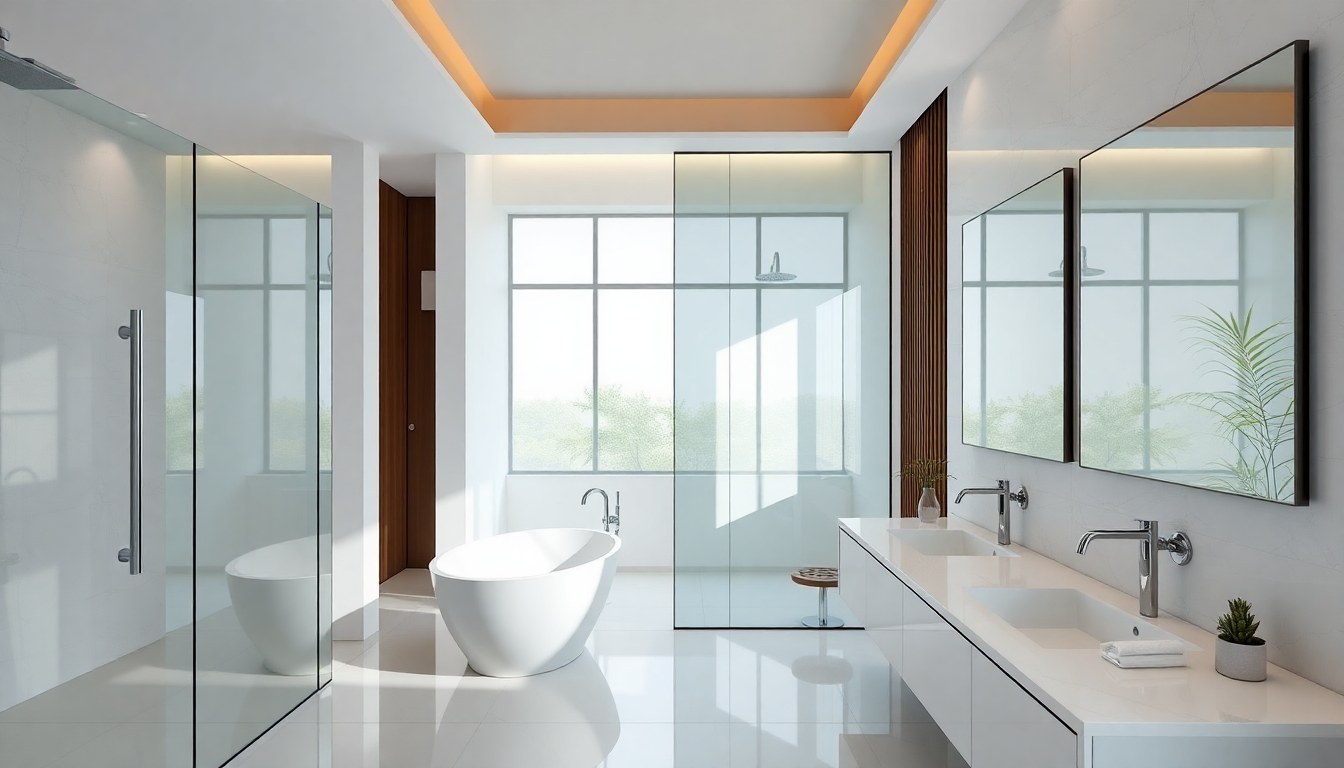
Choosing the right mirror thickness for your bathroom is more critical than most homeowners realize. The wrong thickness can lead to warping, distortion, safety hazards, or even mirror failure in humid conditions. Whether you're renovating a compact bathroom in Mumbai or designing a luxury master bath in Bangalore, understanding mirror thickness options—typically 4mm, 5mm, and 6mm—will help you make an informed decision that balances aesthetics, safety, and longevity.
Understanding Standard Mirror Thickness Options
Bathroom mirrors in India are commonly available in three standard thicknesses: 4mm, 5mm, and 6mm. Each thickness serves different purposes and comes with distinct advantages. The 4mm option is the most economical and lightweight, making it popular for smaller applications. The 5mm thickness strikes a balance between affordability and durability, while 6mm represents the premium choice with superior rigidity and optical clarity.
The thickness you choose directly affects the mirror's weight, strength, resistance to distortion, and overall lifespan. Thicker mirrors are heavier and require more robust mounting systems, but they offer better reflection quality and are less prone to waviness. In Indian bathrooms where humidity levels can be extreme, especially during monsoon season, thickness also influences how well the mirror withstands moisture-related stress over time.
Understanding these differences helps you avoid common pitfalls like purchasing a mirror that's too thin for its size or over-investing in unnecessary thickness for a small application. The right choice depends on several interconnected factors that we'll explore in detail.
Mirror Size and Thickness Relationship
The size of your bathroom mirror is the primary determinant of appropriate thickness. As a general rule, larger mirrors require greater thickness to maintain structural integrity and prevent distortion. For small mirrors up to 2 feet in any dimension, 4mm thickness is typically sufficient. These compact mirrors experience less stress and are less likely to warp or show optical distortion.
Medium-sized mirrors ranging from 2 to 4 feet benefit from 5mm thickness. This is the sweet spot for most standard bathroom applications, including vanity mirrors in typical Indian bathrooms. The additional millimeter provides noticeably better rigidity without significantly increasing weight or cost. For larger mirrors exceeding 4 feet in width or height, 6mm thickness becomes essential to prevent sagging and maintain a flat, distortion-free surface.
Full-Wall and Frameless Mirror Considerations
Full-wall mirrors and frameless designs demand special attention to thickness. Without a frame to provide structural support and hide edges, these mirrors rely entirely on their inherent rigidity. For frameless installations wider than 3 feet, 6mm thickness is strongly recommended. The extra thickness ensures clean, straight edges and prevents the wavy appearance that can occur with thinner glass over large expanses.
In premium bathroom designs where mirrors span entire walls—increasingly popular in urban apartments across Delhi, Pune, and Hyderabad—6mm mirrors with polished edges provide the professional finish that justifies the investment. The superior optical quality becomes especially noticeable in these large installations where even minor distortions are magnified.
Mounting Methods and Thickness Requirements
Your chosen mounting method significantly influences the appropriate mirror thickness. Adhesive-mounted mirrors, which are glued directly to the wall, can generally use thinner glass because the adhesive provides support across the entire back surface. For adhesive mounting, 4mm or 5mm mirrors work well for most bathroom sizes, provided the wall surface is perfectly flat and properly prepared.
Mechanical mounting systems using clips, channels, or standoff hardware require thicker mirrors to handle point loads without cracking. J-channels and bottom clips concentrate stress at specific points, making 5mm the minimum recommended thickness and 6mm preferable for mirrors larger than 3 feet. The thicker glass better distributes these concentrated forces, reducing the risk of stress fractures.
- Adhesive mounting: Suitable for 4mm and 5mm mirrors; requires perfectly flat walls
- Clip mounting: Minimum 5mm thickness; 6mm recommended for larger sizes
- Channel mounting: Best with 5mm or 6mm for adequate grip and stability
- Standoff hardware: Requires 6mm thickness to handle point-load stress
Humidity Resistance and Bathroom Conditions
Indian bathrooms face unique challenges with high humidity, temperature fluctuations, and direct water exposure. While thickness itself doesn't directly prevent moisture damage, thicker mirrors are typically manufactured with better-quality backing materials that provide superior moisture resistance. The backing—usually a combination of copper and protective paint layers—is what actually protects the reflective coating from oxidation and black spots.
Premium 6mm mirrors often come with advanced moisture-resistant backings and edge-sealing treatments that significantly extend lifespan in humid environments. This is particularly important for bathrooms in coastal cities like Chennai, Goa, or Kolkata where salt-laden air accelerates corrosion. The investment in thicker, better-protected mirrors pays off through reduced replacement frequency.
Regardless of thickness, ensure your bathroom mirror has proper ventilation around it. Even the best moisture-resistant backing can fail if water becomes trapped between the mirror and wall. Adequate spacing and ventilation channels are essential, especially for adhesive-mounted installations where airflow is naturally restricted.
Safety Considerations and Building Codes
Safety is paramount when selecting bathroom mirrors, especially in homes with children or elderly residents. Thicker mirrors are inherently stronger and more resistant to impact damage. While no standard mirror is truly shatterproof, 6mm glass can withstand more force before breaking and tends to produce fewer dangerous shards if it does fail.
For enhanced safety, consider mirrors with safety backing film regardless of thickness. This transparent film holds glass fragments together if the mirror breaks, preventing dangerous shards from falling. Some manufacturers offer 5mm and 6mm mirrors with factory-applied safety backing, combining the strength of thicker glass with additional protective features.
Safety Film and Tempered Options
While standard silver-backed mirrors are most common in bathrooms, tempered mirrors offer superior safety properties. Tempered glass is heat-treated to be approximately four times stronger than standard glass and breaks into small, relatively harmless pebbles rather than sharp shards. However, tempered mirrors cannot be cut or drilled after tempering, so precise measurements and hole placements must be determined before manufacturing.
For bathroom applications where mirrors are installed near bathtubs or in areas prone to impact, the combination of 6mm thickness with tempering provides optimal safety. Though this premium option costs 40-60% more than standard mirrors, it's worth considering for high-traffic family bathrooms or commercial applications.
Cost Implications and Budget Planning
Mirror pricing in India increases proportionally with thickness, though the percentage increase is less dramatic than you might expect. A 5mm mirror typically costs 20-30% more than an equivalent 4mm mirror, while 6mm options add another 25-35% to the 5mm price. For a standard 3-foot by 4-foot bathroom mirror, this translates to differences of ₹1,500 to ₹3,000 between thickness options, depending on quality and supplier.
When budgeting, factor in the complete installation cost, not just the mirror price. Thicker mirrors require more robust mounting hardware and may need professional installation, adding ₹500 to ₹2,000 to your total expense. However, this upfront investment often proves economical long-term, as thicker mirrors last longer and require less frequent replacement in challenging bathroom environments.
Consider the mirror as a long-term fixture rather than a disposable element. A quality 6mm mirror with proper moisture protection can easily last 15-20 years in a well-maintained bathroom, while a budget 4mm option might need replacement within 5-7 years due to edge deterioration or backing failure. The annual cost difference becomes negligible when viewed across the product's lifespan.
Making Your Final Decision
To select the ideal mirror thickness for your bathroom, start by measuring your available wall space and determining your preferred mirror size. For mirrors under 2 feet in any dimension, 4mm suffices for most applications. Standard vanity mirrors between 2-4 feet perform best with 5mm thickness, offering the right balance of durability and cost-effectiveness for typical Indian bathrooms.
Choose 6mm thickness for any of these scenarios: mirrors exceeding 4 feet in width or height, frameless installations, full-wall mirrors, bathrooms with extreme humidity, or applications where superior optical quality matters. The premium investment delivers tangible benefits in appearance, longevity, and safety that justify the additional cost.
Consult with experienced glass suppliers who understand local climate conditions and can recommend appropriate backing treatments for your specific location. A knowledgeable supplier will ask about your bathroom's ventilation, direct water exposure, and mounting preferences before recommending thickness and protective treatments.
Frequently Asked Questions
What is the standard thickness for bathroom mirrors in India?
The most common thickness for bathroom mirrors in India is 5mm, which offers an excellent balance between durability, cost, and performance for typical residential applications. This thickness works well for standard vanity mirrors ranging from 2 to 4 feet and provides adequate rigidity to prevent distortion while remaining affordable for most budgets.
Can I use a 4mm mirror for a large bathroom wall?
Using 4mm mirrors for large bathroom walls is not recommended, as thin glass over large expanses tends to show waviness and optical distortion. For mirrors exceeding 3 feet in any dimension, 5mm is the minimum recommended thickness, with 6mm being ideal for installations over 4 feet. Thicker glass maintains a flat surface and provides better reflection quality across large areas.
Does thicker mirror glass prevent moisture damage?
Mirror thickness itself does not prevent moisture damage, but thicker mirrors (5mm and 6mm) are typically manufactured with higher-quality moisture-resistant backings and better edge sealing. The protective backing layers—not the glass thickness—determine moisture resistance. However, premium thicker mirrors often include superior protective treatments that significantly extend lifespan in humid bathroom environments.
How much weight difference is there between 4mm and 6mm mirrors?
A 6mm mirror weighs approximately 50% more than an equivalent 4mm mirror. For a standard 3-foot by 4-foot bathroom mirror, this translates to roughly 15 kg for 4mm versus 22-23 kg for 6mm. This weight difference affects mounting requirements, with thicker mirrors needing more robust adhesives or stronger mechanical mounting systems to ensure secure installation.
Are frameless bathroom mirrors always 6mm thick?
While 6mm is strongly recommended for frameless bathroom mirrors, they are not always this thick. Smaller frameless mirrors under 2 feet can use 5mm thickness successfully. However, for frameless installations exceeding 3 feet or full-wall applications, 6mm thickness is essential to maintain straight edges, prevent sagging, and achieve the clean, professional appearance that makes frameless mirrors attractive. The polished edges of 6mm glass also look more substantial and premium.
Ready to find the perfect mirror for your bathroom renovation? Browse verified glass suppliers and mirror manufacturers on glassy.in, India's most comprehensive glass business directory. Connect with experienced professionals who can help you select the right thickness, backing treatment, and installation method for your specific needs and budget.