
Glass Railings
Glass Staircase Railings: Safety Standards, Installation, & Design Trends 2026
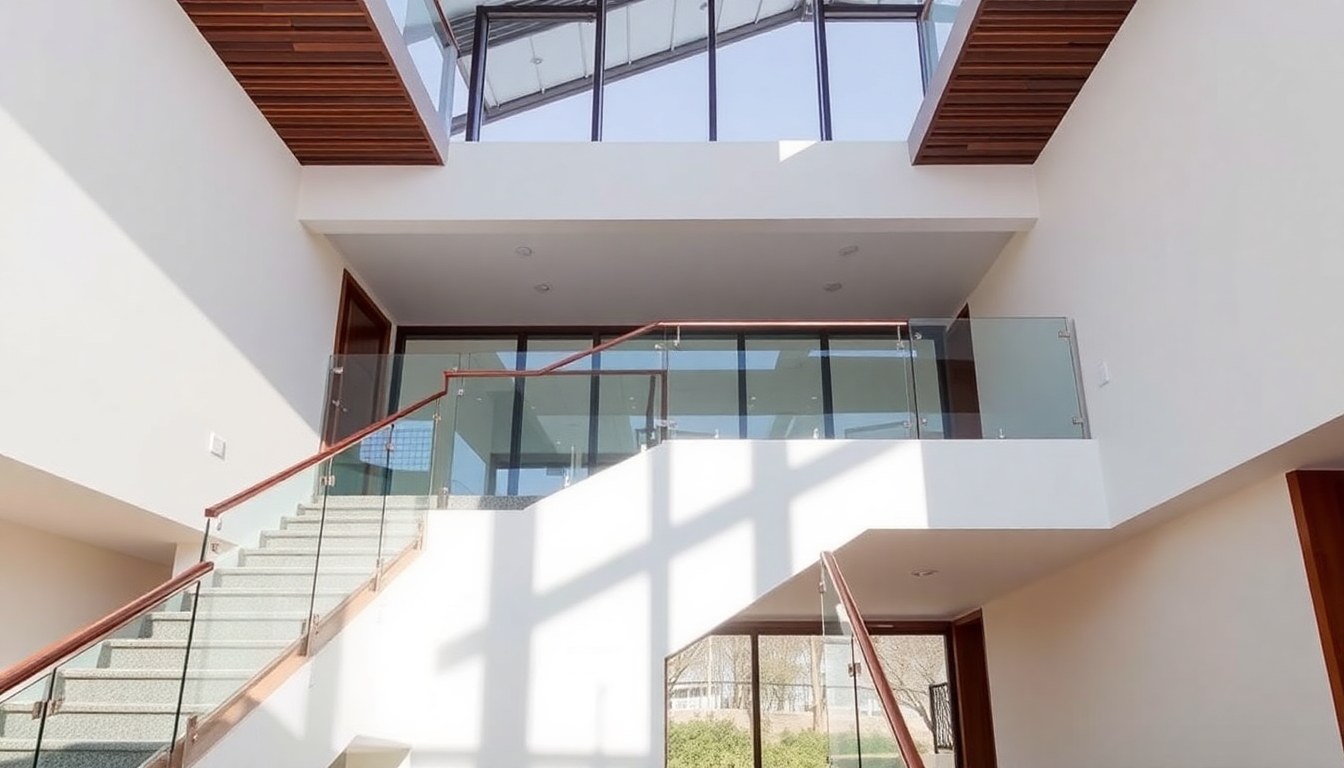
Glass staircase railings have become a hallmark of modern Indian homes and commercial spaces, offering unobstructed views, light transmission, and a contemporary aesthetic. However, installing them safely requires strict adherence to Indian safety standards, proper material selection, and expert installation. This guide covers everything you need to know about glass railings for staircases—from IS 12142 compliance to design options and realistic pricing for residential projects.
Understanding IS 12142: India's Glass Railing Safety Standard
IS 12142 is the Indian Standard that governs the safety requirements for glass railings and balustrades used in buildings. This standard ensures that glass railings can withstand human impact, accidental collisions, and environmental stress without failing. Any glass railing installation in India must comply with IS 12142 to be considered safe and legal for residential, commercial, and public spaces.
The standard specifies critical parameters including glass thickness, impact resistance, height requirements, and structural integrity. Compliance with IS 12142 is not optional—it is mandatory for all new construction and renovation projects in India. Non-compliant installations pose serious safety risks and may result in liability issues if accidents occur.
Key Requirements Under IS 12142
- Minimum Glass Thickness: For residential staircases, toughened glass must be at least 10 mm thick; laminated glass must be at least 6.38 mm (two 3.2 mm panes with 0.38 mm interlayer).
- Height Specifications: Railings must be a minimum of 1.1 meters (1100 mm) high on staircases to prevent falls.
- Impact Resistance: Glass must pass pendulum impact tests to confirm it won't shatter into sharp fragments under human impact.
- Handrail Integration: A handrail must be securely attached to the glass railing or integrated into the frame, positioned between 900–1000 mm from the stair tread.
- Baluster Spacing: If vertical glass panels are used, spacing between balusters cannot exceed 100 mm to prevent child entrapment.
- Safety Glass Requirement: Only toughened or laminated glass is permitted; ordinary annealed glass is strictly prohibited.
Toughened vs. Laminated Glass: Which Is Right for Your Staircase?
Both toughened and laminated glass meet IS 12142 standards, but they offer different safety and performance characteristics. Understanding the differences helps you choose the right material for your specific needs and budget.
Toughened Glass Railings
Toughened (tempered) glass is heated and rapidly cooled during manufacturing, making it approximately 4–5 times stronger than ordinary glass. If it breaks, it shatters into small, relatively harmless granules rather than sharp shards. Toughened glass is lighter, clearer, and more cost-effective than laminated options.
However, toughened glass has one critical drawback: if a small chip occurs in the edge (typically during installation or from impact), the entire pane can spontaneously shatter. This is due to internal stress release. For staircases, toughened glass works well in frameless designs where edges are polished and protected, and in framed systems where edge protection is built into the frame.
Laminated Glass Railings
Laminated glass consists of two or more glass panes bonded together with a polyvinyl butyral (PVB) interlayer. If impact occurs, the glass may crack, but the interlayer holds the fragments together, preventing sharp pieces from falling. This makes laminated glass significantly safer in high-traffic areas and homes with children or elderly members.
Laminated glass is heavier, slightly more expensive, and has a visible interlayer that some consider less aesthetically transparent. However, it offers superior safety and is increasingly preferred for residential staircases in India, especially in metropolitan areas like Mumbai, Delhi, Bangalore, and Hyderabad.
Comparison Table: Toughened vs. Laminated
- Strength: Toughened glass is stronger in tension; laminated glass is safer when broken.
- Cost: Toughened glass is 15–25% cheaper than laminated glass.
- Transparency: Toughened glass offers superior clarity; laminated glass shows a faint interlayer line.
- Edge Sensitivity: Toughened glass is vulnerable to edge chips; laminated glass is more forgiving.
- Noise Reduction: Laminated glass provides better sound insulation due to the PVB layer.
- UV Protection: Laminated glass blocks UV rays; toughened glass does not.
Glass Thickness, Balustrade Design & Handrail Integration
Proper thickness and structural design are essential for safety and durability. The thickness you choose depends on the span of the glass panel, the type of glass, and the mounting system.
Thickness Guidelines for Residential Staircases
For typical residential staircase widths (900–1200 mm), a minimum thickness of 10 mm toughened glass or 6.38 mm laminated glass is required under IS 12142. Wider staircases (1200–1500 mm) may require 12 mm toughened or 8.76 mm laminated glass to prevent excessive deflection and vibration. For very wide spans or high-traffic commercial staircases, 15 mm toughened or 10.76 mm laminated glass is recommended.
Frameless vs. Framed Designs
Frameless designs use minimal metal support, relying on polished glass edges and structural silicone sealants. They offer a sleek, modern look and maximum transparency. However, they require precise installation, high-quality edge polishing, and are typically more expensive (₹8,000–₹12,000 per running meter). Frameless designs work best with laminated glass to minimize edge vulnerability.
Framed designs incorporate aluminum, stainless steel, or mild steel frames around the glass panels. Frames provide structural support, protect glass edges, and allow for easier installation. They are more forgiving of minor installation errors and cost less (₹5,000–₹8,000 per running meter). Frames can be powder-coated in various colors or left natural for contemporary aesthetics.
Handrail Integration
IS 12142 mandates a handrail that can withstand a downward force of 1.1 kN (approximately 112 kg). The handrail must be positioned 900–1000 mm above the stair tread and should be continuous along the entire staircase length. Options include:
- Integrated Metal Handrails: Aluminum or stainless steel rails mounted directly to the glass frame or embedded in the frame profile.
- Glass-Mounted Handrails: Metal rails attached to the glass surface using stainless steel brackets.
- Wooden Handrails: Timber rails (typically teak or sal wood) mounted on top of the glass frame for a classic look.
- Hybrid Designs: Combining metal and wood for aesthetic and functional balance.
Installation Best Practices & Professional Requirements
Proper installation is critical to the safety and longevity of glass staircase railings. Many accidents occur due to poor installation rather than material failure. Always hire certified glass installation professionals who understand IS 12142 requirements and have experience with staircase railings.
Pre-Installation Considerations
- Structural Assessment: The staircase structure must be inspected to ensure it can support the glass railing load (typically 50–100 kg per running meter depending on frame type).
- Precise Measurements: Accurate measurements of the staircase width, height, angles, and landing dimensions are essential for custom-fit railings.
- Material Certification: Verify that the glass carries IS 12142 certification and that the supplier provides test reports.
- Design Approval: Ensure the design meets local building codes and is approved by the architect or structural engineer.
Installation Steps
Professional installation typically involves mounting the base frame securely to the staircase structure using expansion anchors or welding, installing the glass panels into the frame with proper sealing, fitting the handrail, and final safety testing. The process usually takes 2–5 days depending on the staircase length and design complexity. After installation, the railing should be tested for stability, and a compliance certificate should be provided.
Cost Estimates for Residential Glass Staircase Railings in India
Glass railing costs vary significantly based on glass type, thickness, design complexity, and location. Here are realistic estimates for a typical residential staircase (2 meters long, 1 meter high, 1 meter wide):
Price Breakdown by Design Type
- Framed Toughened Glass (10 mm): ₹18,000–₹25,000 for the complete railing (materials + installation).
- Framed Laminated Glass (6.38 mm): ₹22,000–₹30,000 for the complete railing.
- Frameless Toughened Glass (10 mm): ₹28,000–₹38,000 for the complete railing.
- Frameless Laminated Glass (6.38 mm): ₹32,000–₹45,000 for the complete railing.
- Premium Designs (curved, custom frames, hardwood handrails): ₹50,000–₹80,000+ depending on specifications.
These estimates include materials, fabrication, and professional installation. Prices vary by city—major metros like Delhi, Mumbai, and Bangalore may have higher labor costs. Always request detailed quotations from multiple suppliers and verify that quotes include IS 12142 certification, warranty, and after-sales support.
Design Trends for Glass Railings in 2026
Modern glass railing designs are evolving toward sustainability, customization, and integration with smart home features. Trending designs include:
- Minimalist Frameless Designs: Clean, uninterrupted glass surfaces with discreet metal supports.
- Frosted & Patterned Glass: Frosted panels or digital prints for privacy and aesthetic appeal without sacrificing light.
- Colored Glass Railings: Tinted glass (bronze, gray, or custom colors) for contemporary aesthetics.
- Hybrid Materials: Combining glass with wood, steel, or stone for textured, sophisticated designs.
- Integrated Lighting: LED strips embedded in frames or handrails for ambiance and safety.
- Eco-Friendly Options: Recycled glass content and sustainable frame materials gaining popularity.
- Curved & Sculptural Railings: Custom-curved glass panels for architectural distinction in high-end homes.
Maintenance & Longevity
Glass railings are low-maintenance compared to wooden or wrought-iron alternatives. Regular cleaning with mild soap and water keeps the glass transparent and streak-free. The frame and handrail require periodic inspection for corrosion or loosening. Stainless steel frames are highly durable and resistant to rust, while aluminum frames may need repainting every 5–7 years. With proper maintenance, a well-installed glass railing can last 20–30 years or more.
Frequently Asked Questions
Is toughened glass or laminated glass safer for residential staircases?
Both are IS 12142 compliant and safe. Laminated glass is generally considered safer for residential staircases because if it breaks, the interlayer holds fragments together, preventing sharp pieces from falling. Toughened glass is stronger and clearer but can spontaneously shatter if the edge is chipped. For homes with children or elderly members, laminated glass is the preferred choice.
What is the minimum thickness of glass required for a staircase railing in India?
Under IS 12142, the minimum thickness is 10 mm for toughened glass and 6.38 mm for laminated glass (two 3.2 mm panes with 0.38 mm PVB interlayer). These minimums apply to typical residential staircases with spans up to 1200 mm. Wider or high-traffic staircases may require thicker glass.
How much does a glass staircase railing cost in India?
For a typical 2-meter residential staircase, costs range from ₹18,000 to ₹45,000 depending on glass type (toughened vs. laminated), design (framed vs. frameless), and location. Framed toughened glass designs are the most affordable (₹18,000–₹25,000), while frameless laminated glass with premium handrails can exceed ₹45,000. Always request detailed quotations from certified suppliers.
Do glass railings require a handrail?
Yes, IS 12142 mandates a handrail on all glass railings. The handrail must be positioned 900–1000 mm above the stair tread and capable of withstanding a downward force of 1.1 kN. Options include integrated metal rails, wooden handrails, or hybrid designs. The handrail is essential for user safety and building code compliance.
Can I install a glass railing myself, or do I need a professional?
Professional installation is strongly recommended. Glass railings involve precise measurements, structural anchoring, edge polishing, sealing, and safety testing. Poor installation can compromise safety and void warranties. Always hire certified glass professionals who understand IS 12142 requirements and can provide compliance documentation.
Glass staircase railings are an excellent investment for modern Indian homes, combining safety, aesthetics, and functionality. To find certified glass railing suppliers and installation professionals in your city, explore the comprehensive directory on glassy.in—India's largest glass business platform. Browse verified suppliers, compare quotes, and connect with experts who can help you design and install the perfect glass railing for your staircase.