
Glass Railings
Glass Railing Safety Standards in India: Load Ratings & Installation Rules
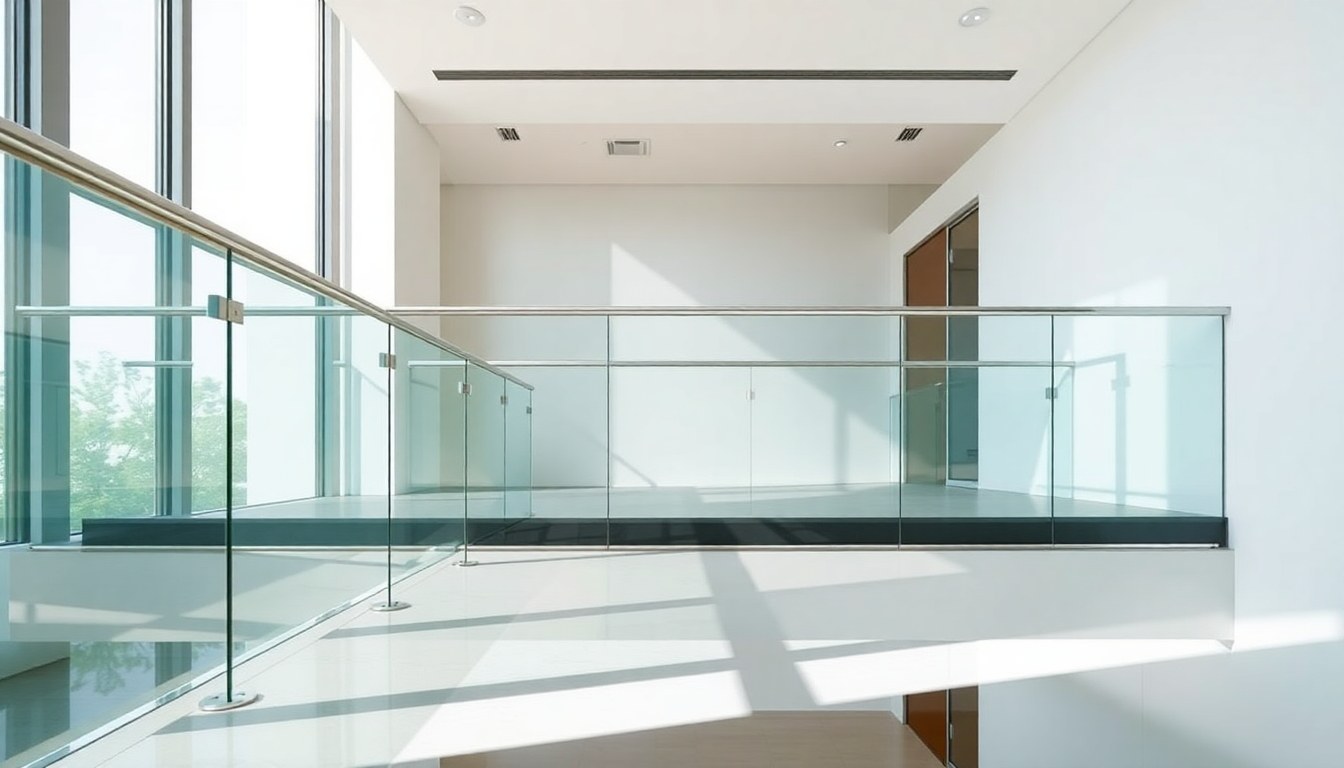
Glass railings have become a hallmark of modern Indian architecture, offering unobstructed views while maintaining safety. However, installing a glass railing that looks good is not enough—it must meet rigorous Indian safety standards to protect occupants from falls and structural failure. This guide walks you through IS 12438 compliance, tempered glass thickness requirements, and load calculations that every architect, builder, and homeowner should understand.
Understanding IS 12438: India's Glass Railing Standard
IS 12438 is the Indian Standard that governs the safety requirements for protective barriers and railings, including those made of glass. Issued by the Bureau of Indian Standards (BIS), this standard applies to balconies, staircases, mezzanines, and any elevated platform where fall protection is necessary. Compliance with IS 12438 is not optional—it is a legal requirement for all construction projects in India.
The standard specifies that glass used in railings must be tempered (toughened) glass, not annealed or ordinary glass. Tempered glass is heat-treated to increase its strength and safety characteristics. When tempered glass breaks, it fractures into small, relatively harmless granules rather than sharp, dangerous shards. This property is critical for safety, as accidental breakage should not create a hazard for occupants.
Key Requirements of IS 12438
- Material specification: Only tempered glass with a minimum thickness of 12 mm is permitted for railings in residential buildings.
- Horizontal load resistance: Glass railings must withstand a concentrated horizontal load of 1.2 kN (approximately 122 kg-force) applied at the top rail.
- Impact resistance: The railing must resist impact from a 50 kg bag dropped from 1 meter height without breaking or permanent deformation.
- Height requirement: Minimum railing height is 1.1 meters above floor level for residential buildings and 1.2 meters for public spaces.
- Baluster spacing: Vertical spacing between glass panels or supports must not exceed 100 mm to prevent entrapment of children's heads.
Tempered Glass Thickness and Load Rating Calculations
The thickness of tempered glass directly determines its load-bearing capacity. In India, most residential glass railings use 12 mm tempered glass, which is the minimum thickness allowed under IS 12438. However, for certain applications—such as railings in commercial buildings, outdoor balconies exposed to wind loads, or railings spanning larger unsupported widths—thicker glass may be required.
Load rating calculations depend on multiple factors: the span of the glass panel (distance between vertical supports), the type of load (concentrated or distributed), and the edge condition of the glass. A 12 mm tempered glass panel with a 1-meter span can safely support a horizontal load of 1.2 kN. If the span increases to 1.5 meters, the allowable load decreases significantly, often requiring 15 mm or 19 mm glass instead.
Common Glass Thickness Specifications in India
- 12 mm tempered glass: Suitable for residential balconies and staircases with spans up to 1.2 meters. Cost ranges from ₹800 to ₹1,200 per square meter.
- 15 mm tempered glass: Used for wider spans (1.2 to 1.5 meters) and commercial applications. Cost ranges from ₹1,200 to ₹1,800 per square meter.
- 19 mm tempered glass: Required for high-load applications, outdoor installations, or spans exceeding 1.5 meters. Cost ranges from ₹1,800 to ₹2,500 per square meter.
- Laminated tempered glass: Combines two or more layers of tempered glass with a polyvinyl butyral (PVB) interlayer. Provides enhanced safety and sound insulation. Cost ranges from ₹2,000 to ₹3,500 per square meter.
Structural Load Calculations for Glass Railings
Proper load calculation is essential to ensure that your glass railing will not fail under expected conditions. The calculation involves determining both the applied loads (horizontal push, impact, wind) and the capacity of the glass to resist these loads. In India, structural engineers typically follow IS 12438 guidelines combined with IS 875 (Code of Practice for Design Loads for Buildings and Structures).
The horizontal load applied to a railing is typically assumed as 1.2 kN concentrated at the top rail for residential buildings. This simulates a person leaning or pushing against the railing. For commercial buildings and public spaces, this load may increase to 1.5 kN or higher. Wind loads must also be considered, especially for balconies in high-rise buildings or coastal areas. Wind pressure can add significant lateral force, requiring thicker glass or more frequent vertical supports.
Calculation Steps for Load Capacity
- Determine the span of the glass panel (distance between vertical supports or posts).
- Identify all applied loads: horizontal push at top rail, wind pressure, and impact loads.
- Calculate bending stress in the glass using structural formulas specific to the glass thickness and span.
- Compare the calculated stress with the allowable stress for tempered glass (typically 50 MPa for design purposes).
- If calculated stress exceeds allowable stress, increase glass thickness or reduce panel span by adding more vertical supports.
Installation Requirements and Best Practices
Even the strongest glass is only as safe as its installation. Poor installation can compromise the entire railing system, leading to failure under load. IS 12438 specifies several installation requirements that must be followed strictly. The glass must be properly secured to the supporting frame using appropriate hardware and fastening methods. All connections must be designed to transmit loads safely to the building structure.
In India, most glass railings use aluminum frames with stainless steel fittings. The aluminum profile must be of sufficient thickness (typically 3 to 4 mm) and properly designed to support the glass and resist bending. Stainless steel fasteners are essential because they resist corrosion in India's humid and coastal climates. Galvanized steel should be avoided as it can corrode and lose strength over time.
Critical Installation Standards
- Support spacing: Vertical posts or supports must be spaced no more than 1.5 meters apart. Closer spacing may be required for thinner glass or longer spans.
- Fastening method: Glass must be secured using mechanical fasteners (bolts, clamps) or bonded with structural silicone sealant. Both methods must be designed by a qualified engineer.
- Silicone sealant: If used, must be structural-grade silicone with a minimum width of 12 mm around all edges of the glass. The sealant must be applied by certified installers.
- Edge finishing: All edges of the glass must be polished and smooth to reduce stress concentration and prevent chipping. Sharp edges are not permitted.
- Drainage: The railing frame must allow water drainage to prevent pooling and structural damage. Weep holes should be provided at the bottom of the frame.
- Expansion allowance: Glass expands and contracts with temperature changes. The installation must allow for a minimum of 5 mm thermal expansion on all sides.
Wind Load Considerations for Indian Climate
India's diverse climate zones require careful consideration of wind loads in railing design. Coastal cities like Mumbai, Chennai, and Kolkata experience higher wind speeds, particularly during monsoon season. IS 875 provides wind pressure data for different regions of India, and these values must be incorporated into the railing design.
For a typical residential balcony in a metropolitan area like Delhi or Bangalore, wind pressure may be around 1.5 kPa. However, in coastal regions, this can increase to 2.5 kPa or higher. A 12 mm tempered glass panel may be insufficient in high-wind areas, necessitating 15 mm or 19 mm glass. Additionally, the frame and support structure must be designed to handle the increased lateral forces from wind pressure.
Common Mistakes in Glass Railing Installation
Many glass railing failures in India occur due to common installation mistakes that could have been prevented. Understanding these errors helps you avoid costly and dangerous problems. One frequent mistake is using non-tempered or annealed glass, which is cheaper but unsafe. When annealed glass breaks, it produces large, sharp shards that can cause severe injuries. Another common error is insufficient support spacing, where posts are placed too far apart, causing excessive glass deflection under load.
Inadequate fastening is another critical issue. Some installers use simple bolts without proper washers or use too few fasteners to secure the glass. This can lead to vibration, noise, and eventual loosening of the glass. Poor drainage design causes water to accumulate in the frame, leading to corrosion of aluminum and steel components. Finally, using standard silicone sealant instead of structural-grade silicone can result in the glass becoming loose over time as the sealant degrades.
Certification and Compliance Verification
Before installing a glass railing, ensure that the glass and installation method have proper certification. In India, tempered glass should carry a BIS mark indicating compliance with IS 13551 (Indian Standard for Toughened Safety Glass). The installation contractor should provide structural design calculations prepared by a qualified civil or structural engineer registered with the Council of Architecture or a professional engineering body.
Many state building codes now require third-party inspection and certification of glass railings. In cities like Mumbai, Bangalore, and Hyderabad, the municipal corporation may mandate inspection before the railing is considered complete. Always request test certificates, design drawings, and installation documentation from your contractor. A reputable glass supplier in India will provide these documents without hesitation.
Frequently Asked Questions
What is the minimum thickness of tempered glass required for railings in India?
According to IS 12438, the minimum thickness of tempered glass for residential building railings is 12 mm. However, thicker glass (15 mm or 19 mm) may be required depending on the span of the glass panel, applied loads, and wind conditions. Commercial buildings and public spaces may require thicker glass or closer support spacing.
Can I use laminated glass instead of tempered glass for railings?
Yes, laminated tempered glass can be used for railings and is often preferred in high-security or noise-sensitive applications. Laminated glass consists of two or more layers of tempered glass bonded with a polyvinyl butyral (PVB) interlayer. It provides superior safety, as the interlayer holds the glass together even if it breaks. However, laminated glass is more expensive than standard tempered glass.
How far apart should vertical supports be placed in a glass railing?
Vertical supports (posts) should be spaced no more than 1.5 meters apart according to IS 12438. For 12 mm tempered glass, supports may need to be closer (1.0 to 1.2 meters apart) to limit deflection and stress. The exact spacing depends on the glass thickness, applied loads, and structural design calculations performed by an engineer.
What is the required railing height in India?
IS 12438 specifies a minimum railing height of 1.1 meters above floor level for residential buildings and 1.2 meters for public spaces and commercial buildings. This height is measured from the finished floor surface to the top of the railing. The height requirement ensures that the railing provides adequate fall protection for adults and children.
Do I need an engineer's certificate for a glass railing installation?
Yes, it is highly recommended and often required by municipal building codes. A qualified civil or structural engineer should prepare design calculations, detail drawings, and material specifications for the railing. The engineer should verify that the design complies with IS 12438 and IS 875. Many state building departments and municipal corporations now mandate engineer certification before issuing occupancy certificates.
Conclusion
Glass railings offer elegance and unobstructed views, but safety must never be compromised. IS 12438 compliance ensures that your railing will protect occupants from falls and withstand expected loads. By understanding tempered glass thickness requirements, load calculations, and proper installation practices, you can make informed decisions when planning a glass railing project. Always work with certified suppliers and qualified engineers, verify all certifications, and insist on proper documentation. Your safety and that of your family depends on it.
Looking for reliable glass suppliers and installers in your area? Visit the glassy.in directory to connect with certified glass businesses across India who specialize in safety-compliant railings and installations.