
Glass Railings
Glass Balcony Railings in High-Rise Buildings: Wind Load & Safety Standards
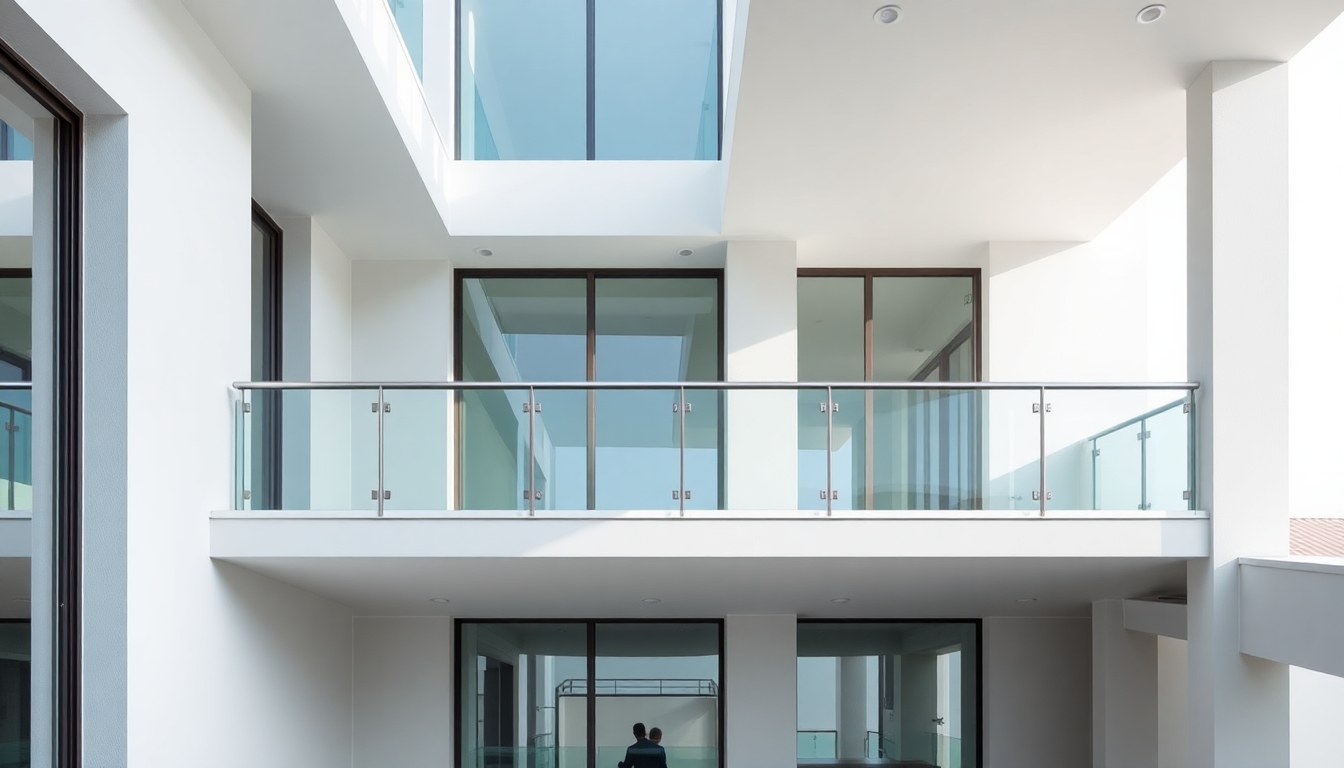
High-rise buildings demand balcony railings that do far more than look elegant—they must withstand extreme wind pressures and meet rigorous safety standards. Glass balcony railings are increasingly popular in modern Indian architecture for their aesthetic appeal and unobstructed views, but their structural integrity depends on precise engineering calculations and compliance with national codes. This guide explains wind load requirements, Indian Standards compliance, and best practices for installing glass railings on tall buildings.
Understanding Wind Load Pressure on High-Rise Balconies
Wind pressure increases dramatically with building height. On a 10-story building, wind speeds and resulting pressures are significantly higher than at ground level. For glass balcony railings, wind load is measured in pascals (Pa) or kilograms per square meter (kg/m²), and these forces act perpendicular to the railing surface.
The wind pressure calculation follows the formula: Wind Pressure = 0.5 × Air Density × Wind Velocity². This means that doubling wind speed quadruples the pressure on the railing. In Indian cities like Mumbai, Bangalore, and coastal regions, wind speeds can reach 100–150 km/h during monsoons or cyclones, translating to pressures of 500–1500 Pa on exposed balcony railings. Architects and structural engineers must account for these dynamic forces when specifying glass thickness, frame materials, and fixing methods.
Height-Based Wind Pressure Variation
Wind pressure is not uniform across all heights. Indian Standards (IS 875-3) provides wind pressure coefficients that vary by building height, terrain category, and exposure. Balconies on the 20th floor experience 40–50% higher wind pressure than those on the 5th floor. This variation means that a single railing specification cannot be applied uniformly to all levels of a high-rise building.
Indian Standards and Regulatory Compliance
Glass railings in high-rise buildings must comply with multiple Indian Standards codes. The primary standards governing structural safety and wind load are IS 875-3 (Code of Practice for Design Loads for Buildings and Structures—Wind Loads) and IS 6533 (Code of Practice for Design, Fabrication and Erection of Structural Steelwork for Buildings). Additionally, IS 12600 covers safety requirements for glazing in buildings.
IS 875-3 mandates that wind pressure coefficients be calculated based on building height, terrain roughness category, and exposure factor. For high-rise residential and commercial buildings in urban areas, terrain category 3 or 4 applies, meaning higher wind pressure coefficients. Balcony railings must be designed to resist the design wind pressure without permanent deformation or failure.
Glass Thickness and Structural Requirements
The thickness of tempered or laminated glass used in high-rise balcony railings typically ranges from 10 mm to 12 mm, depending on railing height (usually 1.1–1.2 m) and wind load calculations. Toughened (tempered) glass is mandatory because it fractures into small, relatively harmless granules if broken, reducing injury risk. For railings above 1.2 m height or in extreme wind zones, 12 mm tempered glass is standard.
Laminated glass—two or more glass panes bonded with polyvinyl butyral (PVB) interlayer—is sometimes preferred because it maintains structural integrity even if one pane cracks. However, laminated glass is heavier and more expensive, so it is typically reserved for railings in cyclone-prone areas or buildings exceeding 30 stories.
Design Calculations and Engineering Standards
Structural engineers perform detailed calculations to determine the safe glass thickness and frame specifications. The deflection limit for glass railings under wind load is typically L/180 (where L is the unsupported span in millimeters), meaning a 1-meter span should deflect no more than 5.5 mm under design wind pressure. This ensures occupant comfort and prevents excessive stress on glass-to-frame connections.
The design process includes:
- Determining design wind pressure using IS 875-3 coefficients and local wind speed data
- Calculating required glass thickness using deflection and stress formulas
- Selecting frame material (aluminum alloy, stainless steel, or mild steel with protective coating)
- Designing fixing details and expansion joints to accommodate thermal movement and wind-induced vibration
- Specifying safety factors (typically 1.5–2.0 for glass and 1.33 for structural components)
Professional architects and structural consultants, such as those at Creative Designs Architect and Engineers, use specialized software and hand calculations to ensure compliance with these standards. In coastal cities and cyclone-prone zones, wind load calculations are even more critical.
Certified Installation Practices for High-Rise Railings
Proper installation is as important as correct design. Glass balcony railings must be fixed to the building structure using mechanical fasteners, adhesives, or a combination of both. All fixing points must be designed to transfer wind loads safely to the main structure without concentrating stress at any single point.
Key Installation Requirements
- Fixing Spacing: Fasteners are typically spaced 300–400 mm apart along the top and bottom rails to distribute loads evenly
- Fastener Grade: Stainless steel or galvanized fasteners (minimum grade 8.8) prevent corrosion and maintain load-bearing capacity over time
- Expansion Joints: Glass railings must include expansion joints to accommodate thermal movement (±5–10 mm) without transferring stress to the glass
- Edge Support: Glass edges must be fully supported by the frame; unsupported edges are vulnerable to stress concentration and failure
- Waterproofing: All fixing points and joints must be sealed with appropriate sealants to prevent water ingress, which can corrode fasteners and weaken the structure
Installation must be carried out by certified professionals with experience in high-rise glazing. Improper installation—such as over-tightening fasteners, inadequate edge support, or missing sealants—can compromise structural integrity and void warranties.
Wind Zone Classification and Regional Considerations
India's building code (IS 875-3) divides the country into wind zones based on basic wind speed. Zone 1 (basic wind speed 47 m/s) applies to coastal areas and cyclone-prone regions like Tamil Nadu, Andhra Pradesh, and Odisha. Zone 2 (39 m/s) covers most urban areas. Zone 3 (33 m/s) applies to sheltered regions. Zone 4 (30 m/s) covers mountainous and remote areas.
Balcony railings in Zone 1 areas must be designed for significantly higher wind pressures than those in Zone 4. For example, a railing in Mumbai (Zone 1) might require 12 mm tempered glass with stainless steel frames and mechanical fasteners every 300 mm, while the same building in a Zone 4 area might use 10 mm glass with wider fastener spacing.
Architects and interior designers, such as Kiran Extrusions Pvt. Ltd., must verify the wind zone classification for each project location and adjust specifications accordingly. Underestimating wind load is a common but serious mistake that can lead to railing failure during extreme weather events.
Testing, Certification, and Quality Assurance
Before installation on high-rise buildings, glass balcony railings should undergo third-party testing to verify compliance with safety standards. Testing includes:
- Deflection Testing: Railings are subjected to design wind pressure, and deflection is measured to ensure it does not exceed L/180
- Strength Testing: Railings are loaded to 1.5 times the design pressure to verify safety factors
- Impact Testing: Tempered glass samples are tested for impact resistance to confirm proper tempering
- Fastener Torque Testing: Fasteners are checked to ensure they are tightened to specified torque values
- Adhesive Bond Testing: If adhesives are used, bond strength is verified through pull-off tests
Reputable manufacturers and installers provide certification documents, test reports, and warranties that cover structural performance for 10–20 years. This documentation is essential for building approval authorities and insurance purposes. Always verify that the supplier holds relevant certifications from organizations such as the Bureau of Indian Standards (BIS) or equivalent international bodies.
Common Mistakes and How to Avoid Them
Several mistakes can compromise the safety of glass balcony railings in high-rise buildings:
- Underestimating Wind Pressure: Using ground-level wind speed data instead of height-adjusted values leads to insufficient glass thickness and frame strength
- Inadequate Edge Support: Leaving glass edges partially unsupported or using shallow frames concentrates stress and causes premature failure
- Poor Sealant Application: Inadequate or incorrect sealant application allows water infiltration, leading to corrosion and structural degradation
- Mixing Material Types: Combining different fastener materials (e.g., stainless steel with mild steel) creates galvanic corrosion
- Ignoring Thermal Movement: Failing to account for thermal expansion and contraction causes excessive stress on glass and connections
Engage qualified structural engineers and certified installers from the outset. Infinity Design Studio and similar professional firms ensure that every aspect of design and installation meets or exceeds Indian Standards.
Maintenance and Long-Term Safety
Glass balcony railings require periodic maintenance to ensure long-term safety. Recommended maintenance includes:
- Annual visual inspection for cracks, delamination, or discoloration in glass
- Checking fasteners for corrosion and re-tightening if necessary
- Inspecting sealants for degradation and resealing as needed
- Cleaning glass and frames to prevent salt spray or pollution buildup (especially in coastal areas)
- After extreme weather events (cyclones, heavy storms), conducting a thorough inspection for damage
Building owners and facility managers should maintain detailed records of all inspections and maintenance work. If cracks or significant damage is discovered, the affected section should be cordoned off and repaired immediately by qualified professionals.
Frequently Asked Questions
What is the minimum glass thickness for high-rise balcony railings?
The minimum glass thickness for high-rise balcony railings is typically 10 mm tempered glass for buildings up to 15 stories in low-wind zones. For buildings above 20 stories or in high-wind zones (coastal areas), 12 mm tempered or laminated glass is standard. The exact thickness depends on railing height, unsupported span, and design wind pressure calculated per IS 875-3.
How often should glass balcony railings be inspected?
Glass balcony railings should be inspected at least annually. In coastal areas or buildings in high-wind zones, inspections should be conducted twice yearly or after severe weather events. Professional structural inspections are recommended every 5 years to check fastener integrity, sealant condition, and glass for micro-cracks.
Can laminated glass be used instead of tempered glass for high-rise railings?
Yes, laminated glass can be used and is preferred in some high-wind or cyclone-prone areas because it maintains structural integrity even if one pane cracks. However, laminated glass is heavier, more expensive, and requires stronger frames and fastening systems. Many high-rise buildings use a combination: tempered glass for the main panes and laminated glass for exposed upper corners.
What does "L/180" mean in the context of railing deflection?
L/180 is a deflection limit where L is the unsupported span length in millimeters. For example, a 1-meter (1000 mm) unsupported span should deflect no more than 5.5 mm under design wind pressure. This limit ensures that the railing remains stiff, occupants feel secure, and excessive stress is not transferred to glass-to-frame connections.
Are there different wind load requirements for different Indian cities?
Yes. India is divided into wind zones based on basic wind speed. Coastal cities like Mumbai, Chennai, and Kolkata (Zone 1) require higher wind load design than inland cities like Delhi or Bangalore (Zone 2 or 3). Architects must refer to IS 875-3 and local building bylaws to determine the applicable wind zone and design accordingly.
Conclusion
Glass balcony railings in high-rise buildings are subject to complex wind loads and strict safety standards. Proper design, material selection, installation, and maintenance are essential to ensure occupant safety and structural longevity. Always work with qualified structural engineers and certified installers who understand Indian Standards and local wind conditions. For expert guidance on glass railing specifications and installation, explore the glassy.in directory, which connects you with experienced architects, interior designers, and glass specialists across India who specialize in high-rise building projects.