
Glass Railings
Glass Railing Durability Test: Toughened vs. Laminated for Balconies
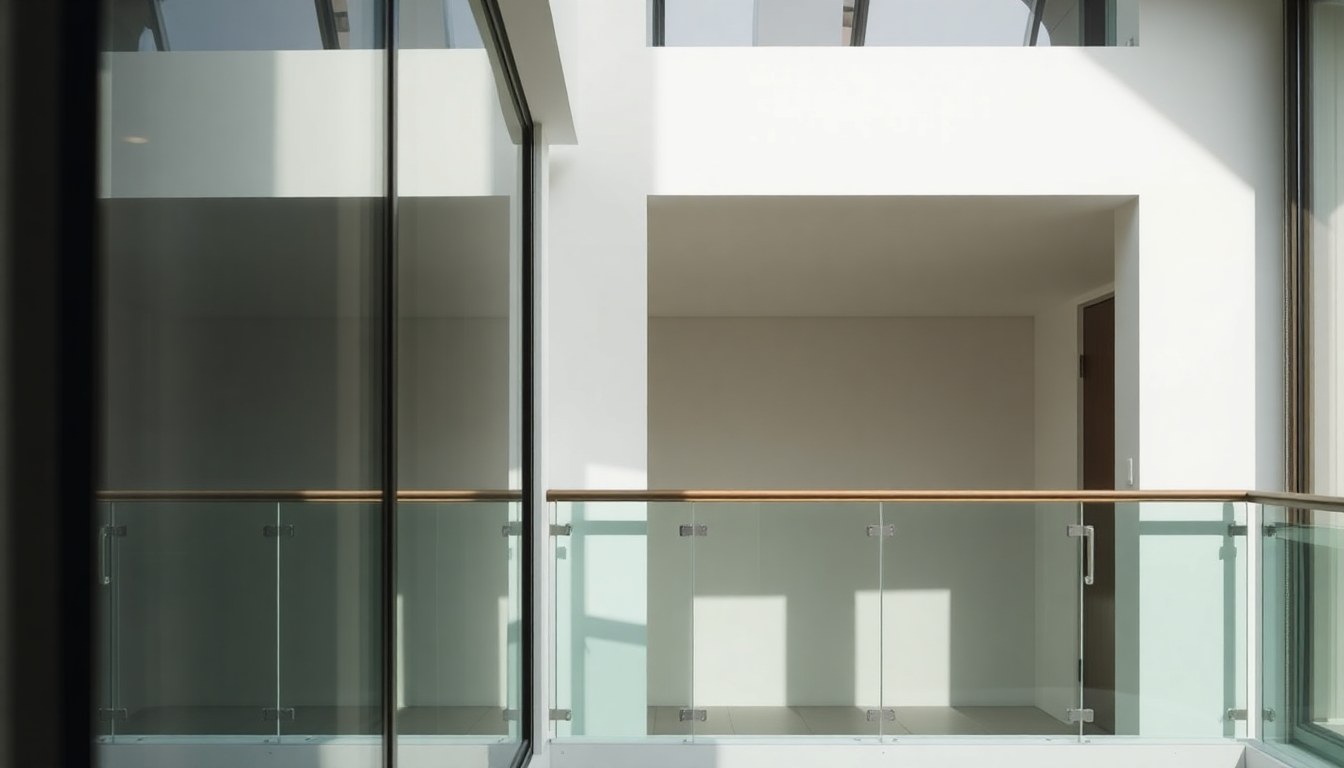
When selecting glass railings for your balcony, durability is non-negotiable. Both toughened and laminated glass offer safety benefits, but they behave very differently under stress—and your climate, building height, and foot traffic determine which one truly wins. This guide compares real-world performance, failure modes, and long-term costs so you can choose the right glass for your home.
Understanding Toughened and Laminated Glass
Toughened glass (also called tempered glass) is heated to around 650°C and then rapidly cooled, creating internal compressive stress. This process makes it roughly 4–5 times stronger than ordinary annealed glass and causes it to shatter into small, relatively harmless granules when broken. It's lightweight, crystal-clear, and affordable—typically ₹800–₹1,500 per square foot in India.
Laminated glass consists of two or more glass panes bonded together with a polyvinyl butyral (PVB) or ethylene vinyl acetate (EVA) interlayer. When broken, the glass cracks but stays attached to the interlayer, preventing shards from scattering. High-performance laminated glass costs more (₹1,500–₹3,500 per square foot) but offers superior impact resistance and sound dampening.
Impact Resistance: How They React to Blows
Toughened glass excels at resisting sudden, concentrated impacts—a ball, a falling object, or accidental bumps. Its compressive surface layer absorbs energy efficiently, and it rarely fails from a single moderate blow. However, once the critical stress threshold is exceeded, it fails catastrophically and completely, creating a shower of small cubes across the balcony.
Laminated glass absorbs impact energy differently. The interlayer acts like a shock absorber, distributing force across a wider area. Even after the outer pane cracks, the inner pane and interlayer hold the structure intact. This makes laminated glass superior for high-traffic balconies, homes with children or pets, or buildings in areas prone to severe weather or vandalism.
Real-World Impact Scenarios
- Child or pet collision: Toughened glass withstands the impact but shatters completely if the force is sufficient. Laminated glass cracks but remains in place, preventing falls.
- Flying debris (storms, hail): Both resist initial impact, but laminated glass is more likely to survive without complete failure.
- Intentional strikes: Laminated glass requires multiple strikes to breach; toughened glass fails on one sufficient blow.
Wind Load Capacity and Structural Performance
Wind load is critical for balcony railings, especially in coastal cities like Mumbai, Bangalore, and Goa where monsoons and cyclones create sustained pressure. Building codes in India typically require railings to withstand 1.5 kN/m² (kiloNewtons per square meter) of lateral wind force, with higher requirements in cyclone-prone zones.
Toughened glass railings are structurally rigid and transfer wind loads directly to the frame. A 10 mm toughened glass panel can safely handle standard wind loads, but under extreme pressure (cyclones, 150+ km/h winds), the entire pane may fail suddenly with no warning. The frame must be exceptionally strong to compensate.
Laminated glass railings are more forgiving under sustained wind stress. The interlayer provides slight flexibility, allowing the panel to flex slightly rather than snap. Even if the outer pane cracks under extreme wind, the inner pane and interlayer continue to provide a barrier, maintaining safety and structural integrity. This makes laminated glass the preferred choice for coastal or high-altitude properties.
Wind Performance by Location
- Inland, low-wind zones (Delhi, Lucknow): Both perform equally; toughened glass is sufficient and cost-effective.
- Coastal cities (Mumbai, Chennai, Kolkata): Laminated glass is recommended due to salt spray and cyclone risk.
- High-altitude or exposed locations (Shimla, Manali): Laminated glass handles sustained wind better.
Coastal Salt Spray and Environmental Durability
In coastal regions, the real enemy isn't the glass itself—it's corrosion of the aluminum or steel frame and the sealants that hold the glass. However, the glass type influences overall system longevity. Toughened glass is chemically inert and doesn't corrode, but its frame and seals degrade faster under salt spray. Laminated glass, paired with quality frames, often outlasts toughened glass systems in coastal environments because the interlayer provides additional moisture resistance.
Salt spray testing (ASTM B117 standard) shows that both glass types remain optically clear and structurally sound for years. However, the frame's aluminum or stainless steel quality matters far more. Powder-coated aluminum frames last 5–7 years in coastal areas; stainless steel or hot-dip galvanized frames last 10–15+ years. Silicone or polyurethane sealants degrade faster than structural glazing adhesives, typically requiring resealing every 3–5 years in salt-spray zones.
For coastal balconies, the glass choice should be paired with marine-grade stainless steel frames and high-performance structural sealants. Laminated glass adds an extra safety margin because if the frame fails, the interlayer still holds the pane in place temporarily, buying time for repairs.
Failure Modes: What Happens When Glass Breaks
Toughened Glass Failure
Toughened glass fails in one of two ways: impact failure (sudden blow exceeds the tensile strength) or edge-initiated failure (tiny chips on the edge propagate under stress). Once failure begins, it's instantaneous and total—the entire pane disintegrates into thousands of small cubes in seconds. While these cubes are less dangerous than sharp shards, complete loss of the barrier is a serious safety issue. A child or pet could fall through the opening, or an intruder could gain access.
Laminated Glass Failure
Laminated glass fails gradually. The outer pane cracks (often in a spider-web pattern), but the interlayer holds the pieces together. The inner pane may remain intact for months or years, depending on the interlayer quality and environmental stress. This gives occupants time to arrange repairs and maintains the safety barrier throughout. Even if both panes crack, the interlayer prevents collapse, unlike toughened glass.
The trade-off: laminated glass is heavier (15–20% more than toughened) and requires stronger frames. Installation is also more complex, and the interlayer can delaminate if exposed to prolonged UV radiation without protective coatings (though modern laminates resist this well).
Cost-Benefit Analysis for Indian Homeowners
The upfront cost of toughened glass railings is lower—typically ₹15,000–₹25,000 per linear meter for a 1.1 m high balcony with standard 10 mm glass. Laminated glass railings cost ₹25,000–₹45,000 per linear meter for equivalent dimensions, a 50–80% premium.
However, lifecycle costs tell a different story. Toughened glass requires frame replacement or major repairs every 7–10 years in coastal areas; laminated glass systems often last 15–20 years. If your balcony is exposed to high wind, salt spray, or heavy use, laminated glass pays for itself in avoided replacement costs and reduced maintenance.
For inland, low-wind residential balconies with light use, toughened glass is economical and safe. For coastal homes, buildings above 15 floors, or properties in cyclone-prone zones, laminated glass is a sound investment.
Frequently Asked Questions
Which glass is safer for homes with children?
Laminated glass is safer because it remains in the frame even after cracking, preventing falls and injury from sharp shards. Toughened glass shatters completely, creating a dangerous opening. If you have young children or pets, laminated glass is the better choice despite the higher cost.
Can toughened glass be repaired, or must it be fully replaced?
Toughened glass cannot be repaired. Once it fails, the entire pane must be replaced. Laminated glass can sometimes be repaired if only the outer pane is cracked and the interlayer is intact, but full replacement is usually recommended for safety.
Does laminated glass turn yellow or haze over time?
High-quality laminated glass with UV-protective interlayers resists yellowing for 20+ years. Budget laminates (older EVA interlayers) may yellow within 5–10 years. Specify PVB or structural-grade interlayers to avoid this issue.
Is toughened glass suitable for coastal balconies?
Toughened glass is chemically durable, but the supporting frame and sealants corrode faster in salt spray. You can use toughened glass in coastal areas if you pair it with stainless steel frames and high-performance sealants, but laminated glass with marine-grade hardware is still the preferred solution for longevity.
What thickness of glass should I choose for a balcony railing?
For balconies up to 15 floors, 10 mm toughened or laminated glass is standard. For heights above 15 floors or in high-wind zones, 12 mm laminated glass is recommended. Always consult local building codes and a structural engineer for your specific property.
Make the Right Choice for Your Balcony
Toughened glass offers affordability and clarity; laminated glass delivers safety, durability, and peace of mind. Your choice depends on your location, climate, building height, and budget. Explore trusted glass suppliers and installers in your city through the glassy.in directory to get quotes, certifications, and expert recommendations tailored to your home's unique needs.