
Glass Partitions
Glass Partition Acoustic Performance: STC Ratings and Soundproofing Guide for Chennai Offices
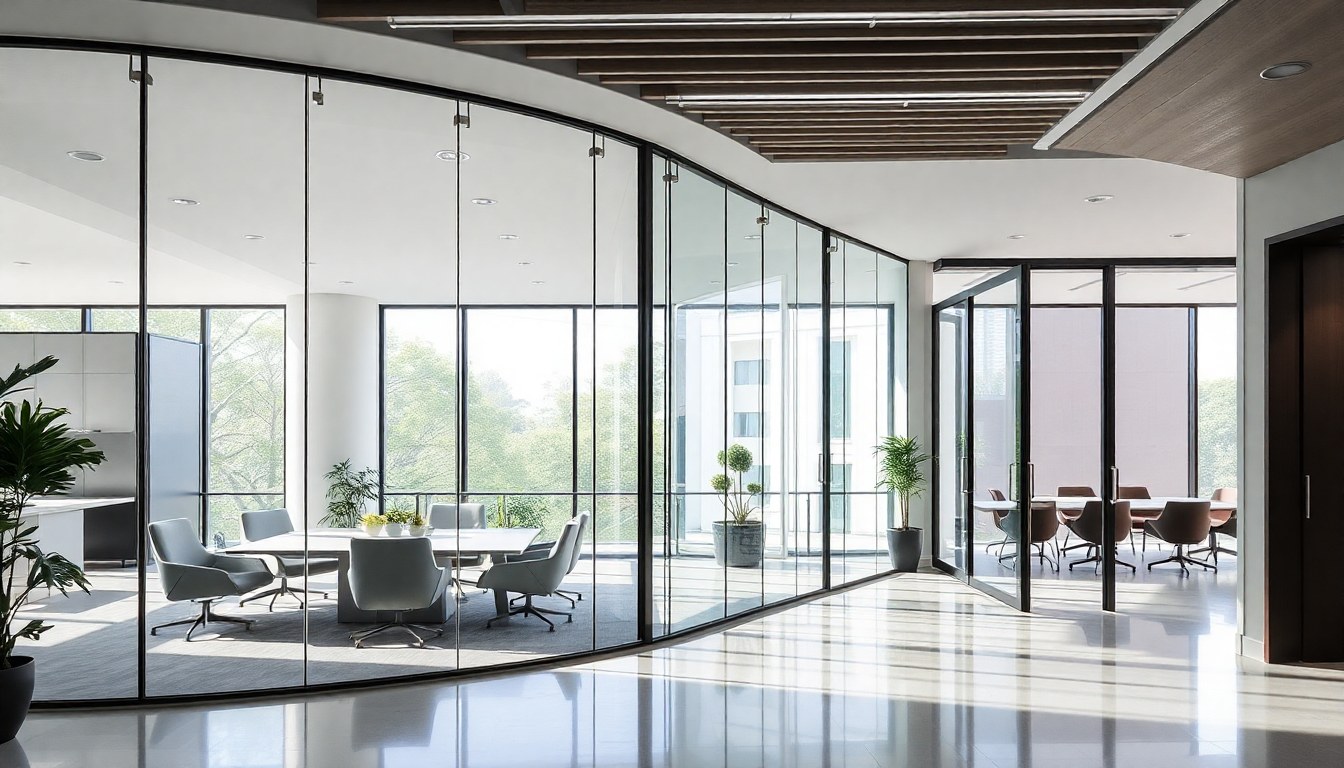
Selecting the right glass partition for your Chennai office involves more than aesthetics—acoustic performance is crucial for productivity and privacy. Sound Transmission Class (STC) ratings provide a standardized measure of how effectively glass partitions block sound, with higher ratings indicating better soundproofing. This comprehensive guide explains STC ratings, compares laminated versus double-glazed options, and covers installation techniques to maximize acoustic performance in Chennai's commercial spaces.
Understanding STC Ratings for Glass Partitions
Sound Transmission Class (STC) is a single-number rating system that measures how well building materials reduce airborne sound transmission across a range of frequencies from 125 Hz to 4000 Hz. The rating represents the decibel reduction a partition provides, with each 10-point increase in STC roughly corresponding to a perceived halving of loudness. For office environments, understanding these ratings helps you make informed decisions about privacy and noise control.
Standard single-pane glass typically achieves an STC rating of 26-28, which allows normal conversations to be clearly understood through the partition. For comparison, standard drywall construction achieves STC 33-35, while quality office partitions should target STC 35-45 for adequate speech privacy. Executive cabins, conference rooms, and sensitive areas like HR offices often require STC ratings of 45 or higher to ensure confidential discussions remain private.
In Chennai's commercial districts, where offices often face external noise from traffic on Mount Road, OMR, or busy areas near T Nagar, combining exterior soundproofing with interior acoustic partitions becomes essential. The ambient noise levels in these areas can reach 70-80 decibels during peak hours, making proper acoustic planning critical for workplace comfort.
Laminated Glass vs Double-Glazed Partitions: Acoustic Comparison
Laminated glass consists of two or more glass panes bonded together with an acoustic interlayer, typically polyvinyl butyral (PVB) or specialized acoustic PVB. This construction dampens sound vibrations as they pass through the multiple layers, with the interlayer acting as a sound-absorbing membrane. Standard laminated glass (6.38mm with PVB) achieves STC ratings of 34-36, while acoustic laminated glass with specialized interlayers can reach STC 38-42.
Double-glazed partitions feature two separate glass panes with an air gap between them, creating an insulating cavity that disrupts sound transmission. The effectiveness depends on three factors: the thickness of each pane, the width of the air gap, and whether the cavity contains inert gas. A typical double-glazed unit with 6mm panes and a 12mm air gap achieves STC 28-32, but asymmetric configurations (combining different pane thicknesses like 6mm and 10mm) can reach STC 38-42 by reducing resonance frequencies.
Performance Factors and Trade-offs
Laminated glass offers several advantages for Chennai offices: it provides consistent performance across frequencies, adds security through its shatter-resistant properties, and requires less overall thickness than comparable double-glazed units. A 10.76mm laminated glass partition (two 5mm panes with acoustic PVB) can match the acoustic performance of a 30mm double-glazed unit while occupying significantly less space—important for maximizing usable floor area.
Double-glazed partitions excel at blocking low-frequency noise such as traffic rumble and HVAC systems, making them ideal for offices near Chennai's busy arterial roads. However, they require robust framing systems to support the additional weight and thickness, and the sealed units are vulnerable to performance degradation if seals fail in Chennai's humid climate, potentially leading to condensation and reduced acoustic performance.
Frame Systems and Sealing Techniques
Even the highest-rated acoustic glass will underperform if the framing system and seals are inadequate. Sound travels through the path of least resistance, meaning gaps, poor seals, and rigid connections can create acoustic flanking paths that bypass the glass entirely. Professional installation with attention to sealing details is essential for achieving rated performance.
Aluminum framing systems dominate Chennai's commercial glass partition market due to their durability in humid conditions and resistance to corrosion. For acoustic applications, frames should incorporate thermal breaks or gaskets that also serve as acoustic barriers. Neoprene or EPDM rubber gaskets provide continuous compression seals around glass edges, preventing air gaps that would allow sound transmission. Quality systems use dual-seal configurations with both inner and outer gaskets for enhanced performance.
Critical Sealing Points
The perimeter seal where partitions meet floors, ceilings, and walls requires particular attention. Acoustic sealant should be applied continuously along these junctions, with no gaps or voids. In raised floor environments common in Chennai IT offices, the cavity beneath must be sealed with barriers extending from the partition to the structural floor below—otherwise, sound simply travels under the partition.
Door integration presents the greatest acoustic challenge in partition systems. Standard office doors typically rate STC 20-25, creating a weak point that undermines partition performance. Acoustic-rated doors with perimeter seals and automatic drop seals at the threshold are essential. Architects like Vogelkop Architects and CHENNEE Architects and Construction often specify coordinated door and partition systems to maintain consistent acoustic performance throughout office layouts.
Acoustic Testing Standards and Certification
STC ratings are determined through laboratory testing according to ASTM E90 (Standard Test Method for Laboratory Measurement of Airborne Sound Transmission Loss) and calculated using ASTM E413 (Classification for Rating Sound Insulation). These tests measure sound transmission across 16 standard frequencies, plotting a transmission loss curve that is then compared to standard STC contour curves to determine the rating.
It's important to understand that laboratory STC ratings represent ideal conditions with perfect installation and sealing. Field-installed partitions typically perform 5-10 STC points lower than laboratory ratings due to installation variations, flanking paths, and real-world conditions. Reputable manufacturers provide both laboratory and field test data, with the latter offering more realistic performance expectations.
In India, the National Building Code (NBC) provides guidelines for acoustic performance in different occupancy types, though specific STC requirements for office partitions are not mandated. International standards like LEED and WELL Building Standard recommend minimum STC 35 for standard office partitions and STC 45 for private offices and conference rooms. Chennai offices pursuing green building certifications should specify partitions meeting these benchmarks.
Optimizing Acoustic Performance in Chennai Office Environments
Climate considerations specific to Chennai affect glass partition performance and longevity. The city's high humidity (70-80% during monsoon months) and temperatures ranging from 25-40°C create challenging conditions for sealed double-glazed units. Desiccant failure in sealed units can lead to condensation between panes, which not only obscures visibility but also degrades acoustic performance by creating a moisture bridge for sound transmission.
For optimal results in Chennai offices, consider these evidence-based recommendations: specify laminated acoustic glass with specialized PVB interlayers for most applications, as it provides reliable performance without the humidity-related risks of double-glazing. For areas requiring maximum soundproofing, such as executive cabins or confidential meeting rooms, combine laminated glass with double-glazed construction for STC ratings exceeding 45.
Cost-Performance Considerations
Acoustic glass partitions command premium pricing compared to standard systems. In Chennai's current market, basic aluminum-framed single-pane partitions cost approximately ₹850-1,200 per square foot installed, while laminated acoustic systems range from ₹1,400-2,200 per square foot. High-performance double-glazed acoustic partitions with specialized frames can reach ₹2,500-3,500 per square foot, depending on specifications and project scale.
The investment in higher STC-rated partitions delivers measurable returns through improved productivity, reduced stress from noise exposure, and enhanced speech privacy for sensitive discussions. Studies consistently show that speech intelligibility drops significantly when background noise is reduced by 15-20 decibels, which corresponds to moving from STC 30 to STC 45-50 partitions. Interior designers like Viruksha Home Looms Hosur often incorporate acoustic planning early in the design process to balance budget constraints with performance requirements.
Frequently Asked Questions
What STC rating do I need for a typical Chennai office cabin?
For standard manager cabins and private offices, target an STC rating of 40-45. This provides adequate speech privacy, preventing normal conversations from being clearly understood outside the cabin while maintaining visual transparency. Conference rooms and executive cabins should aim for STC 45-50 to ensure confidential discussions remain private. Open-plan dividers can function adequately with STC 35-38 if full speech privacy is not required.
Does thicker glass always provide better soundproofing?
Not necessarily. While thickness contributes to acoustic performance, the construction method matters more. A 10.76mm laminated glass with acoustic PVB interlayer typically outperforms a 12mm single pane of monolithic glass. The laminated construction dampens vibrations more effectively than simply adding mass. For maximum performance, asymmetric double-glazed units with different pane thicknesses (like 8mm + 6mm) outperform symmetric configurations of the same total thickness by reducing resonance effects.
How can I verify the actual STC rating of installed partitions?
Request laboratory test reports from manufacturers showing ASTM E90/E413 test results for the specific glass and framing system being proposed. Reputable suppliers provide these reports from accredited testing laboratories. For critical installations, you can commission field testing according to ASTM E336, though this is expensive (₹80,000-1,50,000 per test location) and typically reserved for large projects or dispute resolution. Visual inspection of sealing quality and gasket compression provides a practical indicator of whether installed systems will approach rated performance.
Can acoustic performance be improved after partition installation?
Yes, but with limitations. Adding acoustic sealant to gaps around perimeters, replacing worn gaskets, and installing door seals can recover 3-5 STC points lost to poor installation. However, fundamental improvements require glass replacement—you cannot significantly upgrade a single-pane partition without replacing it with laminated or double-glazed units. The most cost-effective approach is specifying appropriate acoustic performance during initial installation rather than attempting upgrades later.
How does air conditioning affect glass partition acoustic performance?
HVAC systems can compromise partition acoustics through two mechanisms: ducts that cross partition lines create flanking paths for sound transmission, and return air grilles in partitions directly bypass the glass barrier. Properly designed systems extend ductwork through acoustic-rated penetrations with insulated boots, and avoid locating return grilles in acoustic partitions. The background noise from HVAC systems (typically 40-45 decibels in offices) can actually provide beneficial sound masking, reducing speech intelligibility across partitions even with moderate STC ratings.
Choosing the right acoustic glass partition system requires balancing performance requirements, budget constraints, and Chennai's specific environmental conditions. Whether you're planning a new office fit-out or upgrading existing spaces, consult with experienced glass partition specialists listed in the glassy.in directory to ensure your project achieves both visual appeal and acoustic comfort for productive workspaces.