
Glass Facades
Glass Facade Thermal Expansion: Why Buildings Crack in Summer Heat
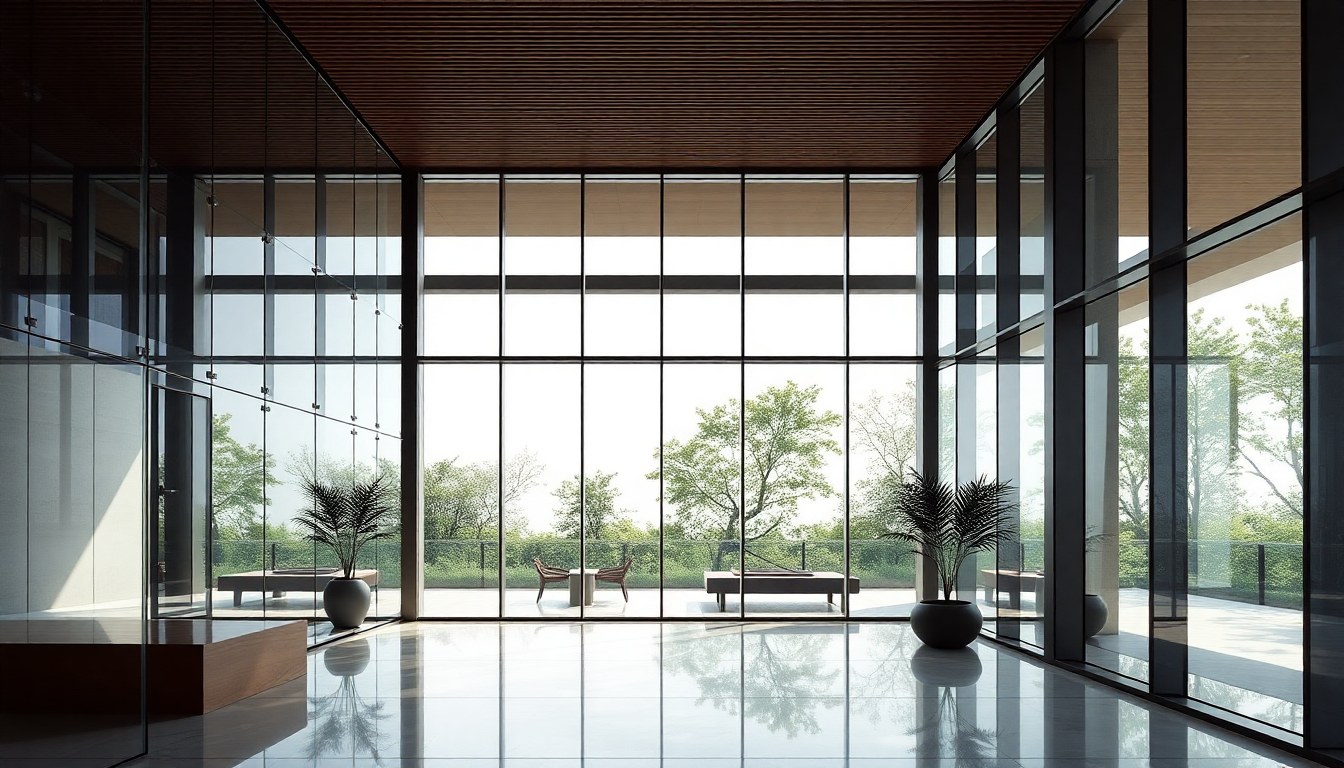
When summer temperatures soar across India's cities, glass-clad office towers and commercial buildings face a silent but serious threat: thermal expansion that can crack facades, misalign joints, and compromise structural integrity. Glass expands and contracts with temperature changes, and without proper joint design and movement allowances, even premium curtain wall systems fail. Understanding the physics behind thermal stress is essential for architects, developers, and facility managers who want to protect their investments.
The Physics of Thermal Expansion in Glass
Glass, like all materials, expands when heated and contracts when cooled. This movement is governed by the coefficient of thermal expansion (CTE), a material property that quantifies how much a substance changes size per unit temperature change. For standard soda-lime glass used in most building facades, the CTE is approximately 9 × 10⁻⁶ per °C. While this sounds infinitesimal, the cumulative effect over large facade areas is substantial.
Consider a glass panel 3 meters wide installed on a building in Bangalore's IT parks, where summer temperatures regularly reach 35–40°C. If the glass was installed at 25°C and the temperature rises to 40°C, the 15°C increase causes the panel to expand by roughly 4 millimeters. Multiply this across multiple panels, mullions, and structural members, and the total movement can exceed 10–15 centimeters in extreme cases. Without accommodation for this movement, stress accumulates at joints, sealants fail, and cracks propagate through the glass or surrounding structure.
Why Summer Heat Amplifies the Problem
India's intense summer sun doesn't just raise ambient air temperature; it heats glass surfaces directly through solar radiation. Dark-tinted or reflective glass can reach surface temperatures 20–30°C higher than the surrounding air, intensifying expansion. This uneven heating also creates differential stress—the outer surface expands faster than the inner surface, generating internal tensile stress that can exceed the glass's strength limits.
Curtain Wall Systems and Thermal Stress Distribution
Modern curtain walls are engineered systems designed to accommodate thermal movement, but only when properly specified and installed. The typical curtain wall comprises glass panes, aluminum or steel mullions, sealants, gaskets, and anchoring hardware—each component with its own CTE and stiffness characteristics.
The aluminum mullions that support glass panels have a CTE of about 23 × 10⁻⁶ per °C, more than twice that of glass. This mismatch in expansion rates creates complex stress patterns. When the mullion expands faster than the glass, it pulls the glass at the edges. When the glass tries to expand outward, it pushes against the sealant and gasket system. If these components are not designed with sufficient flexibility and clearance, failure is inevitable.
Joint Design and Movement Allowances
Proper joint design is the cornerstone of thermal stress management. Industry standards, including those outlined in ASTM E2112 (Standard Practice for Installation of Exterior Windows, Doors, and Skylights), mandate that joints include expansion joints, control joints, and movement joints sized to accommodate expected thermal movement.
- Expansion joints are typically 12–25 mm wide and filled with compressible foam or sealant that allows movement in all directions.
- Movement joints in the curtain wall frame structure allow vertical and horizontal displacement of mullions and anchors.
- Sealant joints must accommodate at least ±25% movement; premium silicone sealants can handle ±50% movement, making them superior to acrylic alternatives for high-thermal-stress applications.
Many buildings in India experience premature facade failure because architects and contractors underestimate thermal movement or specify inadequate joint widths. A joint designed for ±5 mm movement cannot safely accommodate ±15 mm of actual thermal expansion, leading to sealant extrusion, adhesion failure, and water infiltration.
Real-World Lessons from India's IT Parks
Bangalore's IT parks, built over the past two decades, offer instructive case studies in thermal facade performance. Several high-profile office towers experienced facade cracking and sealant failure within 3–5 years of completion, prompting detailed investigations by facade engineers and material scientists.
One notable project in Whitefield, completed in 2015, developed visible cracks in its glass curtain wall during the first summer. Post-failure analysis revealed that the curtain wall was specified with 8 mm expansion joints and standard acrylic sealants—insufficient for the ±12 mm thermal movement calculated for the building's orientation and glass type. The remediation involved removing and reinstalling sections of the facade with 20 mm expansion joints and silicone sealants, at a cost exceeding ₹2.5 crores.
Another case in Koramangala involved a mixed-use tower where differential heating of north and south facades created asymmetric stress. The south-facing facade, receiving direct afternoon sun, expanded more than the north-facing side, causing the building's frame to rack slightly and misalign window units. This was resolved through structural analysis and selective joint reinforcement, but the incident underscored the importance of three-dimensional thermal modeling during design.
These examples demonstrate that thermal facade failure is not a rare edge case but a predictable consequence of inadequate design. Developers and architects in India increasingly partner with specialized facade engineers to perform thermal stress analysis before construction, using finite-element modeling (FEM) to predict movement and validate joint design.
Material Selection and Thermal Performance
The choice of glass type significantly influences thermal behavior. Clear float glass, tinted glass, and laminated glass all have similar CTEs, but their thermal properties differ in how quickly they heat and cool.
- Clear glass transmits solar radiation directly, heating the interior and accelerating expansion.
- Tinted glass (bronze, gray, or green) absorbs more solar energy, reaching higher surface temperatures and expanding more aggressively.
- Low-emissivity (Low-E) coated glass reflects solar heat, reducing surface temperature and thermal stress—a smart choice for India's climate.
- Laminated glass provides safety and some thermal damping, as the interlayer can absorb minor stress variations.
Sealant selection is equally critical. Silicone sealants remain the gold standard for high-movement applications, offering superior elasticity and UV resistance compared to urethane or acrylic alternatives. In Bangalore's intense sun, where sealants face constant UV exposure and temperature cycling, silicone's durability translates to longer facade service life and lower maintenance costs.
Architects working with firms like Creative Designs Architect and Engineers often specify premium materials upfront, recognizing that thermal facade failure is far more expensive to remediate than material cost savings suggest.
Design Strategies to Mitigate Thermal Stress
Modern facade design incorporates several proven strategies to manage thermal expansion and minimize cracking risk:
- Modular panel sizing: Smaller glass panels (under 3 m²) experience less absolute expansion than large monolithic panels, reducing peak stress.
- Floating anchors: Anchoring systems that allow mullions to move vertically and horizontally decouple thermal stress in the frame from stress in the glass.
- Thermal breaks: Insulating material inserted between the exterior and interior aluminum members reduces thermal bridging and moderates the mullion's temperature rise.
- Pressure equalization: Drainage cavities behind the curtain wall allow air pressure to equalize, reducing stress on sealants and gaskets.
- Orientation-aware design: Varying joint widths, sealant types, and panel sizes on north, south, east, and west facades accounts for differential solar exposure.
Computational tools have revolutionized facade design. Engineers now use FEM to simulate hourly temperature cycles over a full year, predicting stress distributions and validating joint design before a single panel is installed. This proactive approach has become standard practice among leading Indian facade contractors and design firms like VKK Construction, which specializes in complex curtain wall systems.
Maintenance and Inspection Protocols
Even well-designed facades require ongoing inspection and maintenance to catch early signs of thermal stress and prevent catastrophic failure. Building managers should establish a routine inspection schedule, particularly before and after summer months when thermal stress peaks.
- Visual inspection: Look for sealant cracks, gaps between glass and frame, or visible movement in mullions.
- Water infiltration testing: Thermal stress often compromises sealant integrity, leading to water leaks. Pressure testing during monsoon season or using spray testing can identify problem areas.
- Thermal imaging: Infrared cameras reveal temperature variations across the facade, helping identify areas of high thermal stress or poor insulation.
- Sealant condition assessment: Sealants degrade over time, losing elasticity. Periodic replacement (typically every 10–15 years) is a cost-effective preventive measure.
Many building owners in India neglect facade maintenance, viewing it as a cosmetic concern. However, early intervention on sealant failure or small cracks costs a fraction of emergency remediation, which can disrupt occupancy and pose safety risks.
Frequently Asked Questions
How much does glass actually expand in summer heat?
A 3-meter glass panel can expand by 3–5 millimeters for every 10°C temperature increase. In India's summer, where temperature swings from 25°C to 40°C are common, a single panel expands by roughly 4.5–7.5 millimeters. Across an entire facade with dozens of panels, this cumulative expansion can exceed 10–15 centimeters, creating significant stress at joints and connections.
Why do some buildings crack while others don't?
Thermal cracking depends on joint design, sealant quality, panel size, and glass type. Buildings with undersized expansion joints, low-quality sealants, or large monolithic glass panels are far more prone to cracking. Proper design, specification of premium materials, and rigorous installation quality control prevent thermal failure. Many older Indian buildings were designed without modern thermal analysis, making them vulnerable to summer cracking.
Can thermal facade damage be repaired?
Yes, but repair costs are substantial. Minor sealant failures can be re-sealed for ₹500–2,000 per linear meter. However, if glass cracks or the structural frame is damaged, entire panel sections may require replacement, costing ₹5,000–15,000 per panel or more. Prevention through proper design is far more economical than remediation.
What's the best sealant for Indian summer conditions?
Silicone sealants are superior to acrylic or urethane for high-thermal-stress applications in India's climate. They offer ±50% movement capability, excellent UV resistance, and longevity of 15–20 years. Premium brands like Dow Corning or Sika cost 20–30% more than budget alternatives but deliver significantly better performance and lower long-term maintenance costs.
How often should facade joints be inspected?
Annual inspections are recommended, with heightened scrutiny before and after summer months. Water infiltration testing should be performed every 5 years or after major weather events. Sealants should be replaced every 10–15 years, depending on climate exposure and material quality. Proactive maintenance extends facade life and prevents emergency repairs.
Protect Your Building from Thermal Stress
Thermal expansion of glass facades is a well-understood phenomenon with proven design solutions. Whether you're specifying a new curtain wall system or maintaining an existing one, partnering with experienced facade engineers and contractors ensures your building withstands India's intense summer heat. Explore the glassy.in directory to connect with certified glass facade specialists, architects, and contractors who understand thermal stress management and can deliver durable, long-lasting building envelopes.