
Glass Guides
Glass Canopy Wind Load Calculations: Engineering Guide for Noida Commercial Entrances
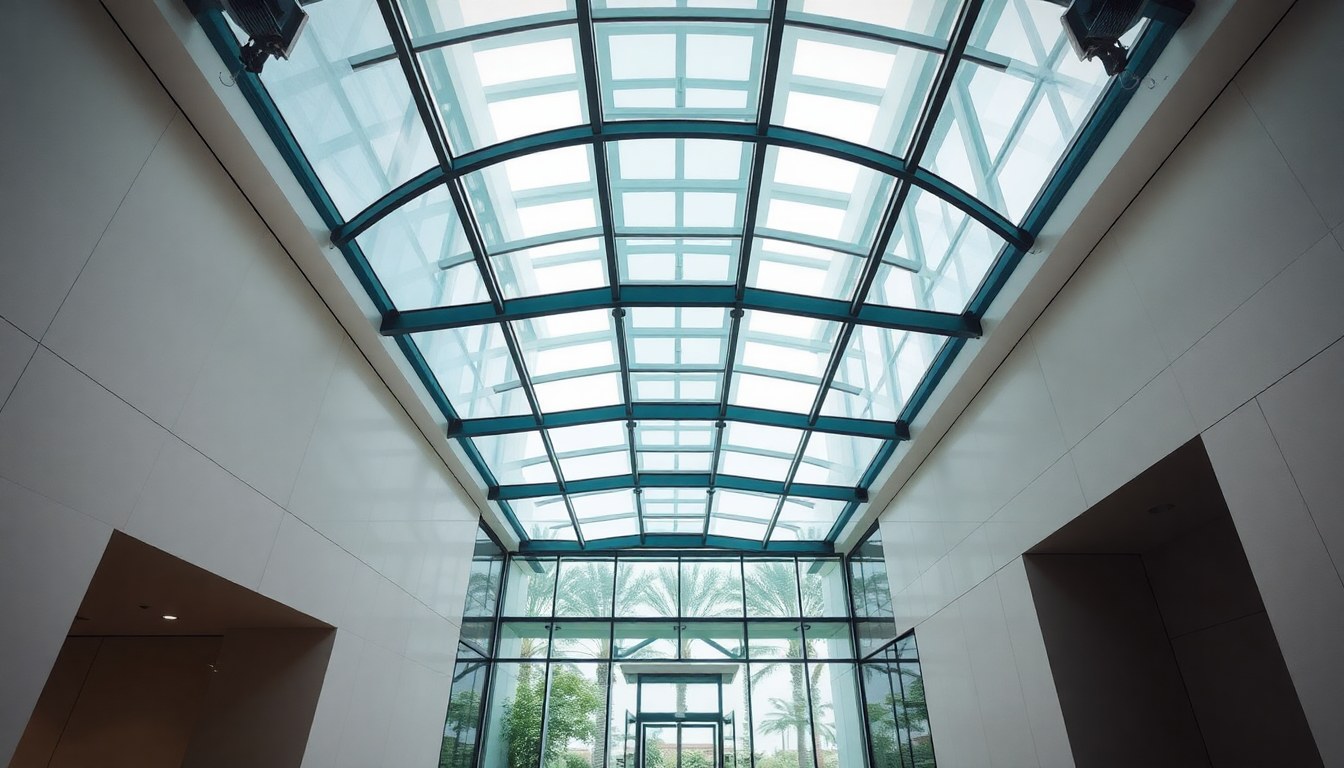
Glass canopies at commercial building entrances provide architectural elegance while protecting visitors from harsh weather, but their structural integrity depends entirely on accurate wind load calculations. In Noida's climate zone, where wind speeds can vary significantly during monsoons and dust storms, proper engineering analysis is not just recommended—it's mandated by Indian building codes to prevent catastrophic failures. This comprehensive guide walks you through the essential calculations, BIS standards, and safety considerations for designing wind-resistant glass canopy systems.
Understanding Wind Load Fundamentals for Glass Canopies
Wind load represents the force exerted by moving air on a structure's surface, and glass canopies are particularly vulnerable due to their exposed position and minimal mass. Unlike traditional roofing systems, canopies project outward from buildings, creating unique aerodynamic challenges where wind can apply pressure from above, below, and the sides simultaneously. The magnitude of these forces depends on wind velocity, canopy geometry, surface area, and surrounding terrain characteristics.
In India, wind load calculations must comply with IS 875 (Part 3): Code of Practice for Design Loads for Buildings and Structures - Wind Loads. This standard provides the framework for determining basic wind speed, terrain categories, and pressure coefficients specific to your location. Noida falls under wind zone classification that requires careful consideration of local meteorological data and the urban landscape's effect on wind patterns.
The basic wind pressure formula is: p = 0.6 V² (where p is pressure in N/m² and V is wind speed in m/s). However, this simplified equation must be modified by multiple factors including height coefficient, terrain roughness, topography, importance factor, and shape coefficients to arrive at the actual design wind pressure your canopy must withstand.
BIS Standards and Regulatory Requirements for Noida
Commercial glass canopy installations in Noida must adhere to several Bureau of Indian Standards codes beyond IS 875 Part 3. IS 875 Part 1 covers dead loads (the canopy's self-weight), while Part 2 addresses imposed loads such as maintenance personnel access. Additionally, IS 2553 provides specific guidelines for glass in building construction, including safety glass requirements for overhead applications.
For Noida's geographical location in the National Capital Region, the basic wind speed typically ranges from 39 to 47 m/s depending on the specific zone classification. Urban areas with substantial development require terrain category adjustments that account for building density and height. The risk coefficient must also factor in the structure's design life and the consequences of failure—commercial entrances serving high foot traffic demand higher safety margins.
Safety Factors and Load Combinations
Indian standards mandate partial safety factors that account for material variability and calculation uncertainties. For glass canopies, load combinations must consider dead load, live load, and wind load acting simultaneously. The most critical combination often involves maximum wind uplift combined with minimum dead load, which can literally lift an inadequately anchored canopy off its supports.
The limit state method requires checking both ultimate limit states (structural failure) and serviceability limit states (excessive deflection). Glass deflection limits are particularly stringent—typically L/60 to L/125 depending on glass type—because excessive bending creates stress concentrations that can initiate cracks in tempered or laminated glass panels.
Calculating Design Wind Pressure Step-by-Step
Begin by determining the basic wind speed (Vb) for Noida from IS 875 Part 3 wind zone maps. Apply the risk coefficient (k1) based on the structure's design life and acceptable failure probability. For commercial buildings, a 50-year return period is standard, yielding k1 = 1.0. Next, calculate the terrain and height factor (k2) which accounts for the canopy's elevation above ground and surrounding roughness.
The topography factor (k3) typically equals 1.0 for flat terrain but increases for canopies on elevated sites or near terrain discontinuities. Multiply these factors to obtain the design wind speed: Vz = Vb × k1 × k2 × k3. The design wind pressure then becomes: pz = 0.6 × Vz². For a canopy at 4 meters height in Noida's urban environment with Vb = 44 m/s, this might yield approximately 1.2 to 1.5 kN/m² base pressure.
Pressure Coefficients for Canopy Geometry
The external pressure coefficient (Cpe) varies dramatically across the canopy surface depending on wind direction and canopy dimensions. For rectangular canopies, the leading edge experiences maximum positive pressure while the trailing edge and underside often face suction (negative pressure). IS 875 Part 3 provides coefficient tables, but complex geometries may require wind tunnel testing or computational fluid dynamics analysis.
Internal pressure coefficients (Cpi) apply when the canopy encloses a space or connects to building openings. Fully open canopies experience pressure on both surfaces simultaneously. The net pressure on each element equals: p = (Cpe - Cpi) × pz. Conservative design often assumes the worst-case coefficient combination, which for canopies typically means maximum uplift conditions.
Structural Design Considerations for Glass and Support Systems
Once wind pressures are established, structural engineers must translate these loads into glass thickness requirements and support system specifications. Laminated or tempered safety glass is mandatory for overhead applications per IS 2553. Annealed glass lacks the strength and safe failure characteristics required for canopies where breakage could injure people below.
Glass thickness calculation involves determining maximum bending stress under design loads and comparing against the material's characteristic strength with appropriate safety factors. A typical 2-meter by 1.5-meter canopy panel might require 12mm to 19mm laminated glass depending on support conditions. Point-supported systems concentrate stresses near fixings, demanding thicker glass or additional laminate layers compared to continuously supported edges.
Support structures—whether steel frames, cable systems, or point fixings—must transfer wind loads to the main building without excessive deflection. Connection details are critical failure points; anchor bolts must penetrate deep enough into concrete or masonry to resist both tension (uplift) and shear forces. Professional firms like Space Grid Architects and Aescon Builders & Architects specialize in integrating structural analysis with architectural vision for such installations.
Dynamic Effects and Fatigue Considerations
Wind loads aren't static—gusts create fluctuating pressures that can induce vibration and fatigue in both glass and support members. The gust factor accounts for short-duration peak pressures exceeding mean wind speed values. Canopies with natural frequencies below 1 Hz may experience resonance amplification, requiring dynamic analysis beyond static load calculations.
Repeated load cycles over the structure's lifetime can propagate micro-cracks in glass or loosen mechanical connections. Quality installation with proper torque specifications, isolation gaskets, and regular maintenance inspections mitigate fatigue risks. Stainless steel hardware resists corrosion that could weaken connections over decades of exposure.
Climate-Specific Factors for Noida Installations
Noida experiences distinct seasonal wind patterns that influence design decisions. Pre-monsoon dust storms in May-June can generate sudden high-velocity winds exceeding 60 km/h with airborne debris that scratches or impacts glass surfaces. Monsoon winds from July-September bring sustained moderate speeds with heavy rain, testing drainage systems and water infiltration resistance.
Temperature variations between summer peaks above 45°C and winter lows near 5°C create thermal expansion and contraction in glass and metal components. Structural silicone sealants and setting blocks must accommodate this movement without transmitting excessive stress to glass edges. UV exposure degrades some sealant types, making material selection crucial for long-term performance.
The urban heat island effect in Noida's developed commercial zones can create localized wind patterns different from regional meteorological data. Tall surrounding buildings may channel winds, creating acceleration zones where actual pressures exceed code minimum values. Site-specific assessment considers these microclimate effects for critical installations.
Documentation and Professional Certification Requirements
Municipal authorities in Noida require structural design calculations stamped by a licensed structural engineer as part of building permit applications. Documentation must include wind load analysis, material specifications, fabrication drawings, and installation procedures. Non-compliance can result in permit rejection or mandatory retrofits after inspection failures.
Professional engineers typically provide a structural design report detailing all assumptions, calculations, and safety verifications. This document serves as the legal record demonstrating code compliance and becomes essential if structural issues arise later. Contractors must follow approved drawings exactly—field modifications require engineer approval and revised calculations.
Third-party testing certificates for glass quality, hardware load ratings, and sealant properties form part of the compliance package. IS 2553 mandates specific testing protocols for safety glass, including impact resistance and fragmentation characteristics. Reputable suppliers provide these certificates; unverified materials jeopardize both safety and regulatory approval.
Frequently Asked Questions
What is the minimum glass thickness required for commercial canopies in Noida?
There is no universal minimum thickness as requirements depend on panel dimensions, support spacing, and calculated wind loads. However, most commercial canopies use laminated safety glass ranging from 10mm to 19mm total thickness. Smaller panels with closely spaced supports might use 10mm (5+5mm laminated), while larger spans often require 13.5mm (6+6mm) or thicker. A structural engineer must calculate the specific requirement based on your canopy's geometry and exposure conditions per IS 2553 and IS 875 standards.
How often should wind load calculations be updated for existing canopies?
Original design calculations remain valid unless structural modifications occur, building codes are revised with stricter requirements, or surrounding development significantly alters wind exposure. However, physical inspections should occur annually to check for glass damage, sealant deterioration, loose connections, or corrosion that could compromise the structure's ability to resist design loads. After severe weather events, immediate inspection is prudent even without visible damage.
Can I install a glass canopy without engineering calculations for small residential projects?
While enforcement may be less rigorous for small residential installations, proper engineering is always recommended regardless of project size. Wind forces don't discriminate by building type—an undersized canopy can fail catastrophically whether over a shop entrance or home porch. The liability risks and potential for injury make professional design a worthwhile investment. Many structural failures occur in "simple" structures where owners skipped proper analysis to save costs.
What are the typical costs for wind load analysis and structural design in Noida?
Professional structural engineering fees for canopy design typically range from ₹15,000 to ₹50,000 depending on project complexity, canopy size, and whether wind tunnel testing is required. Simple single-panel canopies with standard geometry fall at the lower end, while complex multi-panel systems with irregular shapes or unusual support conditions cost more. This represents roughly 3-8% of total installation costs but is essential for safety and regulatory compliance.
Do glass canopies require special maintenance to maintain wind resistance?
Yes, regular maintenance preserves structural integrity. Annual inspections should check sealant condition, hardware tightness, glass integrity, and drainage function. Sealants typically require replacement every 10-15 years as UV exposure and weathering reduce adhesion. Fastener torque should be verified periodically as thermal cycling can cause loosening. Keeping drainage channels clear prevents water accumulation that adds unintended dead load and accelerates corrosion of metal components.
Designing wind-resistant glass canopies requires specialized expertise combining structural engineering knowledge with understanding of glass material properties and local climate conditions. For your commercial entrance project in Noida, connect with qualified glass contractors and structural engineers through the glassy.in directory to ensure your canopy meets all safety standards while delivering the architectural impact your building deserves.