
Glass Guides
Etched Glass vs Sandblasted Glass: Texture and Privacy Comparison for Visakhapatnam Homes
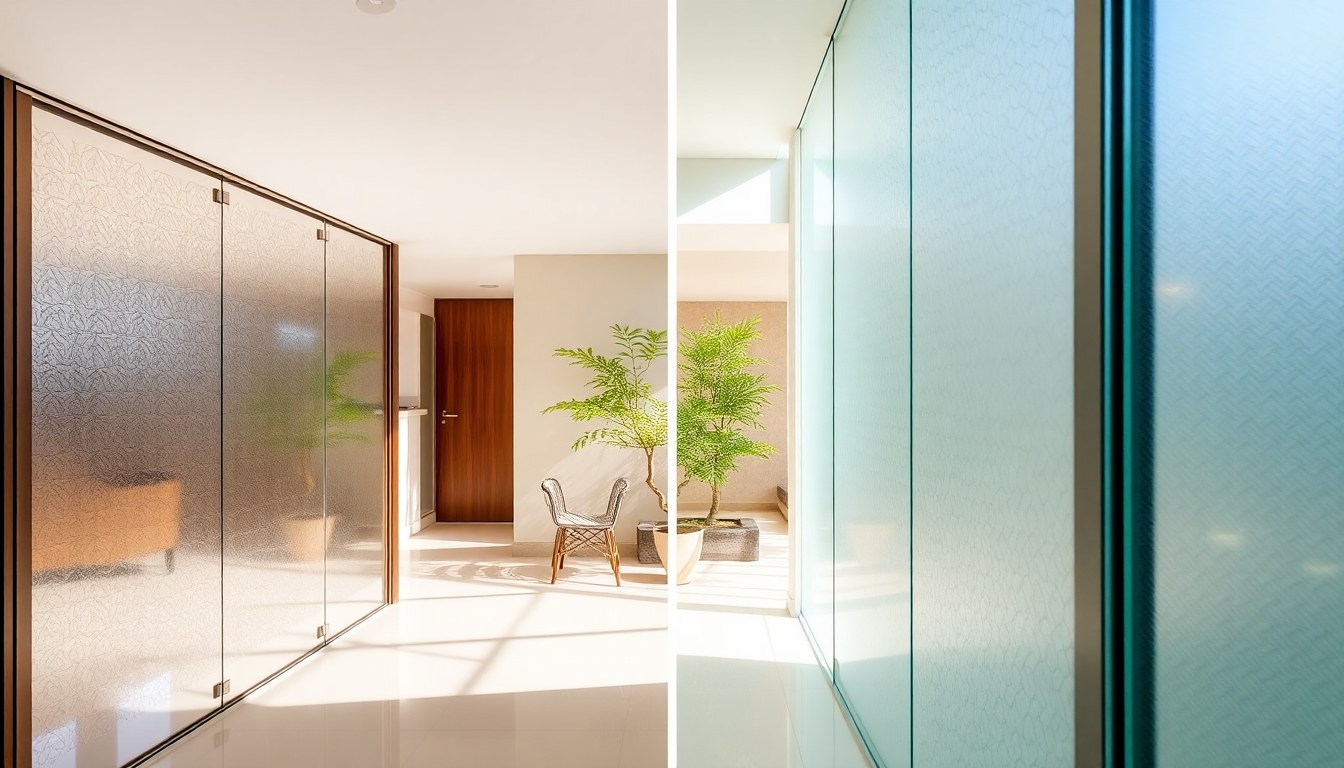
When selecting privacy glass for your Visakhapatnam home, the choice between etched and sandblasted glass can significantly impact aesthetics, maintenance, and longevity in coastal conditions. Both finishes create translucent surfaces that diffuse light while obscuring views, but they differ fundamentally in manufacturing process, surface texture, durability against salt air, and cost. This comprehensive guide breaks down every distinction to help you make an informed decision for your bathroom partitions, office dividers, entrance doors, and balcony panels.
Understanding the Manufacturing Process
Acid-etched glass is created through a chemical process where hydrofluoric acid is applied to clear glass, either by dipping the entire sheet or by applying the acid through stencils for patterned designs. The acid corrodes the glass surface, creating a smooth, satin-like finish that feels soft to the touch. This controlled chemical reaction produces a uniform surface with minimal texture variation across the entire panel.
Sandblasted glass, by contrast, is produced mechanically by propelling fine abrasive particles—typically aluminum oxide or silicon carbide—at high velocity against the glass surface. The impact of these particles physically erodes the glass, creating a rougher, more deeply textured finish. The depth and intensity of sandblasting can be adjusted by controlling pressure, distance, and duration, allowing for varied effects from light frosting to deeply carved patterns.
For Visakhapatnam manufacturers and fabricators, sandblasting equipment represents a higher initial investment but offers greater design flexibility. Acid-etching requires proper ventilation systems and chemical handling protocols, making it more suitable for established glass processing facilities with environmental compliance measures in place.
Surface Texture and Touch Feel
The most immediately noticeable difference between these finishes is how they feel. Acid-etched glass has a silky, almost velvety texture that is smooth to the touch. Running your hand across etched glass feels similar to touching fine fabric—there is texture, but no roughness. This smoothness makes etched glass particularly popular for interior applications where people frequently touch the surface, such as shower enclosures and partition walls.
Sandblasted glass presents a noticeably coarser surface with a gritty, matte feel. The texture is more pronounced and tactile, with microscopic peaks and valleys created by the abrasive impact. Depending on the blasting intensity, the surface can range from lightly frosted to deeply pitted. This rougher texture has practical implications for cleaning and maintenance, especially in Visakhapatnam's humid coastal environment where dust and salt particles can settle into the surface irregularities.
Implications for Design and Application
For high-traffic areas in commercial spaces or homes with children, the smoother etched surface is generally more practical. Sandblasted glass works beautifully for decorative applications where the surface won't be frequently touched, such as fixed windows, decorative panels, and architectural features. Many Visakhapatnam designers combine both finishes in a single project—using etched glass for functional areas and sandblasted glass for purely aesthetic elements.
Privacy Levels and Light Diffusion
Both finishes provide excellent privacy by scattering light and obscuring clear views, but they achieve this effect differently. Acid-etched glass creates a more uniform translucency with consistent light diffusion across the entire surface. The privacy level is predictable and even, making it ideal for bathroom windows and office partitions where consistent obscuration is essential. Etched glass typically allows slightly more light transmission than sandblasted glass of equivalent thickness.
Sandblasted glass produces a slightly more opaque appearance with denser light scattering. The deeper surface disruption creates more pronounced light diffusion, which can result in marginally better privacy at the cost of slightly reduced brightness. In practical terms, the difference is subtle—both provide adequate privacy for residential and commercial applications. The choice often comes down to the desired aesthetic rather than functional privacy performance.
- Etched glass transmits approximately 80-85% of light while maintaining privacy
- Sandblasted glass transmits approximately 75-80% of light with similar privacy levels
- Both options eliminate glare more effectively than clear glass
- Neither finish is completely opaque—silhouettes remain visible at close distances
Durability in Visakhapatnam's Coastal Environment
Visakhapatnam's proximity to the Bay of Bengal creates unique challenges for building materials. The salt-laden air, high humidity, and occasional cyclonic conditions demand careful material selection. In this context, acid-etched glass demonstrates superior long-term durability. The chemical etching process creates a sealed, smooth surface that resists salt accumulation and corrosion. The finish is integral to the glass structure rather than merely a surface treatment, making it highly resistant to degradation.
Sandblasted glass, with its rougher, more porous surface, can accumulate salt deposits and moisture in its microscopic crevices. Over time, this can lead to discoloration, staining, and a gradual dulling of the finish. While high-quality sandblasted glass with proper protective coatings can perform well, it requires more vigilant maintenance in coastal conditions. For exterior applications in Visakhapatnam—balcony railings, façade panels, or entrance doors—etched glass generally offers better long-term performance.
Protective Treatments for Coastal Applications
Regardless of which finish you choose, applying a protective coating significantly extends the lifespan of privacy glass in coastal environments. Hydrophobic coatings create a water-repellent barrier that prevents salt and mineral buildup. For sandblasted glass in particular, these treatments fill the surface texture and create a smoother profile that is easier to clean. Many Visakhapatnam glass suppliers now offer pre-treated panels specifically designed for coastal installations.
Maintenance Requirements and Cleaning
The smooth surface of etched glass makes it considerably easier to maintain. Regular cleaning with a mild glass cleaner and soft cloth is typically sufficient to keep the surface looking fresh. The lack of deep texture means that dirt, grime, and watermarks don't become embedded in the surface. For Visakhapatnam homes, where dust and salt can accumulate quickly, this translates to less frequent deep cleaning and lower long-term maintenance effort.
Sandblasted glass requires more attention. The textured surface traps dust, fingerprints, and watermarks more readily. Cleaning often requires slightly more aggressive methods—soft brushes or textured cleaning pads—to reach into the surface irregularities. Hard water stains, common in many Visakhapatnam neighborhoods, can be particularly challenging to remove from sandblasted surfaces. Homeowners should expect to clean sandblasted glass more frequently and thoroughly than etched alternatives.
- Use pH-neutral cleaners to avoid damaging the frosted finish
- Avoid abrasive scrubbing pads that can create scratches on etched glass
- For sandblasted glass, use soft-bristled brushes to clean textured surfaces
- Rinse thoroughly with clean water to prevent mineral deposits
- Dry with a microfiber cloth to prevent water spotting
Cost Comparison for Visakhapatnam Projects
Pricing for both glass types varies based on thickness, panel size, design complexity, and supplier. In the Visakhapatnam market, acid-etched glass typically ranges from ₹250 to ₹450 per square foot for standard 10-12mm thickness with uniform frosting. Custom patterns or gradient etching can increase costs to ₹600-800 per square foot. These prices include basic fabrication but exclude installation, hardware, and framing.
Sandblasted glass generally falls in a similar price range—₹280 to ₹500 per square foot for standard work—but can be more economical for large-scale projects due to faster processing times. Complex carved designs or deep relief sandblasting can push costs to ₹700-1000 per square foot. Local Visakhapatnam fabricators often offer competitive rates for sandblasted glass since the equipment is more commonly available than acid-etching facilities.
When calculating total project costs, factor in long-term maintenance expenses. The easier cleaning and better coastal durability of etched glass can offset a slightly higher initial investment over a 10-15 year lifespan. For budget-conscious projects with interior applications, sandblasted glass remains a cost-effective choice. For premium installations or exterior use, etched glass delivers better value.
Frequently Asked Questions
Which is more scratch-resistant, etched or sandblasted glass?
Acid-etched glass is generally more scratch-resistant due to its smoother, denser surface. The chemical etching process creates a uniform finish that is less prone to visible scratching. Sandblasted glass, with its rougher texture, can show scratches more readily, though the textured surface may help camouflage minor abrasions. For high-traffic areas in Visakhapatnam homes, etched glass offers better long-term appearance retention.
Can etched or sandblasted glass be used for shower enclosures in coastal areas?
Both can be used, but acid-etched glass is the superior choice for shower enclosures in Visakhapatnam. The smooth surface resists soap scum and hard water buildup more effectively, and the finish won't degrade from constant moisture exposure. If choosing sandblasted glass for aesthetic reasons, ensure it receives a protective hydrophobic coating and commit to more frequent cleaning to prevent staining.
How do these finishes affect the strength of the glass?
Both etching and sandblasting slightly reduce the structural strength of glass by removing material from the surface. However, when properly tempered after the finishing process, both types meet Indian safety standards for residential and commercial use. The strength reduction is minimal—typically 5-10%—and not a concern for standard applications. Always specify tempered or laminated glass for safety-critical installations regardless of the finish type.
Can I get colored etched or sandblasted glass?
Yes, both finishes can be applied to tinted glass or combined with back-painted surfaces. Many Visakhapatnam suppliers offer etched or sandblasted finishes on bronze, grey, or blue-tinted glass. Alternatively, you can apply colored backing to frosted glass to create vibrant decorative panels. The frosted finish will affect color intensity and appearance, so request samples before committing to large orders.
Which finish is better for reducing heat gain in Visakhapatnam's climate?
Neither etched nor sandblasted finishes significantly impact thermal performance—both scatter visible light but don't substantially reduce infrared heat transmission. For heat control in Visakhapatnam's tropical climate, consider combining your chosen privacy finish with low-E coatings or laminated glass with heat-reflective interlayers. The privacy finish addresses light and visibility, while specialized coatings handle thermal performance.
Ready to source the perfect privacy glass for your Visakhapatnam project? Explore verified glass suppliers, fabricators, and installation professionals on the Glassy.in directory. Compare quotes, view portfolios, and connect with experts who understand coastal glass requirements and can deliver quality etched or sandblasted glass solutions tailored to your specific needs.