
Glass Guides
Fluted Glass vs Reeded Glass: Understanding the Difference for Indian Interiors
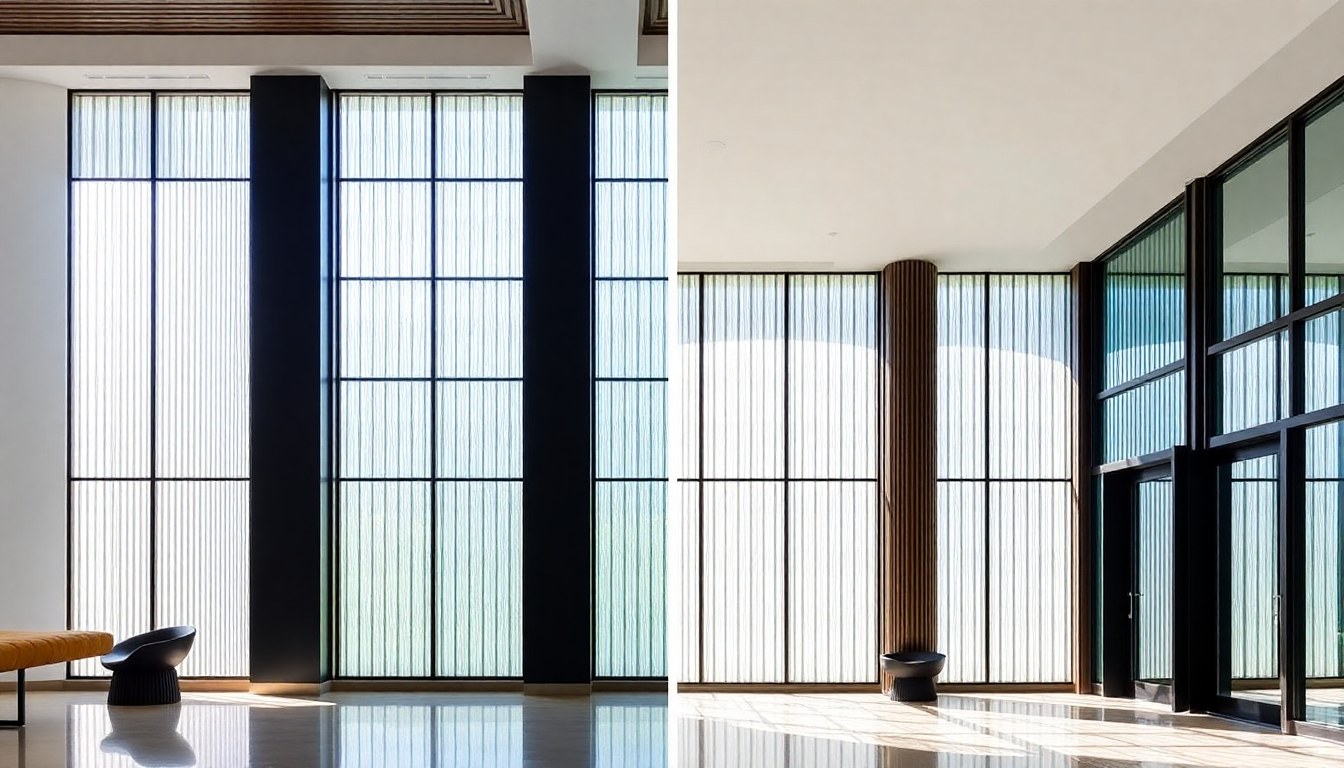
Fluted glass and reeded glass are two popular textured glass options that have taken Indian interior design by storm, yet many homeowners and even some designers use these terms interchangeably. While both feature vertical linear patterns that offer privacy and aesthetic appeal, they are distinctly different in their groove dimensions, light diffusion properties, and visual impact. Understanding these differences is essential when selecting the right glass for your partition walls, cabinet doors, or decorative panels.
What is Fluted Glass?
Fluted glass features wide, rounded vertical grooves that create a soft, undulating surface texture. The grooves are typically deeper and more pronounced than those found in reeded glass, with each channel measuring approximately 10-15mm in width. This architectural glass style has its roots in classical column design, where fluting refers to the shallow grooves running vertically along pillars.
The manufacturing process involves pressing molten glass through patterned rollers or casting it into moulds that create these distinctive channels. The result is a glass surface with gentle curves that catch and refract light in broad, sweeping patterns. Indian manufacturers have increasingly adopted this style, making fluted glass readily available in major cities like Mumbai, Delhi, Bangalore, and Chennai at prices ranging from ₹350 to ₹800 per square foot, depending on thickness and quality.
Fluted glass offers moderate privacy while still allowing substantial light transmission. The wider grooves create a softer blur effect, making silhouettes visible but details obscured. This makes it ideal for spaces where you want to maintain a sense of openness while defining separate zones.
What is Reeded Glass?
Reeded glass consists of narrow, tightly-spaced vertical ridges that create a more uniform, linear texture across the glass surface. Each reed typically measures 3-5mm in width, resulting in a denser pattern with more ridges per inch compared to fluted glass. The term "reeded" comes from the resemblance to bundled reeds or bamboo stalks placed side by side.
The manufacturing technique for reeded glass is similar to fluted glass but uses rollers with finer, more closely-spaced patterns. The narrower grooves create sharper lines and a more pronounced ribbed effect. This glass type has gained popularity in contemporary Indian homes, particularly in metro areas where space optimization and privacy are priorities.
Reeded glass provides enhanced privacy compared to fluted glass due to its denser pattern. The tightly-packed vertical lines fragment light more effectively, creating a greater distortion effect. This makes it particularly suitable for bathroom partitions, bedroom wardrobes, and office cabins where privacy is paramount. Pricing for reeded glass in India typically ranges from ₹300 to ₹700 per square foot.
Key Technical Differences Between Fluted and Reeded Glass
Pattern Dimensions and Spacing
The most fundamental difference lies in the groove dimensions. Fluted glass features wider channels with more space between ridges, creating a rhythmic, flowing pattern. Reeded glass has narrower, more densely packed ridges that produce a tighter, more uniform appearance. When you run your hand across both surfaces, fluted glass feels like gentle waves, while reeded glass has a more pronounced ribbed texture.
This dimensional difference directly impacts how each glass type performs in various applications. Fluted glass with its broader grooves works well in larger panels where you want to create visual drama without overwhelming the space. Reeded glass, with its finer pattern, suits both large installations and smaller decorative elements like cabinet inserts.
Light Diffusion Properties
Light behaves differently when passing through these two glass types. Fluted glass creates broader light refractions with softer shadows and highlights. The light patterns tend to be more flowing and organic, changing subtly as you move around the space. This makes fluted glass excellent for creating ambient lighting effects in living rooms and dining areas.
Reeded glass produces sharper, more defined light patterns with stronger linear shadows. The narrow ridges act like multiple tiny prisms, breaking light into more distinct bands. This creates a more dramatic play of light and shadow, particularly effective in spaces that receive direct sunlight. Many Indian architects use reeded glass in east or west-facing windows to manage harsh morning or evening sun while maintaining natural illumination.
Privacy Levels
Both glass types offer privacy, but to different degrees. Fluted glass provides moderate privacy, obscuring details while allowing general shapes and movements to be visible. You can distinguish between a person and furniture, but facial features and fine details remain hidden. This works well for semi-private spaces like study rooms or home offices where complete isolation isn't necessary.
Reeded glass offers superior privacy due to its denser pattern. The closely-spaced ridges fragment the view more effectively, making it difficult to discern even general shapes beyond vague silhouettes. This enhanced privacy makes reeded glass the preferred choice for bathrooms, changing areas, and bedroom partitions in Indian homes where privacy expectations are higher.
Design Applications in Indian Interiors
Living Spaces and Partition Walls
Fluted glass has become increasingly popular in modern Indian living rooms as a material for partition walls that separate the living area from the dining space or foyer. The softer pattern complements both contemporary and transitional design styles. Interior designers in cities like Pune and Hyderabad frequently specify fluted glass for pooja room doors, where the gentle light diffusion creates an ethereal, spiritual ambiance.
Reeded glass works exceptionally well in compact urban apartments where space division is necessary but you don't want to sacrifice natural light. The vertical lines create an illusion of height, making rooms appear taller—a valuable trait in Indian apartments where ceiling heights often range from 9 to 10 feet. Many homeowners use reeded glass partitions to create home offices or study nooks without the closed-in feeling of solid walls.
Kitchen and Bathroom Applications
In Indian kitchens, both glass types serve specific purposes. Fluted glass works beautifully in upper cabinet doors where you want to display decorative items while protecting them from cooking residue. The pattern adds visual interest without making the kitchen feel busy. Reeded glass is often chosen for lower cabinets or pantry doors where you prefer to conceal contents completely.
For bathrooms, reeded glass is the clear winner for shower enclosures and partition walls due to its superior privacy. However, fluted glass finds its place in bathroom windows where you want maximum light transmission with adequate privacy. Many bathroom designers combine both types—using reeded glass for wet areas and fluted glass for vanity backsplashes or decorative panels.
Furniture and Decorative Elements
Fluted glass adds a touch of elegance to furniture pieces like console tables, bar cabinets, and display units. The wider grooves catch light beautifully, creating a luxurious feel that pairs well with brass or gold hardware—a combination increasingly popular in Indian luxury interiors. Wardrobe shutters with fluted glass panels have become a signature element in contemporary bedroom designs.
Reeded glass brings a more industrial, minimalist aesthetic to furniture. It works particularly well in modern office furniture, bookshelf doors, and media unit fronts. The linear pattern complements clean-lined furniture designs favoured in Scandinavian and Japanese-inspired Indian interiors. Some furniture manufacturers in Bangalore and Ahmedabad now offer modular systems with interchangeable fluted and reeded glass panels.
Maintenance and Durability Considerations
Both fluted and reeded glass require similar maintenance routines, though the cleaning process differs slightly due to their distinct textures. The grooves in both types can trap dust and grime, particularly in Indian homes where dust accumulation is a constant challenge. Regular cleaning with a microfiber cloth and glass cleaner keeps both types looking pristine.
Fluted glass, with its wider grooves, is generally easier to clean as you can wipe along the channels with less effort. A squeegee works well for larger fluted glass panels. Reeded glass requires more attention to detail—the narrow ridges need cleaning with a soft brush or cloth that can reach into the tight spaces. Some homeowners use a mixture of vinegar and water with a spray bottle for effective cleaning without streaks.
In terms of durability, both glass types offer similar strength when manufactured to the same thickness specifications. Standard options include 5mm, 6mm, and 8mm thicknesses, with 6mm being most common for interior applications in Indian homes. For high-traffic areas or floor-to-ceiling installations, 8mm or 10mm thickness is recommended. Both can be tempered for additional safety, which is advisable for bathroom enclosures and partition walls.
Cost Comparison and Availability in India
Pricing for both fluted and reeded glass varies based on thickness, quality, and location. Generally, fluted glass commands a slightly higher price—typically ₹50 to ₹100 more per square foot—due to its popularity in luxury interiors and the perception of it being a more premium option. However, prices have become more competitive as Indian manufacturers have scaled up production.
Availability has improved significantly across India. Major glass suppliers in metropolitan areas stock both varieties, and even tier-2 cities now have access through regional distributors. Custom sizing and tempering services are widely available, though lead times may vary from 7 to 15 days depending on specifications and order volume. Some manufacturers also offer tinted versions in bronze, grey, or blue, though these specialty options cost 20-30% more than clear glass.
When budgeting for a project, factor in installation costs which typically range from ₹150 to ₹300 per square foot depending on complexity. Partition walls with aluminum or steel frames require additional hardware costs. Many glass suppliers offer complete installation services, which is recommended for larger projects to ensure proper handling and fitting of these textured glass types.
Frequently Asked Questions
Can fluted glass and reeded glass be used interchangeably?
While both serve similar functions of providing privacy and decorative appeal, they cannot always be used interchangeably due to their different aesthetic and functional properties. Fluted glass with its softer pattern works better in spaces where you want elegance and moderate privacy, while reeded glass is more suitable for applications requiring enhanced privacy and a contemporary look. The choice depends on your specific design goals, privacy requirements, and the overall interior style of your space.
Which glass type is better for small Indian apartments?
Reeded glass is generally better suited for compact Indian apartments because its vertical lines create an illusion of height and the denser pattern provides better privacy in close quarters. The narrower ridges work well in smaller panels without overwhelming the space. However, fluted glass can work beautifully in small apartments if used strategically in areas where you want to create a focal point, such as a pooja room door or a single accent panel.
Is fluted or reeded glass more difficult to maintain in Indian climate conditions?
Reeded glass requires slightly more effort to maintain due to its narrower, more closely-spaced grooves that can trap dust and moisture more easily. In humid Indian climates, particularly in coastal cities like Mumbai or Chennai, the fine ridges may accumulate moisture and require more frequent cleaning. Fluted glass with wider grooves is easier to wipe clean and maintain. However, with regular weekly cleaning, both types can be kept in excellent condition regardless of climate.
Can these glass types be used in exterior applications?
Both fluted and reeded glass can be used in exterior applications, but with important considerations. They should be tempered for safety and weather resistance, and ideally installed in covered or semi-covered areas like balcony partitions or verandah doors rather than fully exposed locations. In Indian climates with heavy monsoons, ensure proper sealing and drainage to prevent water accumulation in the grooves. Many homeowners successfully use these glass types for main entrance doors, balcony railings, and covered patio enclosures.
Which glass provides better sound insulation?
Neither fluted nor reeded glass provides significantly better sound insulation than the other—acoustic performance depends primarily on glass thickness rather than surface texture. For meaningful sound reduction in Indian homes where noise pollution is common, opt for 8mm or 10mm thickness regardless of pattern choice, or consider laminated versions. If sound insulation is a priority, discuss acoustic glass options with your supplier, as specialized products offer better performance than standard textured glass.
Choosing between fluted and reeded glass ultimately depends on your specific design vision, privacy needs, and budget. Both options bring unique character to Indian interiors and are readily available through quality suppliers. To connect with experienced glass dealers and manufacturers who can guide you through the selection process and provide competitive quotes for your project, explore the comprehensive business directory at glassy.in—India's most trusted resource for all your glass requirements.