
Glass Partitions
Frosted Glass Partitions for Medical Clinics: Privacy & Hygiene Standards
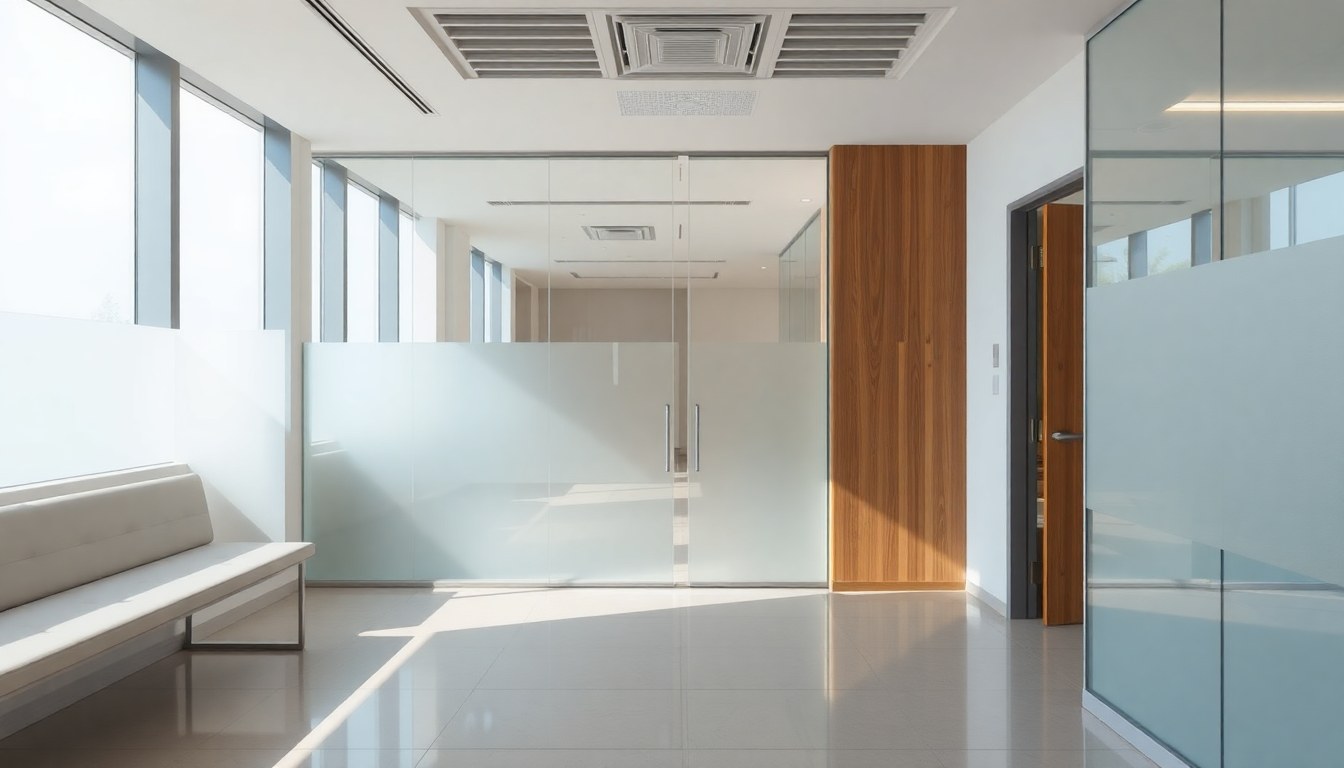
Medical clinics and diagnostic centers across India face a critical challenge: balancing patient confidentiality with strict hygiene and infection control protocols. Frosted glass partitions have emerged as the gold-standard solution, offering transparent privacy barriers that meet both regulatory requirements and practical operational needs. This guide explores how FDA-compliant frosted glass systems protect patient dignity while maintaining the sanitization standards essential in healthcare environments.
Why Frosted Glass Partitions Matter in Medical Settings
Patient privacy is a legal and ethical cornerstone of healthcare delivery. In India, the Indian Medical Council (Professional Conduct, Etiquette and Ethics) Regulations, 2002 mandate that practitioners protect patient confidentiality. Frosted glass partitions create visual barriers that obscure identifiable details while maintaining a sense of openness—critical for reducing patient anxiety and building trust.
Beyond privacy, frosted glass offers distinct hygiene advantages over traditional solid partitions. Unlike fabric-based dividers or wooden frames that harbor bacteria and viruses, glass surfaces are non-porous and resistant to microbial colonization. This makes them ideal for high-touch environments where infection control is paramount. Clinics in Hyderabad and Delhi NCR increasingly specify frosted glass to align with WHO and Indian Public Health Standards (IPHS) guidelines.
FDA Compliance and Indian Healthcare Regulations
Understanding Relevant Standards
While the FDA (U.S. Food and Drug Administration) primarily regulates American medical devices, many Indian clinics adopt FDA-aligned standards as a mark of quality assurance. Frosted glass partitions must meet:
- ISO 9001:2015 – Quality management systems for manufacturing
- Indian Standards (IS) 2595 – Safety code for use of glass in buildings
- Biofilm resistance standards – Ensuring glass surfaces resist bacterial adhesion
- Fire safety codes – Compliance with National Building Code (NBC) of India
Reputable manufacturers working with architects like Architect Rajan Sareen & Associates ensure that frosted glass systems meet these standards during design and installation phases.
Regulatory Compliance in Delhi NCR and Hyderabad
Delhi NCR clinics must comply with the Delhi Building Bye-laws, 2016, which specify fire-rated glass requirements for medical facilities. Hyderabad clinics follow the Telangana Building Regulations, 2018. Both jurisdictions increasingly mandate tempered or laminated frosted glass for patient safety. Tempered glass is four to five times stronger than standard glass and shatters into harmless granules if broken, reducing injury risk in clinical settings.
Sanitization and Infection Control Protocols
Daily Cleaning Best Practices
Frosted glass partitions require regular sanitization to maintain infection control standards. Unlike opaque partitions, frosted surfaces allow visual inspection for cleanliness—a key advantage in medical environments. Recommended sanitization protocols include:
- Daily cleaning: Use hospital-grade disinfectants (70% isopropyl alcohol or quaternary ammonium compounds) with lint-free microfiber cloths. Wipe both sides of the partition to prevent cross-contamination.
- Weekly deep cleaning: Apply EPA-approved disinfectants such as sodium hypochlorite (0.5%) for 10 minutes of contact time, then rinse thoroughly with distilled water.
- Post-patient sanitization: After each patient encounter, wipe high-touch areas (frames, door handles, hinges) with disinfectant wipes.
- Monthly inspection: Check for cracks, scratches, or seal degradation that could harbor pathogens.
The non-porous nature of glass prevents biofilm accumulation—a major concern with fabric or wood partitions that can harbor SARS-CoV-2, influenza, and tuberculosis bacteria for extended periods.
Material Specifications for Hygiene
High-quality frosted glass partitions use:
- Tempered or laminated glass – Meets safety standards and resists shattering
- Anodized aluminum frames – Resists corrosion and microbial growth better than stainless steel in high-moisture environments
- Silicone-based sealants – More resistant to moisture and bacterial colonization than acrylic caulk
- Antimicrobial coatings (optional) – Copper or silver-ion treatments that actively inhibit bacterial growth
Architects specializing in medical spaces, such as UrbanArc, recommend antimicrobial-coated glass for high-traffic consultation areas and isolation rooms.
Design Considerations for Patient Privacy and Clinic Workflow
Frosting Patterns and Opacity Levels
Frosted glass comes in varying opacity levels, allowing clinics to customize privacy while maintaining functionality. Options include:
- Full frosting (100% opacity) – Complete privacy for consultation rooms and diagnostic areas
- Partial frosting (50-70% opacity) – Vision panels at eye level allow staff to observe patients without full visibility, useful for monitoring elderly or pediatric patients
- Decorative frosting patterns – Geometric designs or clinic logos can be etched while maintaining privacy
- Switchable smart glass – Electrochromic glass that toggles between frosted and clear on demand (premium option, ₹8,000–12,000 per sq. meter)
Standard frosted glass partitions in India typically cost ₹2,500–4,500 per square meter, with installation adding 20–30% to the total cost. Hyderabad and Delhi NCR clinics often choose mid-range frosting (60–70% opacity) to balance privacy with staff supervision capabilities.
Integration with Clinic Layout
Frosted glass partitions work best when integrated into clinic design early. Modular systems allow easy reconfiguration as clinic needs evolve. Key design elements include:
- Frameless or minimalist framing to reduce dust-trapping crevices
- Sliding or swing doors with soft-close mechanisms to prevent cross-contamination through air currents
- Integrated hand sanitizer dispensers near partition entry points
- Adequate ventilation planning—glass partitions should not obstruct HVAC airflow critical for infection control
Living Nest Architects specializes in medical facility layouts that maximize both privacy and workflow efficiency through strategic glass partition placement.
Installation and Maintenance for Long-Term Durability
Professional Installation Standards
Improper installation compromises both privacy and hygiene. Professional installers must ensure:
- Partitions are plumb and level to prevent water pooling on horizontal surfaces
- All seals are airtight to prevent dust and pathogens from bypassing the partition
- Frames are securely anchored to prevent vibration or movement during patient interactions
- Door hinges and locks are installed to prevent finger-pinch injuries
Installation typically takes 2–5 days depending on partition complexity. Clinics should budget for temporary privacy measures during installation to maintain patient confidentiality.
Preventive Maintenance Schedule
Extending the lifespan of frosted glass partitions requires consistent maintenance:
- Weekly: Clean glass surfaces and frames with hospital-grade disinfectant
- Monthly: Inspect seals and caulking for gaps; check hinges and locks for smooth operation
- Quarterly: Deep clean frames and test partition stability
- Annually: Professional inspection and seal replacement if necessary
Well-maintained frosted glass partitions typically last 15–20 years, making them a cost-effective long-term investment compared to fabric dividers that require replacement every 3–5 years.
Real-World Applications in Indian Medical Facilities
Leading diagnostic centers in Hyderabad and Delhi NCR have successfully implemented frosted glass partition systems. Consultation rooms use full-frosted glass to ensure patient privacy during sensitive discussions. Diagnostic areas employ 60% frosted glass to allow technicians to monitor patients during procedures while maintaining modesty. Waiting areas increasingly feature frosted partitions to separate different patient streams and reduce cross-contamination risks.
The shift toward frosted glass reflects broader industry recognition that patient safety—both in terms of privacy and infection control—directly impacts clinical outcomes and patient satisfaction scores. Clinics adopting these systems report improved patient feedback and reduced infection-related complications.
Frequently Asked Questions
Are frosted glass partitions suitable for isolation rooms in clinics?
Yes, frosted glass partitions are excellent for isolation rooms when specified with full opacity and tempered or laminated glass. However, isolation rooms must also meet airflow and ventilation requirements—glass partitions should be combined with proper HVAC systems that maintain negative air pressure (for infectious disease isolation) or positive pressure (for immunocompromised patients). Consult with HVAC engineers and architects like Forming Spaces Architects to ensure integrated design.
How often should frosted glass partitions be replaced in a clinic?
With proper maintenance and sanitization, frosted glass partitions can last 15–20 years. Replacement becomes necessary only if glass is damaged (cracked or severely scratched) or if seals degrade and allow pathogen infiltration. Most clinics replace partitions due to aesthetic updates or layout changes rather than material failure.
Can frosted glass partitions withstand high-pressure steam sterilization?
No. Frosted glass partitions should not be subjected to direct steam sterilization as the extreme temperature and moisture can damage seals and frames. Instead, use approved chemical disinfectants (70% isopropyl alcohol, quaternary ammonium compounds, or sodium hypochlorite solutions) as recommended by infection control guidelines. Steam sterilization is appropriate for removable items and instruments, not fixed architectural elements.
What is the cost difference between frosted and clear glass partitions?
Frosted and clear tempered glass typically cost the same per square meter (₹2,500–4,500 in India). The frosting process itself adds minimal cost; the primary expense is the base glass quality, framing system, and installation labor. Switchable smart glass (electrochromic) is significantly more expensive at ₹8,000–12,000 per sq. meter but offers flexibility for clinics that need variable privacy levels.
Do frosted glass partitions comply with fire safety codes in India?
Frosted glass partitions comply with fire safety codes when manufactured from tempered or laminated glass and installed according to the National Building Code (NBC) of India. Laminated glass is particularly fire-resistant as it maintains structural integrity even when exposed to heat, preventing smoke spread. Always specify fire-rated glass and have installations certified by authorized engineers to ensure compliance with local building regulations in your city.
Conclusion: Elevating Medical Clinic Standards
Frosted glass partitions represent a modern, evidence-based approach to clinic design that honors both patient privacy and public health imperatives. By combining visual privacy with superior hygiene characteristics, these systems address the dual pressures facing medical facilities today. Whether you're establishing a new clinic in Hyderabad, expanding a facility in Delhi NCR, or upgrading existing spaces, frosted glass partitions deliver measurable benefits in patient satisfaction, infection control, and long-term durability.
Ready to upgrade your clinic with FDA-aligned frosted glass partitions? Explore verified glass suppliers, architects, and installation specialists on glassy.in—India's largest glass-business directory. Connect with experienced professionals who understand medical facility requirements and can deliver compliant, hygienic solutions tailored to your clinic's needs.