
Shower Enclosures
Frameless Shower Enclosure Glass Thickness: Safety Standards & Deflection Limits
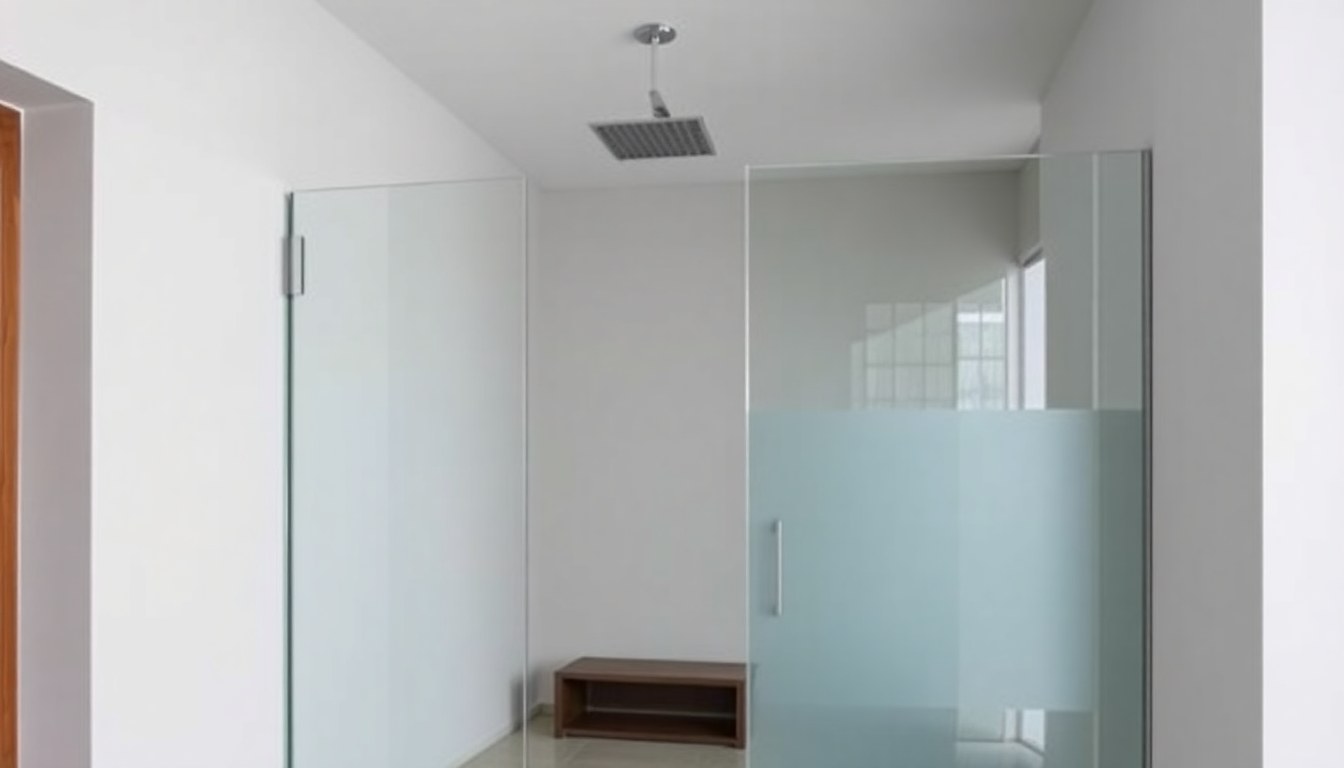
Frameless shower enclosures have become the standard in modern Indian bathrooms, offering a sleek, minimalist aesthetic without the visual clutter of metal frames. However, choosing the right glass thickness is not a matter of preference—it's a matter of safety and compliance. The thickness of toughened glass directly affects how much the glass will bend under water pressure and its ability to support hinges and hardware, making this decision critical for both durability and regulatory compliance.
Understanding Indian Safety Standards for Shower Glass
In India, frameless shower enclosures must comply with IS 2553:2016 (Code of Practice for Installation of Safety Glass in Buildings) and IS 12600:1988 (Specifications for Toughened Glass). These standards define safety requirements, testing procedures, and installation guidelines specific to the Indian climate and building practices. The Bureau of Indian Standards (BIS) mandates that all toughened glass used in wet areas must meet impact resistance, thermal shock resistance, and edge strength requirements.
Additionally, the National Building Code of India (NBC) classifies bathrooms as wet, hazardous areas where safety glass is mandatory. This classification means that any frameless shower enclosure installed in a residential or commercial property in India must use toughened (tempered) glass that has been tested and certified by an accredited laboratory. Manufacturers selling in India should provide BIS certification or equivalent international certification (such as CE marking) with their products.
Key Requirements Under IS 2553:2016
- All safety glass must be permanently marked with the manufacturer's name and date of manufacture
- Glass must be tested for impact resistance, thermal shock, and edge strength
- Installation must follow prescribed guidelines for fixing, spacing, and support
- Bathroom glass must be toughened, not annealed or heat-strengthened
- Documentation and certificates must be retained for warranty and compliance purposes
Glass Thickness Comparison: 10mm vs. 12mm Toughened Glass
The two most common thicknesses for frameless shower enclosures in India are 10mm and 12mm. Both are toughened and meet Indian safety standards, but they differ significantly in deflection (bending), load-bearing capacity, and long-term durability. Understanding these differences helps you select the right thickness for your specific bathroom layout and usage patterns.
10mm Toughened Glass: Specifications and Limitations
10mm toughened glass is the more affordable option, typically costing ₹800–₹1,200 per square foot in Indian markets. It is suitable for smaller enclosures (up to 800mm width), lower water pressure conditions, and bathrooms with less frequent use. The glass will deflect slightly under water pressure—typically 3–5mm for a 1-meter span—which is within safety limits but may be noticeable to the user.
The hinge load rating for 10mm glass is generally 25–35 kg per hinge, meaning a single hinged panel should not exceed 70–100 kg in total weight. In high-humidity environments or with larger door panels, 10mm glass may show visible bowing over time, particularly if the enclosure is not properly supported or if water pressure is consistently high.
12mm Toughened Glass: Superior Strength and Durability
12mm toughened glass costs approximately ₹1,200–₹1,800 per square foot but offers superior performance. Deflection is reduced to 1–2mm for the same span, making the enclosure feel more rigid and stable. The hinge load rating increases to 40–50 kg per hinge, supporting panels up to 120–150 kg in total weight, which accommodates larger, heavier doors and dual-panel configurations.
12mm glass is the recommended choice for high-traffic bathrooms, larger enclosures (over 900mm width), frameless pivot doors, and areas with hard water or mineral buildup that may require more aggressive cleaning. The increased thickness also provides better sound insulation and thermal stability, which can reduce condensation issues in humid climates like those in coastal Indian cities (Mumbai, Bangalore, Hyderabad).
Deflection Calculation and Safety Margins
Deflection is calculated using the formula: Deflection (mm) = (5 × W × L⁴) / (384 × E × I), where W is the load, L is the span, E is the modulus of elasticity, and I is the second moment of inertia. For practical purposes, deflection increases with the fourth power of the span length, meaning that doubling the width quadruples the deflection. This is why glass thickness becomes critical for larger panels.
Indian safety standards allow a maximum deflection of L/60 (span divided by 60) for shower glass. For a 1.2-meter span, this translates to a maximum deflection of 20mm. While both 10mm and 12mm glass easily stay within this limit, the subjective feel of the enclosure changes noticeably. A 10mm panel may flex slightly when you lean against it, while 12mm feels completely rigid.
Hinge Load Ratings and Hardware Compatibility
The thickness of the glass directly determines how much weight the hinges can safely support and how much stress the glass edge can withstand. Hinges are rated based on the tensile strength and edge strength of the glass, not the hinge itself. A hinge rated for 35 kg on 10mm glass cannot safely support 35 kg on 8mm glass, even though the hinge is identical.
When selecting hinges, always verify that they are certified for the specific glass thickness you are using. Most reputable manufacturers in India (such as Dorset, Jaquar, and Hindware) provide hinge load tables in their specification sheets. For frameless enclosures, it is also essential to ensure that the glass edge has been properly polished and beveled to reduce stress concentrations that could lead to edge failure over time.
Pivot vs. Butt Hinges: Load Distribution
Pivot hinges distribute the load across a larger area of the glass edge, allowing higher load ratings on thinner glass. Butt hinges concentrate the load at a smaller point, requiring thicker glass for the same door weight. For a 15 kg frameless door, 10mm glass with pivot hinges is acceptable, but 12mm glass is recommended if using butt hinges or if the door will be frequently opened and closed.
Climate and Environmental Factors in India
India's diverse climate zones impose different demands on shower glass. In coastal regions like Mumbai, Goa, and Kochi, high humidity and salt spray accelerate corrosion of metal hardware and mineral buildup on glass. In these areas, 12mm glass is preferable because it resists bowing under constant moisture exposure and can better tolerate the stress from mineral deposits that accumulate over time.
In dry regions like Delhi, Jaipur, and Ahmedabad, thermal stress becomes a concern. Rapid temperature changes between hot water and cooler bathroom air can cause micro-fractures in glass over years of use. While toughened glass is designed to handle thermal shock, thicker glass distributes this stress more evenly, extending the lifespan of the enclosure. Hard water is prevalent across India, and mineral deposits on 10mm glass can make cleaning more difficult and stress the glass edge if aggressive cleaning methods are used.
Cost-Benefit Analysis: When to Choose Each Thickness
The decision between 10mm and 12mm ultimately depends on your budget, bathroom size, and long-term expectations. A 10mm enclosure for a small, guest bathroom in a low-humidity area may serve well for 10–15 years at a lower initial cost. However, for master bathrooms with daily use, larger panels, or premium finishes, the additional ₹400–₹600 per square foot for 12mm glass is a worthwhile investment that extends the lifespan to 20+ years and reduces the risk of deflection-related issues.
Consider also the resale value of your property. Frameless enclosures with 12mm glass are perceived as higher quality and more durable, which can positively impact your home's market value. In competitive real estate markets like Bangalore, Mumbai, and Delhi, this perception matters.
Installation Best Practices for Safety and Longevity
Proper installation is as critical as glass thickness. The glass must be supported at the top and bottom with adjustable clamps or channels that distribute the load evenly. Inadequate support can cause premature deflection and edge stress, even with 12mm glass. Ensure that the bathroom structure (walls and floor) is level and plumb before installation, as misalignment can cause uneven pressure on the glass.
Sealing is another crucial factor. A high-quality silicone sealant (ASTM C920 or equivalent) must be applied to the glass-to-wall interface to prevent water from seeping behind the glass and into the wall structure. This is particularly important in India, where poor waterproofing can lead to structural damage and mold growth in humid climates.
Regular maintenance—monthly cleaning with mild soap and water, annual inspection of hinges and seals—can significantly extend the life of your frameless enclosure, regardless of glass thickness. Avoid abrasive cleaners or high-pressure jets that can damage the glass surface or dislodge sealants.
Frequently Asked Questions
Is 10mm glass safe for frameless shower enclosures in India?
Yes, 10mm toughened glass meets all Indian safety standards (IS 2553:2016 and IS 12600:1988) and is safe for most residential applications. However, it is best suited for smaller enclosures (up to 800mm width) and lower-traffic bathrooms. For larger panels or daily heavy use, 12mm is recommended.
What is the maximum deflection allowed for shower glass in India?
According to the National Building Code and IS standards, the maximum allowable deflection is L/60, where L is the span length. For a 1.2-meter span, this equals 20mm. Both 10mm and 12mm toughened glass easily comply with this limit, but 12mm provides a more rigid feel with less noticeable bending.
Can I use 8mm glass for a frameless shower enclosure?
8mm glass is not recommended for frameless enclosures in India. While it may meet minimum safety standards for small, fixed panels, it lacks the rigidity and hinge load capacity needed for hinged doors. Most frameless enclosure manufacturers and Indian building codes recommend a minimum of 10mm for safety and durability.
How long does a 10mm vs. 12mm frameless enclosure last?
A properly installed and maintained 10mm enclosure typically lasts 10–15 years, while 12mm glass can last 20+ years, especially in high-humidity or hard-water areas. The difference is due to reduced deflection, better stress distribution, and improved resistance to environmental factors like mineral buildup and thermal cycling.
What is the cost difference between 10mm and 12mm frameless enclosures?
In India, 10mm glass costs approximately ₹800–₹1,200 per square foot, while 12mm costs ₹1,200–₹1,800 per square foot. For a typical 1.2m × 2m enclosure, the difference is roughly ₹4,000–₹7,000. This premium is justified by increased durability, better performance, and higher resale value.
Selecting the right glass thickness for your frameless shower enclosure is a decision that impacts both safety and long-term satisfaction. Whether you choose 10mm or 12mm, ensure that your supplier provides BIS-certified toughened glass and that installation is performed by qualified professionals. Explore our directory on glassy.in to find verified glass manufacturers, suppliers, and installers across India who specialize in frameless shower enclosures and can guide you through the selection process based on your specific needs and local building codes.