
Glass Partitions
Fluted Glass vs Clear Glass Partitions: Design & Acoustic Comparison
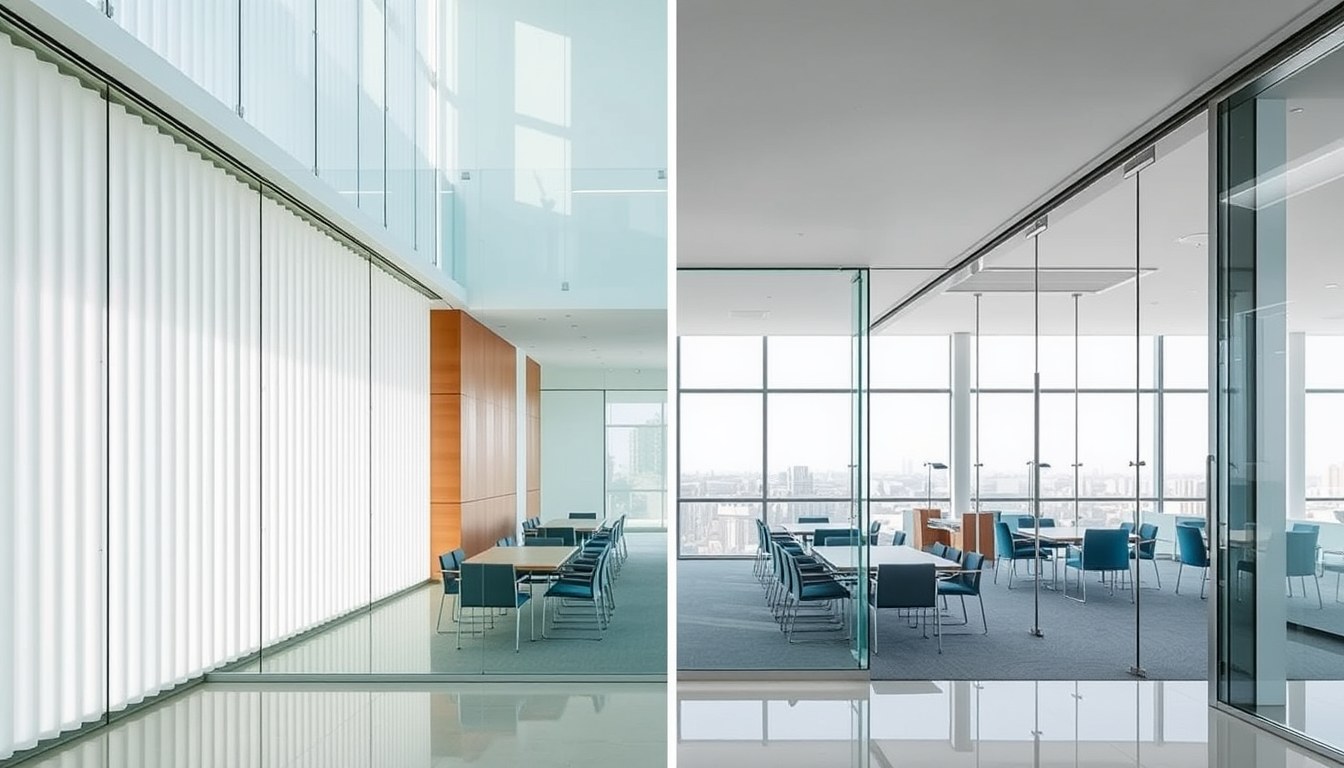
When designing modern office spaces, glass partitions have become the go-to choice for creating open, collaborative environments while maintaining visual boundaries. However, the decision between fluted (reeded) glass and clear glass can significantly impact both the aesthetic and functional qualities of your workspace. This guide breaks down the key differences in light transmission, acoustic performance, privacy levels, and costs to help you make an informed choice for your office or commercial space.
Understanding Fluted and Clear Glass Partitions
Clear glass partitions are transparent panels made from annealed, tempered, or laminated glass that allow unobstructed views between spaces. They create a sense of openness and visual continuity, making areas feel larger and more connected. This straightforward approach has made clear glass the standard choice in contemporary office design across India's metros and growing business hubs.
Fluted glass, also called reeded glass, features parallel vertical or horizontal grooves etched or molded into the surface. These ridges diffuse light and create a textured appearance while maintaining translucency. The pattern obscures direct sightlines without completely blocking light, offering a middle ground between full transparency and solid walls.
Light Transmission and Visual Privacy
Clear Glass: Maximum Light Diffusion
Clear glass partitions excel at light transmission. They allow natural daylight to flow freely between spaces, reducing dependence on artificial lighting and creating bright, energizing work environments. In Indian offices where natural light is premium real estate, this benefit is particularly valuable. Clear glass maintains visual clarity, allowing colleagues to see each other's activities and expressions, which can foster informal communication and team cohesion.
However, this transparency comes with a privacy trade-off. Employees feel exposed when sitting near clear glass walls, and sensitive discussions or confidential work become visible to passersby. Many offices address this by adding frosted films or smart glass technology, adding to the overall cost.
Fluted Glass: Diffused Light with Privacy
Fluted glass strikes a balance between light and privacy. The grooved surface scatters light diffusely, allowing illumination to pass through while obscuring sharp details. You can see general movement and shapes but not fine details like facial expressions or document content. This makes fluted glass ideal for meeting rooms, executive cabins, and areas where some visual separation is desired without creating a closed-off feel.
The light diffusion quality of fluted glass is superior to frosted glass films because it's built into the material itself, ensuring consistent performance over time without peeling or degradation. The textured surface also adds visual interest and sophistication to partition designs.
Acoustic Performance and Sound Insulation
Clear Glass Acoustic Properties
Standard clear glass partitions offer minimal sound insulation. Single-pane clear glass typically provides 25–30 dB of sound reduction, which is inadequate for controlling office noise. A conversation on one side remains clearly audible on the other. To improve acoustic performance, offices must upgrade to laminated glass (with acoustic interlayers) or double-glazed systems, both of which significantly increase costs.
Laminated clear glass with a polyvinyl butyral (PVB) interlayer can achieve 35–40 dB sound reduction, while double-glazed clear glass systems reach 40–50 dB. These upgrades are essential for noise-sensitive environments but add ₹500–₹1,500 per square meter to partition costs.
Fluted Glass Acoustic Advantages
Fluted glass offers inherent acoustic benefits due to its textured surface. The grooves trap sound waves and reduce their transmission more effectively than smooth clear glass. A standard fluted glass partition typically provides 30–35 dB of sound reduction—noticeably better than clear glass without additional treatment. This makes fluted glass a cost-effective option for offices seeking moderate sound control without investing in laminated or double-glazed systems.
When fluted glass is laminated with acoustic interlayers, performance improves further to 40–45 dB, rivaling expensive double-glazed clear glass systems. For many Indian offices, this balance of moderate cost and decent acoustic performance makes fluted glass an attractive middle ground.
Design Aesthetics and Workplace Psychology
Clear glass partitions create a contemporary, minimalist aesthetic that conveys openness, transparency, and innovation. They're ideal for startups, tech companies, and organizations that want to project a forward-thinking image. The visual continuity of clear glass can make compact office spaces feel larger, which is valuable in expensive Indian metros like Mumbai, Bangalore, and Hyderabad where real estate is at a premium.
Fluted glass introduces texture and visual depth, offering a more refined, sophisticated appearance. The pattern breaks up large expanses of glass and reduces the "sterile" feeling that some find off-putting in all-clear-glass offices. Fluted glass works particularly well in hospitality, luxury retail, and professional services (law, finance, consulting) where a polished, upscale aesthetic matters. The grooved surface also helps disguise fingerprints and dust better than clear glass, reducing maintenance effort.
From a psychological perspective, fluted glass provides subtle visual privacy that can reduce stress and improve focus, especially in open-plan offices. Employees feel less exposed, which can boost productivity and morale compared to working behind fully transparent partitions.
Cost Comparison and Installation Considerations
Material and Installation Costs
Clear glass partitions are generally the least expensive option. Standard 10 mm tempered clear glass partitions cost approximately ₹300–₹600 per square meter in most Indian cities, depending on quality and supplier. Installation is straightforward, requiring basic framing and hardware. However, costs escalate quickly when acoustic upgrades are needed:
- Single-pane clear glass: ₹300–₹600/sq.m
- Laminated clear glass (acoustic): ₹800–₹1,500/sq.m
- Double-glazed clear glass: ₹1,200–₹2,000/sq.m
Fluted glass partitions typically cost ₹500–₹900 per square meter for standard 10 mm thickness. While initially more expensive than basic clear glass, fluted glass eliminates the need for acoustic upgrades in many applications, making the total cost competitive or even lower than laminated clear glass solutions. Custom fluted patterns or specialty finishes can increase costs to ₹1,000–₹1,300/sq.m.
Maintenance and Durability
Clear glass requires frequent cleaning to maintain transparency and remove fingerprints, dust, and smudges. In humid Indian climates, mineral deposits from water spotting are common. Laminated and double-glazed clear glass systems are more durable but harder to repair if damaged—replacement of the entire unit is often necessary.
Fluted glass is more forgiving in terms of maintenance. The textured surface hides fingerprints and dust better, requiring less frequent cleaning. If damage occurs, individual fluted panels are easier and more cost-effective to replace than laminated or double-glazed systems. The grooved surface also resists scratching better than smooth clear glass.
Choosing the Right Partition for Your Space
Select clear glass partitions if your priorities are maximum light transmission, an open and spacious feel, and minimizing initial costs. They work best for collaborative open-plan offices, reception areas, and spaces where visual connectivity is important. However, budget for acoustic upgrades if noise control is a concern.
Choose fluted glass partitions if you need a balance of light, privacy, and sound control without breaking the budget. They're ideal for meeting rooms, executive offices, training centers, and professional service firms. Fluted glass also suits environments where design sophistication and reduced maintenance effort are valued.
For maximum acoustic performance and privacy, consider laminated fluted glass, which combines the aesthetic and maintenance benefits of fluted glass with superior sound insulation. This option typically costs less than double-glazed clear glass while delivering comparable or better performance.
Frequently Asked Questions
Does fluted glass block more sound than clear glass?
Yes, fluted glass provides better sound insulation than standard clear glass due to its textured surface, which traps sound waves. A typical fluted glass partition offers 30–35 dB of sound reduction compared to 25–30 dB for clear glass. When both are laminated with acoustic interlayers, the difference narrows, but fluted glass still performs slightly better and at lower cost.
Can I see through fluted glass partitions?
Fluted glass is translucent, not transparent. You can see light, movement, and general shapes, but not fine details like facial features, text, or specific activities. This makes it ideal for situations where you want some visual separation while maintaining a sense of openness and connection between spaces.
Which option is more cost-effective for offices in India?
For basic partitions without acoustic requirements, clear glass is cheaper upfront at ₹300–₹600/sq.m. However, when acoustic performance is needed, fluted glass at ₹500–₹900/sq.m often becomes more cost-effective than laminated clear glass (₹800–₹1,500/sq.m) because it provides decent sound control without additional treatment.
Is fluted glass harder to clean than clear glass?
Fluted glass is actually easier to maintain. The grooved surface hides fingerprints, dust, and water spots better than smooth clear glass, requiring less frequent cleaning. However, dust can accumulate in the grooves, so occasional deeper cleaning with a soft brush or microfiber cloth is recommended.
Can I use frosted film on clear glass instead of buying fluted glass?
Frosted films are an option, but they degrade over time, peel at edges, and don't provide the acoustic benefits of fluted glass. Frosted films also trap dust and are harder to clean. For a permanent solution, fluted glass is more durable, aesthetically superior, and ultimately more cost-effective over the long term.
Ready to design the perfect office partition system for your space? Explore verified glass suppliers, manufacturers, and installation experts across India on the Glassy.in directory. Compare quotes, view portfolios, and connect with trusted professionals who understand the unique requirements of Indian commercial spaces.