
Glass Railings
Staircase Glass Railing Thickness Guide for Residential Buildings in India
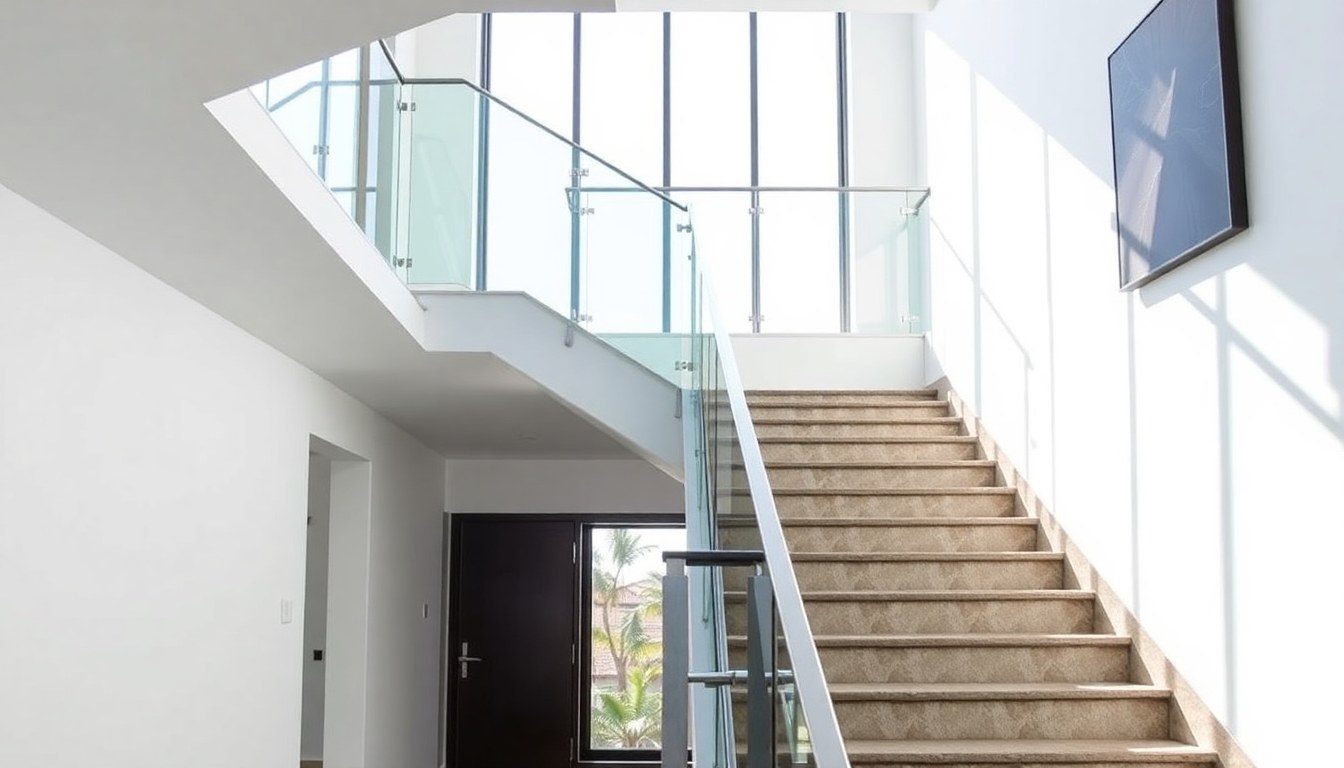
Selecting the appropriate glass thickness for staircase railings is crucial for ensuring safety, durability, and compliance with Indian building regulations. The right thickness depends on factors including railing height, glass type, installation method, and load-bearing requirements specified in IS codes. This comprehensive guide will help homeowners, architects, and contractors make informed decisions about glass railing specifications for residential staircases.
Understanding Indian Standards for Glass Railings
The Bureau of Indian Standards (BIS) has established specific guidelines for glass used in railings and balustrades through IS 14900. This standard specifies that glass used in barrier applications must be safety glass—either toughened (tempered) glass or laminated glass. These requirements exist because ordinary annealed glass can shatter into dangerous shards upon impact, posing serious injury risks in high-traffic areas like staircases.
According to IS 14900, the minimum thickness for toughened glass used in railings is 10mm, though this represents the absolute minimum and may not be suitable for all applications. The National Building Code of India (NBC) also mandates that all glass barriers must withstand horizontal loads without failure. For residential buildings, the standard horizontal load requirement is typically 0.74 kN/m applied at handrail height.
Compliance with these standards is not merely a recommendation—it is a legal requirement for construction approval in most Indian municipalities. Working with experienced professionals like AR ARCHITECTS STUDIO can help ensure your staircase railing design meets all regulatory requirements while maintaining aesthetic appeal.
Recommended Glass Thickness for Different Staircase Configurations
Standard Residential Staircases
For typical residential staircases with glass panels supported by posts or channels at regular intervals (not exceeding 1200mm), a 12mm toughened glass thickness is the most commonly recommended specification. This thickness provides adequate strength for normal residential use while remaining cost-effective. The 12mm specification has become an industry standard because it offers a good balance between safety, structural integrity, and visual clarity.
When glass panels are installed with continuous bottom and side channels providing additional support, 10mm toughened glass may be acceptable for shorter spans (under 900mm). However, many contractors and architects prefer to specify 12mm as a standard to provide an extra safety margin and reduce the risk of deflection or vibration when the railing is subjected to lateral loads.
Frameless and Minimalist Designs
Frameless glass railings, which use minimal hardware and rely primarily on the glass itself for structural support, require thicker glass specifications. For these installations, 15mm or even 17.52mm laminated glass is recommended. Laminated glass consists of two or more glass layers bonded with an interlayer (typically PVB—polyvinyl butyral), which holds the glass together even if it cracks.
The most common laminated configuration for frameless staircase railings is 8mm + 8mm (two 8mm toughened glass layers with a 1.52mm interlayer, totaling 17.52mm). This specification provides exceptional strength and safety because even if one layer fails, the other continues to provide protection. Frameless designs require precise engineering calculations, and consulting with specialists like VICKY GLASS WORKS can ensure proper specification and installation.
Factors Influencing Glass Thickness Selection
Panel Height and Width
The dimensions of your glass panels directly impact the required thickness. Taller panels (above 1200mm) experience greater wind loads and lateral forces, necessitating thicker glass. Similarly, wider unsupported spans require increased thickness to prevent excessive deflection. As a general rule, for every 300mm increase in unsupported width beyond 900mm, you should consider increasing glass thickness by 2mm.
Standard residential staircase railings typically range from 900mm to 1100mm in height as per NBC requirements. For these heights with support posts every 1000-1200mm, 12mm toughened glass is adequate. However, if you're planning a feature staircase with wider glass panels or minimal support points, engineering calculations become essential to determine the appropriate thickness.
Installation Method and Support System
The way glass is secured significantly affects thickness requirements. Glass panels set into U-channels at the base and sides can use thinner specifications because the channels distribute loads more effectively. Point-fixed systems using standoff hardware require thicker glass because stress concentrates around the fixing points. For point-fixed installations, 15mm or laminated glass is typically necessary.
Top-mounted railings, where glass sits in a base channel with a handrail cap on top, can often use 12mm glass for standard residential applications. Base-mounted systems with exposed top edges may require 15mm specifications for added rigidity and to prevent excessive movement. Professional architects like those at VK construction and architect can assess your specific installation method and recommend appropriate thickness.
Usage Intensity and Safety Margins
Consider the expected usage pattern of your staircase. High-traffic areas, homes with children, or staircases in commercial-residential buildings benefit from thicker glass specifications that provide additional safety margins. While 10mm may meet minimum code requirements, upgrading to 12mm or 15mm provides peace of mind and reduces long-term maintenance concerns.
The incremental cost difference between 10mm and 12mm toughened glass is relatively modest—typically ₹150-250 per square foot difference—making the upgrade worthwhile for most residential applications. The enhanced safety and reduced risk of deflection or vibration justify the additional investment.
Types of Safety Glass for Staircase Railings
Toughened (Tempered) Glass
Toughened glass undergoes a thermal treatment process that makes it approximately four to five times stronger than ordinary annealed glass of the same thickness. When broken, it shatters into small, relatively harmless granular chunks rather than dangerous shards. For staircase railings, toughened glass must conform to IS 2553 standards, which specify requirements for flatness, edge quality, and fragmentation patterns.
The main advantage of toughened glass is its cost-effectiveness compared to laminated alternatives. A 12mm toughened glass panel typically costs ₹350-550 per square foot depending on quality and finish. However, toughened glass has one limitation: it cannot be cut or drilled after the tempering process, so all holes and cutouts must be made beforehand, requiring precise measurements.
Laminated Safety Glass
Laminated glass offers superior safety characteristics because the interlayer holds glass fragments in place even after breakage, preventing collapse and maintaining a barrier. This makes laminated glass the preferred choice for overhead applications, large unsupported spans, and high-security installations. Common laminated configurations for railings include 6mm + 6mm, 8mm + 8mm, or asymmetric combinations like 10mm + 6mm.
Laminated glass costs approximately 40-60% more than equivalent-thickness toughened glass but provides additional benefits including sound dampening, UV protection, and enhanced security. For premium residential projects or situations where maximum safety is paramount, laminated glass represents the best choice despite the higher investment.
Installation Considerations and Best Practices
Proper installation is as critical as selecting the correct thickness. Glass edges must be polished to prevent stress concentrations that could lead to spontaneous breakage. All mounting hardware should include rubber or neoprene setting blocks and spacers to prevent direct glass-to-metal contact, which can create stress points. Expansion gaps of 3-5mm should be maintained in channels to accommodate thermal expansion and building movement.
The base channel or fixing system must be perfectly level and aligned. Even minor misalignment can create stress in the glass, potentially leading to failure over time. Professional installation ensures that loads are distributed evenly across the glass surface and that all hardware is properly torqued to manufacturer specifications. Overtightening point-fixed hardware is a common installation error that can crack or damage glass.
Weather exposure should also be considered for staircases near open areas. Glass railings exposed to direct sunlight, rain, or temperature fluctuations may require thicker specifications or laminated glass to handle thermal stress. Adequate drainage in bottom channels prevents water accumulation that could lead to hardware corrosion or glass staining.
Cost Considerations and Budgeting
Glass railing costs vary significantly based on thickness, type, and finish. As of 2024, approximate costs per square foot in Indian markets are: 10mm toughened glass (₹300-450), 12mm toughened glass (₹400-600), 15mm toughened glass (₹550-750), and 17.52mm laminated glass (₹800-1200). These prices include basic clear glass; finishes like frosted, tinted, or low-iron glass add 15-30% to base costs.
Hardware and installation typically add ₹200-400 per square foot to material costs. Complete turnkey installation for a standard residential staircase railing (approximately 15-20 square feet of glass) ranges from ₹15,000-35,000 depending on specifications and complexity. While this represents a significant investment, glass railings offer excellent longevity with minimal maintenance requirements when properly installed.
Budget-conscious homeowners should resist the temptation to reduce thickness below recommended specifications to save costs. The safety implications and potential liability issues far outweigh the modest savings. Instead, consider adjusting other variables like finish options, hardware style, or installation extent to meet budget constraints while maintaining appropriate thickness standards.
Frequently Asked Questions
What is the minimum glass thickness allowed for staircase railings in India?
According to IS 14900, the absolute minimum thickness for toughened glass used in staircase railings is 10mm. However, most architects and contractors recommend 12mm as a practical minimum for standard residential applications to provide adequate safety margins and structural performance. Laminated glass railings typically use configurations totaling 12mm or more, such as 6mm + 6mm with interlayer.
Is 10mm glass sufficient for residential staircase railings?
While 10mm toughened glass meets minimum code requirements, it is generally recommended only for shorter spans (under 900mm) with continuous channel support on multiple sides. For typical residential staircases with support posts at 1000-1200mm intervals, 12mm toughened glass is the preferred specification. The modest additional cost of 12mm glass provides noticeably better rigidity and reduces the risk of visible deflection when pressure is applied.
Should I choose toughened or laminated glass for staircase railings?
For standard framed railings with regular support posts, 12mm toughened glass provides excellent safety and value. Laminated glass becomes preferable for frameless installations, extra-large panels, overhead applications, or situations requiring maximum safety (homes with young children or elderly residents). Laminated glass offers the advantage of remaining in place even if cracked, while toughened glass will shatter completely when broken, though into relatively safe granular pieces.
How does glass thickness affect the cost of staircase railings?
Glass thickness significantly impacts material costs. Upgrading from 10mm to 12mm toughened glass typically adds ₹100-150 per square foot, while moving to 15mm adds another ₹150-200 per square foot. Laminated glass configurations cost 40-60% more than equivalent-thickness toughened glass. For a typical residential staircase railing (15-20 square feet), the difference between 10mm and 12mm specifications amounts to approximately ₹2,000-3,000 total—a worthwhile investment for improved safety and performance.
Can I install glass railings myself or should I hire professionals?
Glass railing installation requires specialized knowledge, proper tools, and precise execution to ensure safety and compliance with building codes. Improper installation can create stress points leading to glass failure, or result in railings that don't meet load-bearing requirements. Professional installation is strongly recommended and often required for building approval. Experienced contractors ensure proper edge treatment, correct hardware torque, adequate expansion gaps, and compliance with IS standards and local building regulations.
Choosing the right glass thickness for your staircase railing is a critical decision that impacts safety, aesthetics, and long-term satisfaction. Whether you're building a new home or renovating an existing staircase, consult with qualified professionals to ensure your glass railing meets all safety standards while achieving your design vision. Explore the glassy.in directory to connect with experienced glass fabricators, architects, and contractors in your area who can guide you through the specification and installation process.