
Glass Railings
Glass Pool Fencing: Australian Standards vs Indian Building Codes for Gurugram Villas
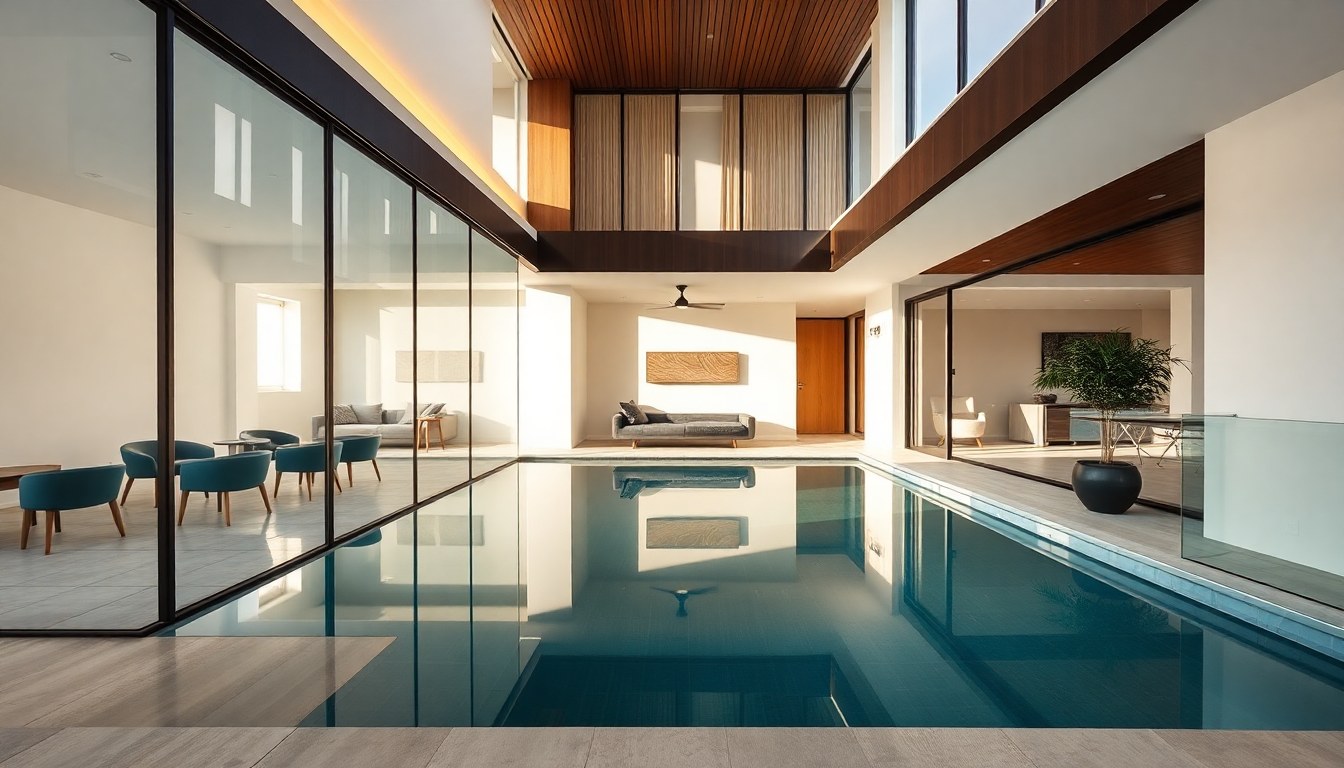
As luxury villas with private swimming pools become increasingly common across Gurugram's sectors, homeowners face a crucial safety and compliance question: what regulations govern glass pool fencing in India? While Australia's stringent AS 1926 standards are often referenced globally, Indian building codes follow a different framework—and understanding both can help Gurugram villa owners install safer, legally compliant pool barriers that blend aesthetics with child safety.
Understanding the Regulatory Landscape for Pool Fencing in India
India does not have a unified national standard specifically dedicated to residential pool fencing like Australia's AS 1926. Instead, pool safety barriers fall under the broader umbrella of the National Building Code of India (NBC) 2016, which provides general guidelines for safety railings and barriers. The NBC specifies minimum heights and structural requirements for balustrades and barriers but does not mandate pool-specific features such as self-closing gates or non-climbable zones.
In Gurugram and the wider NCR region, the Haryana Building Code 2017 and local municipal bylaws from the Department of Town and Country Planning (DTCP) Haryana apply. These regulations require barriers around water bodies on residential properties but leave specific design parameters largely to the discretion of architects and engineers. This regulatory gap means many Gurugram homeowners and architects look to international standards—particularly Australian AS 1926—as a best-practice benchmark when designing pool enclosures.
For homeowners working with experienced professionals such as BuildScape - Designers And Builders or similar architectural firms, understanding both frameworks ensures that your pool fencing meets safety expectations even when local enforcement may be less rigorous.
Australian Standard AS 1926: The Global Benchmark
Australia's AS 1926.1-2012 standard for swimming pool safety barriers is one of the world's most comprehensive frameworks. It mandates a minimum barrier height of 1200 mm (approximately 4 feet) measured from the finished ground level, with specific provisions to prevent climbing. The standard requires that horizontal elements or footholds within 900 mm of the top of the fence be spaced more than 900 mm apart to eliminate climbing aids.
Key Requirements of AS 1926
- Barrier height: Minimum 1200 mm from ground level on the non-pool side
- Non-climbable zone: No footholds or horizontal rails within 900 mm of the top
- Gap specifications: Maximum 100 mm gap beneath the barrier to prevent small children from crawling under
- Gate requirements: Self-closing and self-latching mechanisms, with latches positioned at least 1500 mm above ground or shielded to prevent young children from operating them
- Glass specifications: Toughened safety glass complying with AS/NZS 2208, typically 8-12 mm thick for frameless designs
These requirements are designed around child safety research showing that children under five years old have limited climbing ability and reach. The standards aim to create a barrier that a young child cannot scale, crawl under, or open independently.
Glass Specifications Under Australian Standards
For glass pool fencing, AS 1926 works in conjunction with AS/NZS 2208 (Safety Glazing Materials in Buildings). Frameless glass pool fences typically use 10-12 mm toughened glass, while semi-frameless designs may use 8-10 mm panels. The glass must be Grade A safety glass, capable of withstanding horizontal loads of at least 0.6 kN/m applied at any height. Many Australian installations now use laminated toughened glass—two layers of toughened glass bonded with a PVB interlayer—which holds together even if shattered, providing an additional safety margin.
Indian Building Code Requirements and NBC 2016 Guidelines
The National Building Code of India 2016, Part 6 (Structural Design – Section 4: Loads), addresses barriers and railings primarily in the context of balconies, terraces, and staircases. For general barriers, the NBC specifies a minimum height of 1050 mm (approximately 3.5 feet) for residential applications, measured from the finished floor level. Horizontal loading requirements specify that railings must withstand a minimum horizontal force of 0.75 kN/m applied at the top.
However, the NBC does not include specific provisions for pool barriers such as self-closing gates, non-climbable zones, or gap limitations beneath barriers. This creates a situation where technically compliant installations may still pose safety risks, particularly for families with young children. Forward-thinking architects often supplement NBC requirements with elements borrowed from AS 1926 to enhance safety.
Haryana Building Code and DTCP Gurugram Provisions
The Haryana Building Code 2017 largely mirrors NBC 2016 provisions but adds state-specific requirements for setbacks, FAR (Floor Area Ratio), and coverage. For swimming pools in residential plots, DTCP Gurugram requires that pools be set back at least 1.5 meters from property boundaries and that adequate safety barriers be installed. The code does not specify barrier design details, leaving compliance interpretation to approved architects and structural engineers.
Consulting with qualified professionals listed in directories like glassy.in—including specialists such as VKK Construction—can help ensure your pool fencing meets both the letter and spirit of local regulations while incorporating international best practices.
Toughened vs Laminated Glass: Material Specifications for Pool Fencing
Glass pool fencing in Gurugram typically uses either toughened (tempered) glass or laminated toughened glass. Understanding the differences is critical for both safety and regulatory compliance.
Toughened Glass Specifications
Toughened glass undergoes a heat treatment process that increases its strength approximately four to five times compared to ordinary annealed glass. When broken, it shatters into small, relatively harmless granular chunks rather than sharp shards. For pool fencing applications, 10-12 mm toughened glass is standard for frameless installations, while 8-10 mm may suffice for semi-frameless designs with post supports. The glass must comply with IS 2553 (Indian Standard for Safety Glass) or equivalent international standards such as EN 12150 or ASTM C1048.
Laminated Toughened Glass: The Premium Option
Laminated toughened glass consists of two layers of toughened glass bonded with a polyvinyl butyral (PVB) or ethylene-vinyl acetate (EVA) interlayer. This configuration provides dual benefits: the toughening process increases impact resistance, while the lamination ensures that even if both layers shatter, the fragments remain adhered to the interlayer rather than falling. For high-traffic pool areas or homes with children, laminated configurations (typically 5mm+1.52mm PVB+5mm or 6mm+1.52mm PVB+6mm) offer superior safety, though at approximately 30-40% higher cost than single-layer toughened glass.
Quality suppliers and fabricators can be found through specialized directories, and for glass sourcing, businesses like a window glass can provide material specifications that meet both Indian standards and international benchmarks.
Self-Closing Gate Mechanisms and Latch Requirements
One of the most critical safety features in pool fencing—and a mandatory element under Australian standards—is the self-closing, self-latching gate. While not explicitly required by NBC 2016 or Haryana Building Code, these mechanisms are considered essential best practice for any residential pool installation.
Self-Closing Mechanisms
Self-closing gates use spring-loaded or hydraulic hinges that automatically return the gate to the closed position after being opened. The mechanism must be capable of closing the gate from any open position and must function reliably under varying weather conditions. In Gurugram's climate—with temperatures ranging from below 5°C in winter to above 45°C in summer—hydraulic closers with temperature-compensating features are recommended over simple spring mechanisms.
Latch Height and Design
The latch should be positioned at least 1500 mm above ground level or, if lower, must be shielded on the pool side to prevent young children from reaching over and operating it. Magnetic latches are popular in glass pool fencing as they provide reliable closure without visible mechanical components that might detract from the minimalist aesthetic. The latch must engage automatically when the gate closes and should require deliberate adult action to disengage.
Compliance Checklist for Gurugram Villa Pool Fencing
To ensure your glass pool fencing meets both regulatory requirements and safety best practices, use this comprehensive checklist during planning and installation:
- Barrier height: Minimum 1200 mm (4 feet) from finished ground level on the approach side, exceeding both NBC and AS 1926 minimums
- Glass specification: 10-12 mm toughened glass complying with IS 2553, or laminated toughened glass for enhanced safety
- Structural loading: Design to withstand minimum 0.75 kN/m horizontal load per NBC, with engineering certification
- Gap beneath barrier: Maximum 100 mm to prevent children crawling underneath
- Non-climbable zone: No horizontal elements or footholds within 900 mm of the top rail
- Gate mechanism: Self-closing hydraulic or spring-loaded hinges with self-latching magnetic or mechanical latch
- Latch position: Minimum 1500 mm above ground or shielded if lower
- Fixings and posts: Stainless steel 316-grade spigots and fixings for corrosion resistance in wet environments
- Professional installation: Certified glass installers with experience in pool fencing systems
- Local approvals: Building plan approval from DTCP Haryana with pool and barrier details clearly marked
Working with experienced architects who understand both local codes and international best practices ensures compliance. Firms with structural engineering expertise can provide the necessary certifications and ensure your installation meets safety expectations.
Cost Considerations and Installation Timeline in Gurugram
Glass pool fencing costs in Gurugram typically range from ₹1,200 to ₹2,500 per running foot for frameless toughened glass installations, depending on glass thickness, hardware quality, and design complexity. Laminated toughened glass systems add approximately ₹400-600 per running foot. Semi-frameless systems with aluminum posts are generally 20-30% less expensive than fully frameless designs.
A typical residential pool perimeter of 40-50 running feet would cost between ₹48,000 and ₹1,25,000 for a complete installation including gates, hardware, and professional fitting. Installation typically takes 3-5 days after glass fabrication, which itself requires 7-10 days for toughened glass and 12-15 days for laminated specifications.
Factor in additional costs for engineering certification (₹8,000-15,000), municipal approval processing if required, and periodic maintenance including hinge adjustment and latch servicing (recommended annually, approximately ₹2,000-3,000 per service).
Frequently Asked Questions
What is the minimum legal height for pool fencing in Gurugram?
The National Building Code of India 2016 specifies a minimum barrier height of 1050 mm for general railings, which technically applies to pool barriers in Gurugram. However, best practice based on Australian AS 1926 standards recommends 1200 mm (4 feet) minimum to effectively prevent young children from climbing over. Most safety-conscious installations in Gurugram NCR follow the higher 1200 mm specification even though local codes may not explicitly mandate it.
Is laminated glass required for pool fencing or is toughened glass sufficient?
Indian building codes and Haryana regulations require safety glass (toughened glass complying with IS 2553) for pool barriers but do not mandate lamination. Single-layer toughened glass of 10-12 mm thickness is legally compliant and widely used. However, laminated toughened glass provides an additional safety layer by holding fragments together if breakage occurs, making it the preferred choice for families with young children despite the 30-40% cost premium.
Are self-closing gates mandatory for residential pools in Gurugram?
Self-closing, self-latching gates are not explicitly mandated by the National Building Code 2016 or Haryana Building Code 2017 for residential pool barriers. However, they are considered essential safety features and are mandatory under Australian AS 1926 standards. Given that pool drowning is a leading cause of accidental death for children under five globally, installing self-closing gates is strongly recommended as best practice regardless of legal requirements.
How often should glass pool fencing be inspected and maintained?
Glass pool fencing should undergo professional inspection at least annually, with particular attention to gate self-closing mechanisms, latch functionality, glass panel integrity, and spigot/fixing corrosion. In Gurugram's climate with extreme temperature variations and monsoon humidity, hydraulic gate closers may require adjustment every 6-12 months to maintain proper closing force. Stainless steel hardware should be checked for corrosion, and any chips or cracks in glass panels warrant immediate replacement.
Can I install pool fencing myself or must I hire a professional?
While Indian regulations do not explicitly prohibit DIY pool fence installation, professional installation is strongly recommended for several reasons. Glass pool fencing requires precise leveling, proper drilling into concrete or paving without cracking glass, correct spigot alignment, and structural knowledge to ensure the barrier can withstand required horizontal loads. Improper installation can compromise safety and void glass warranties. Professional installers also provide engineering certifications that may be required for insurance or property transfer purposes.
Whether you're building a new villa with a pool or retrofitting an existing installation, finding qualified glass specialists and architects through comprehensive directories like glassy.in ensures you connect with experienced professionals who understand both regulatory requirements and safety best practices. Explore the directory today to find certified glass fabricators, installers, and architectural consultants serving Gurugram and the wider NCR region.