
Glass Facades
Spandrel Glass vs Vision Glass: Facade Design Guide for Ahmedabad Commercial Buildings
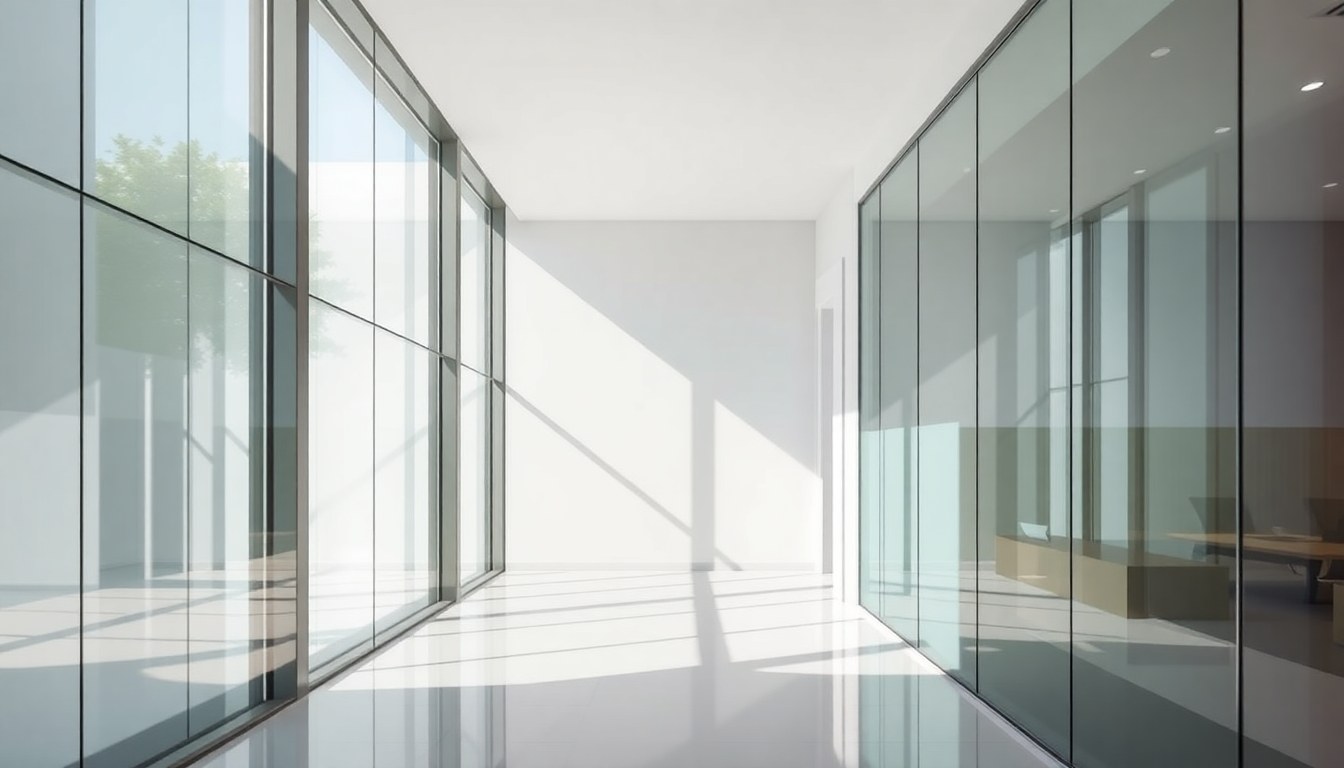
When designing curtain wall systems for commercial buildings in Ahmedabad, architects and developers face a fundamental choice between spandrel glass and vision glass. Spandrel glass provides opaque coverage for structural elements, insulation, and mechanical systems, while vision glass offers transparency and natural light. Understanding the thermal performance, aesthetic integration, and cost implications of each type is essential for creating energy-efficient, visually cohesive facades that perform well in Ahmedabad's intense heat and humidity.
Understanding Spandrel Glass and Vision Glass
Vision glass is the transparent glazing that allows occupants to see outside and permits natural daylight to enter the building. It typically consists of clear or lightly tinted glass, often in insulated glass unit (IGU) configurations with low-emissivity coatings to control solar heat gain. Vision glass defines the openness and connectivity between interior spaces and the external environment.
Spandrel glass, in contrast, is designed to conceal non-vision areas of a building facade, including floor slabs, columns, insulation, HVAC equipment, and electrical wiring. While it appears similar to vision glass from the exterior to maintain aesthetic continuity, spandrel glass is opaque and does not require the same optical clarity. It can be manufactured using ceramic frit, back-painted glass, or shadow box construction techniques.
The key distinction lies in function: vision glass prioritizes transparency and view, while spandrel glass prioritizes concealment and thermal protection of building components. Both must work together harmoniously to create a unified curtain wall appearance while meeting different performance requirements.
Thermal Performance in Ahmedabad's Climate
Ahmedabad experiences extreme temperatures, with summer peaks reaching 45°C and intense solar radiation throughout most of the year. The thermal performance of both spandrel and vision glass directly impacts building energy consumption, occupant comfort, and HVAC system sizing.
Vision Glass Thermal Considerations
For vision glass in Ahmedabad, solar heat gain coefficient (SHGC) and U-value are critical metrics. Low-E coatings with SHGC values between 0.25 and 0.35 help reject solar heat while maintaining visible light transmittance. Double-glazed IGUs with argon gas fill and low-E coatings on surface #2 (outer pane, room-side surface) provide optimal performance, achieving U-values around 1.6-1.8 W/m²K.
Visible light transmittance (VLT) should be balanced against solar control needs. A VLT of 40-50% typically provides adequate daylight while minimizing glare and heat gain. Reflective coatings can further reduce solar heat gain but may create exterior glare issues and alter the building's appearance throughout the day.
Spandrel Glass Thermal Requirements
Spandrel areas require additional insulation behind the glass since they cover building elements that would otherwise create thermal bridges. The glass itself serves primarily as a weather barrier and aesthetic element. Insulation with R-values of at least R-10 to R-15 (approximately 1.76-2.64 m²K/W) should be installed behind spandrel glass to meet energy code requirements.
Without proper insulation, spandrel areas can become significant sources of heat gain, with surface temperatures exceeding 70°C under direct sun exposure. This heat radiates into adjacent occupied spaces and increases cooling loads substantially. Shadow box construction, which creates an air gap between the exterior glass and an interior backing panel with insulation, provides better thermal performance than back-painted glass alone.
Aesthetic Integration and Design Continuity
Creating visual unity between spandrel and vision glass is one of the most challenging aspects of curtain wall design. From street level and distance views, spandrel and vision areas should appear as a seamless, continuous facade without obvious differentiation that breaks the architectural rhythm.
Several techniques achieve this integration. Color-matching involves selecting spandrel glass tints and coatings that closely replicate the reflected appearance of vision glass. This requires careful mockups and samples viewed under various lighting conditions, as spandrel glass without depth can appear flatter than vision glass with its interior reflections.
Shadow box construction creates artificial depth behind spandrel glass by installing a dark-colored backing panel several inches behind the exterior glass pane. This depth creates shadows and reflections similar to vision glass, making the distinction nearly invisible from outside. The shadow box cavity should be properly ventilated to prevent heat buildup.
Firms like Vihar Fadia Architects and Design Core in Ahmedabad have experience specifying curtain wall systems that balance aesthetic continuity with performance requirements for commercial projects.
Cost Comparison and Budget Considerations
The cost differential between spandrel and vision glass systems depends on the chosen construction method, performance specifications, and project scale. Understanding these cost factors helps developers and architects make informed decisions during design development and value engineering.
Vision Glass Costs
High-performance vision glass for Ahmedabad's climate typically costs between ₹1,200 and ₹2,500 per square meter for the glass unit alone, depending on coating quality, glass thickness, and IGU configuration. This includes double-glazed units with low-E coatings and argon fill. Triple-glazed units, rarely necessary in Ahmedabad except for acoustic control, can exceed ₹3,500 per square meter.
Installation costs add ₹800 to ₹1,500 per square meter, including aluminum framing, structural attachments, sealants, and labor. Total installed costs for vision glass curtain walls range from ₹2,000 to ₹4,000 per square meter for standard commercial applications.
Spandrel Glass Costs
Back-painted spandrel glass is the most economical option, costing ₹600 to ₹1,200 per square meter for the glass itself. However, this approach provides minimal thermal performance without additional insulation layers, which must be factored into the total assembly cost.
Shadow box spandrel construction costs ₹1,400 to ₹2,200 per square meter for materials, including the exterior glass pane, aluminum framing for the cavity, insulation, and interior backing panel. While more expensive than simple back-painted glass, shadow box construction delivers superior thermal performance and better aesthetic integration with vision glass areas.
Overall, a well-designed curtain wall system in Ahmedabad might allocate 60-70% of the facade area to vision glass and 30-40% to spandrel coverage, with total facade costs averaging ₹2,500 to ₹3,500 per square meter installed.
Installation Best Practices for Ahmedabad Projects
Proper installation is critical for both spandrel and vision glass performance. Ahmedabad's climate presents specific challenges including thermal expansion, monsoon moisture management, and air quality concerns that affect sealant longevity.
Thermal movement must be accommodated through appropriate joint sizing and high-quality structural silicone sealants. Glass surface temperatures can vary by 40°C or more between early morning and peak afternoon, causing significant expansion and contraction. Joints should be sized at 12-15mm minimum width with depth-to-width ratios between 1:1 and 2:1 for optimal sealant performance.
Moisture barriers and ventilation are essential for spandrel areas. Shadow box cavities require weep holes at the bottom and ventilation slots at the top to prevent condensation buildup and allow hot air to escape. Without proper ventilation, trapped moisture can lead to insulation degradation and interior damage.
Quality control during installation should include verification of insulation placement behind all spandrel areas, proper sealant tooling and curing, and thermal imaging inspection after installation to identify any thermal bridges or gaps in the insulation layer. Working with experienced suppliers like Shree Ambaji Glass & Plywood Centre ensures access to quality materials suitable for Ahmedabad's demanding climate.
Maintenance and Long-Term Performance
Both spandrel and vision glass require ongoing maintenance to preserve appearance and performance. In Ahmedabad's dusty, polluted urban environment, facade cleaning should occur at least twice annually to maintain aesthetic quality and prevent buildup that can degrade sealants.
Vision glass maintenance focuses on cleaning for clarity and inspection of IGU seals. Seal failure in insulated units leads to condensation between panes and loss of thermal performance. Quality IGUs should maintain seal integrity for 15-20 years under normal conditions, but Ahmedabad's temperature extremes can accelerate degradation.
Spandrel glass requires inspection of backing insulation and shadow box integrity. Water infiltration through failed sealants can saturate insulation, dramatically reducing R-value and potentially causing interior damage. Thermal imaging surveys every 3-5 years can identify developing problems before they become severe.
Sealant replacement is typically necessary every 10-15 years, depending on exposure and initial quality. Structural silicone sealants generally outlast weatherproofing sealants, which face direct UV exposure and weathering. Planning for this maintenance cycle in building operational budgets ensures long-term facade performance.
Frequently Asked Questions
What is the main difference between spandrel glass and vision glass?
Vision glass is transparent glazing that provides views and natural light, while spandrel glass is opaque and designed to conceal structural elements, insulation, and mechanical systems behind the facade. Spandrel glass maintains aesthetic continuity with vision glass from the exterior while serving a completely different functional purpose of concealment and thermal protection.
How much insulation is needed behind spandrel glass in Ahmedabad?
Spandrel areas in Ahmedabad should have insulation with R-values of at least R-10 to R-15 (1.76-2.64 m²K/W) to prevent excessive heat gain and meet energy efficiency standards. Without adequate insulation, spandrel areas can reach surface temperatures exceeding 70°C and significantly increase cooling loads in adjacent interior spaces.
Is shadow box construction worth the extra cost for spandrel areas?
Yes, shadow box construction typically justifies its additional cost of ₹800-1,000 per square meter over simple back-painted glass. It provides superior thermal performance through the air cavity and insulation layer, better aesthetic integration with vision glass through created depth, and improved long-term durability. The energy savings and enhanced appearance usually offset the higher initial investment within 5-7 years.
Can spandrel and vision glass be made to look identical from outside?
With careful specification and shadow box construction, spandrel and vision glass can appear nearly identical from exterior viewing distances. The key is matching the reflective properties and creating depth behind spandrel glass that mimics the interior reflections of vision glass. Physical mockups viewed under various lighting conditions are essential to achieve proper color and reflection matching.
What glass specifications work best for curtain walls in Ahmedabad's climate?
For vision glass, specify double-glazed IGUs with low-E coatings achieving SHGC values of 0.25-0.35 and U-values around 1.6-1.8 W/m²K. For spandrel areas, use shadow box construction with the same exterior glass specification as vision areas for aesthetic continuity, backed by R-10 to R-15 insulation. This combination balances thermal performance, daylight admission, and energy efficiency for Ahmedabad's hot climate.
Designing effective curtain wall systems requires balancing aesthetic goals with thermal performance and budget constraints. Whether you're an architect, developer, or building owner in Ahmedabad, connecting with experienced glass suppliers and facade consultants is essential for successful project outcomes. Visit the glassy.in directory to find qualified glass professionals, architects, and suppliers who understand the specific requirements of commercial facade design in Ahmedabad's challenging climate.