
Glass Facades
Point-Supported Glass Fin Wall Systems: Design and Installation for Delhi NCR Atriums
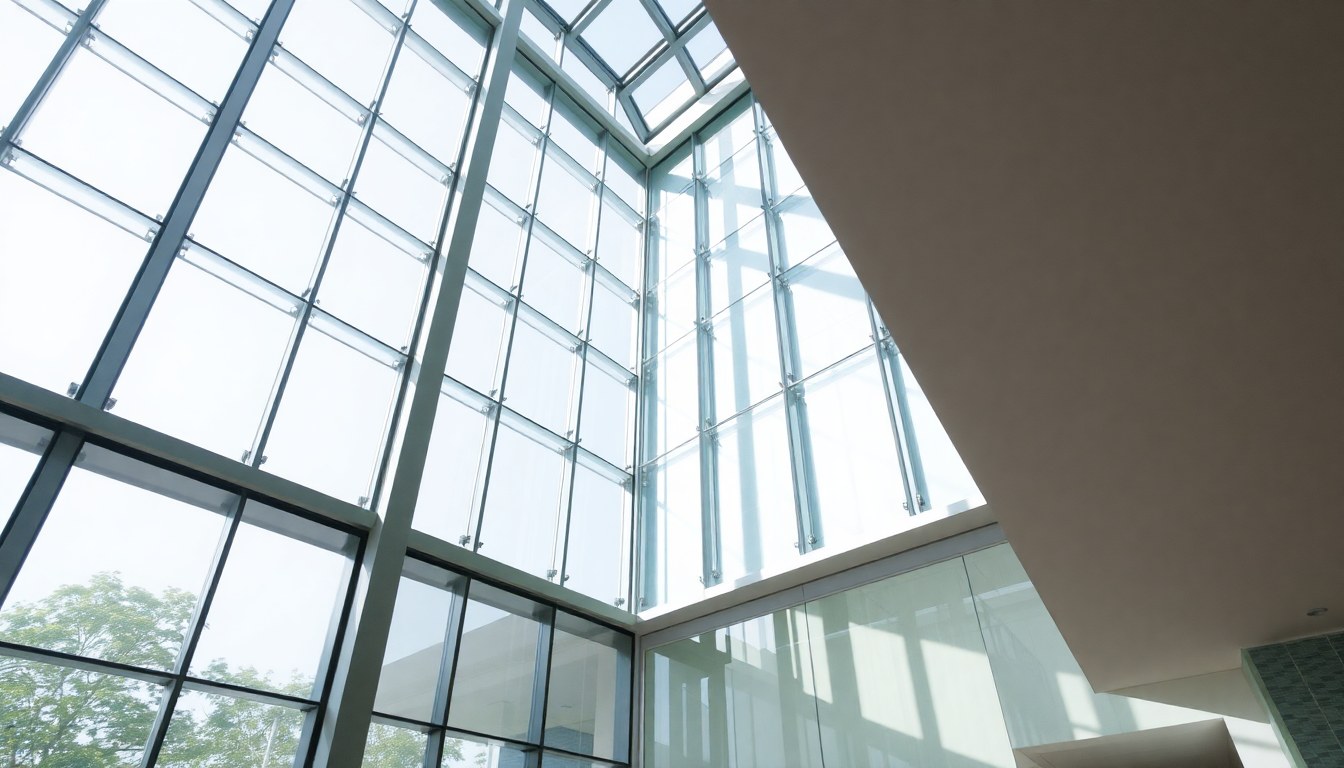
Point-supported glass fin wall systems have transformed atrium design across Delhi NCR, offering unobstructed views and flood natural light into commercial and residential spaces. These structural glazing systems use minimal hardware—typically stainless steel spider fittings—to secure glass panels while maintaining visual transparency. For architects and developers working on atrium projects in the region, understanding the structural principles, material specifications, and installation sequencing is essential to deliver safe, compliant, and visually stunning results.
Understanding Glass Fin Wall Structural Systems
Glass fin walls rely on vertical glass fins that act as the primary structural support, eliminating the need for heavy metal framing. The system transfers wind loads and dead loads through the glass itself, with point fixings at strategic locations. In Delhi NCR's climate, where temperatures can swing from 4°C in winter to 45°C in summer, thermal expansion calculations become critical to system performance.
The typical configuration includes laminated glass panels (usually 12mm to 19mm thick) connected to structural glass fins (ranging from 15mm to 25mm thick) via stainless steel spider fittings. These fins are anchored to the floor and sometimes to lateral supports, creating a self-supporting glass wall. The structural glass fins themselves are made from heat-strengthened or tempered laminated glass with PVB or SGP interlayers for post-breakage performance.
For atrium applications in Delhi NCR, designers must account for the increased solar heat gain coefficient and specify appropriate low-E coatings. Many projects in Gurgaon and Noida now incorporate double-glazed units with argon filling to improve thermal performance while maintaining the minimalist aesthetic that point-supported systems provide.
Spider Fitting Specifications and Hardware Selection
Spider fittings are the critical connection points in these systems, typically manufactured from AISI 316 or 304 grade stainless steel for corrosion resistance. Each spider fitting consists of multiple arms (commonly 2, 3, or 4 arms) that connect to adjacent glass panels through drilled holes. The rotational capability of these fittings allows them to accommodate minor installation tolerances and structural movement.
Key Hardware Components
- Spider brackets: Available in various arm configurations, typically supporting loads from 150 kg to 400 kg per fitting depending on design
- Countersunk bolts: Grade 8.8 or higher stainless steel bolts that fit flush with glass surface
- Point fixing bushings: Brass or stainless steel bushings that distribute load around drilled holes and prevent stress concentration
- Structural anchors: Chemical anchors or cast-in plates that secure the system to concrete or steel structure
- Patch fittings: Used at door locations and access points, providing additional reinforcement
The spacing between point fixings typically ranges from 1200mm to 1500mm vertically and horizontally, though this varies based on glass thickness, panel dimensions, and wind load calculations. For Delhi NCR projects, wind pressure calculations must account for basic wind speeds of 47 m/s as per IS 875 Part 3, with terrain category adjustments for urban locations.
Material Quality Standards
All glass used in point-supported systems must comply with IS 2553 for tempered glass and IS 14900 for laminated glass. The PVB interlayer thickness should be minimum 1.52mm, though many architects now specify SGP (SentryGlas) interlayers for improved structural performance and clarity. Hardware should meet ISO 9001 quality standards, with load testing certificates provided for each batch of spider fittings.
Cantilever Calculations and Structural Analysis
The structural design of glass fin walls requires detailed finite element analysis to verify stress levels, deflections, and safety factors. Glass fins act as vertical cantilevers when fixed only at the base, or as beams when laterally supported at multiple points. The maximum allowable stress in tempered glass is typically limited to 24 MPa for long-term loads and 50 MPa for short-term wind loads, with appropriate safety factors applied.
Deflection limits are equally important—most specifications restrict deflection to L/100 for wind loads and L/200 for combined loads, where L is the span length. For a typical 6-meter-high atrium glass wall in Delhi NCR, this translates to maximum deflections of 60mm and 30mm respectively. Experienced firms like Sky Earth Architects incorporate these calculations early in the design phase to ensure structural adequacy.
Load Considerations Specific to Delhi NCR
- Wind loads: Calculate using IS 875 Part 3 with appropriate risk coefficients and terrain factors
- Seismic loads: Delhi falls in Zone IV, requiring seismic analysis per IS 1893
- Thermal loads: Account for 40°C temperature differential between summer and winter
- Dead loads: Include self-weight of glass (approximately 25 kg/m² for 10mm glass)
- Maintenance loads: Provision for window cleaning equipment and access
The structural analysis should also verify the capacity of point fixings, including bearing stress around drilled holes. The hole diameter is typically 4mm to 6mm larger than the bolt diameter to allow for thermal expansion and installation tolerances. Edge distances from holes to glass edges must be minimum 2.5 times the glass thickness to prevent edge failures.
Installation Sequencing and Site Procedures
Proper installation sequencing is critical to achieving the designed performance of glass fin wall systems. The process typically begins weeks before glass arrives on site, with structural preparation and anchor installation. For Delhi NCR projects, scheduling must account for extreme weather—installation during monsoon months (July-September) or peak summer (May-June) should be avoided when possible.
Pre-Installation Phase
The structural substrate must be surveyed for levelness and plumbness, with tolerances typically within ±3mm over 3 meters. Any deviations require correction before anchor installation. Chemical anchors or cast-in plates are installed according to manufacturer specifications, with pull-out tests conducted on a minimum of 10% of anchors. The base channel or fixing system must be precisely leveled, as any error compounds over the height of the installation.
Glass panels arrive on site pre-drilled and edge-polished, with holes positioned according to shop drawings. Each panel should be inspected for edge quality, hole positioning accuracy (±1mm tolerance), and any surface defects. Temporary storage must protect glass from direct sunlight and provide adequate support to prevent stress cracks.
Installation Steps
- Install base anchors and structural fins: Begin with the glass fins that provide primary support, ensuring perfect vertical alignment using laser levels
- Secure bottom fixings: Install base spider fittings with appropriate torque settings (typically 15-20 Nm for M10 bolts)
- Position first glass panel: Use vacuum lifters to position panels, starting from one corner and working systematically
- Install spider fittings: Attach spiders at each fixing point, ensuring even pressure distribution and proper alignment
- Progress panel by panel: Install adjacent panels, maintaining consistent joint widths (typically 10-15mm)
- Install weatherproofing: Apply structural silicone or gasket systems at joints after all panels are secured
- Final inspection: Check all connections, torque values, alignment, and visual appearance
Throughout installation, workers must use non-abrasive handling equipment and avoid metal-to-glass contact. Many contractors in Gurgaon and Noida now use specialized glass installation robots for large atrium projects, improving safety and precision while reducing installation time.
Compliance and Quality Assurance for Delhi NCR Projects
Glass fin wall installations in Delhi NCR must comply with National Building Code of India 2016, particularly Part 6 (Structural Design) and Part 8 (Building Services). Local building authorities in Gurgaon, Noida, and Delhi have specific requirements for high-rise and atrium installations, often requiring third-party structural certification before approval.
Quality assurance should include material testing certificates for all glass and hardware, structural calculations stamped by a licensed structural engineer, and installation records documenting torque values, alignment checks, and any deviations from design. Mock-up installations are increasingly common for large projects, allowing the design team to verify performance before full-scale installation begins.
Post-installation testing may include water spray tests to verify weatherproofing, visual inspection under various lighting conditions to check for optical distortions, and deflection monitoring during high-wind events. Professional firms like Alter Architects often recommend a commissioning period where the system is monitored before final acceptance.
Maintenance and Long-Term Performance
Glass fin wall systems require minimal maintenance compared to traditional curtain walls, but regular inspection is essential for safety and performance. Annual inspections should verify the integrity of all spider fittings, check for any glass cracks or edge damage, and ensure that structural silicone joints remain intact. In Delhi NCR's dusty environment, quarterly cleaning is typically necessary to maintain optical clarity.
The stainless steel hardware may develop surface staining from water runoff, particularly in areas with hard water. This can be addressed through periodic cleaning with appropriate stainless steel cleaners. Any damaged glass panels should be replaced immediately, as the structural system relies on each panel contributing to overall stability.
For atrium applications, access for maintenance must be considered during design. Permanent anchors for window cleaning equipment or provisions for mobile elevated work platforms should be incorporated. The building maintenance team should receive training on the specific requirements of point-supported glass systems, including proper cleaning techniques and what signs of distress to monitor.
Frequently Asked Questions
What is the typical cost of glass fin wall installation in Delhi NCR?
Glass fin wall systems in Delhi NCR typically range from ₹4,500 to ₹8,500 per square meter, depending on glass specifications, hardware quality, and installation complexity. High-performance systems with SGP lamination and premium spider fittings can exceed ₹10,000 per square meter. These costs include materials, fabrication, and installation but exclude structural modifications or specialized access equipment that may be required for tall atriums.
How long does installation take for a typical atrium project?
A standard atrium glass fin wall covering 200-300 square meters typically requires 3-4 weeks for complete installation, including structural preparation, glass installation, and weatherproofing. Larger projects or complex geometries may extend to 6-8 weeks. Weather delays during monsoon season can add 1-2 weeks to the schedule. Pre-fabrication and shop drawing approval should begin 8-10 weeks before planned installation to ensure timely delivery of custom components.
What glass thickness is required for different atrium heights?
For atrium heights up to 4 meters, 12mm tempered laminated glass (6mm+6mm) with appropriate spider spacing is generally sufficient. Heights of 4-6 meters typically require 15mm to 17mm laminated glass, while installations above 6 meters often need 19mm or thicker glass with closer spider spacing or additional lateral support. The exact specification depends on wind loads, panel dimensions, and specific project requirements determined through structural analysis.
Are glass fin walls suitable for Delhi NCR's extreme climate?
Yes, when properly designed with appropriate thermal breaks and low-E coatings. The temperature differential in Delhi NCR requires careful attention to thermal expansion—typically 9mm per 10 meters of glass for a 40°C temperature change. Structural silicone joints must accommodate this movement while maintaining weatherproofing. Double-glazed units with low-E coatings and argon filling significantly improve thermal performance, reducing cooling loads while maintaining the transparent aesthetic.
What certifications should installers have for these systems?
Installers should have experience with structural glazing systems and provide references for similar atrium projects. Key personnel should be trained in glass handling, spider fitting installation, and structural silicone application. The installation company should maintain quality management systems (ISO 9001) and safety certifications. For large projects, the structural engineer should conduct site inspections at critical installation stages to verify compliance with design specifications and approved shop drawings.
For your next atrium project in Delhi NCR, finding experienced glass fabricators and installers is crucial to success. Explore the extensive directory at glassy.in to connect with qualified professionals who specialize in point-supported glass systems and can deliver the technical expertise your project demands.