
Glass Facades
Glass Spandrel Panel Installation: Structural Requirements for Ahmedabad Commercial Buildings
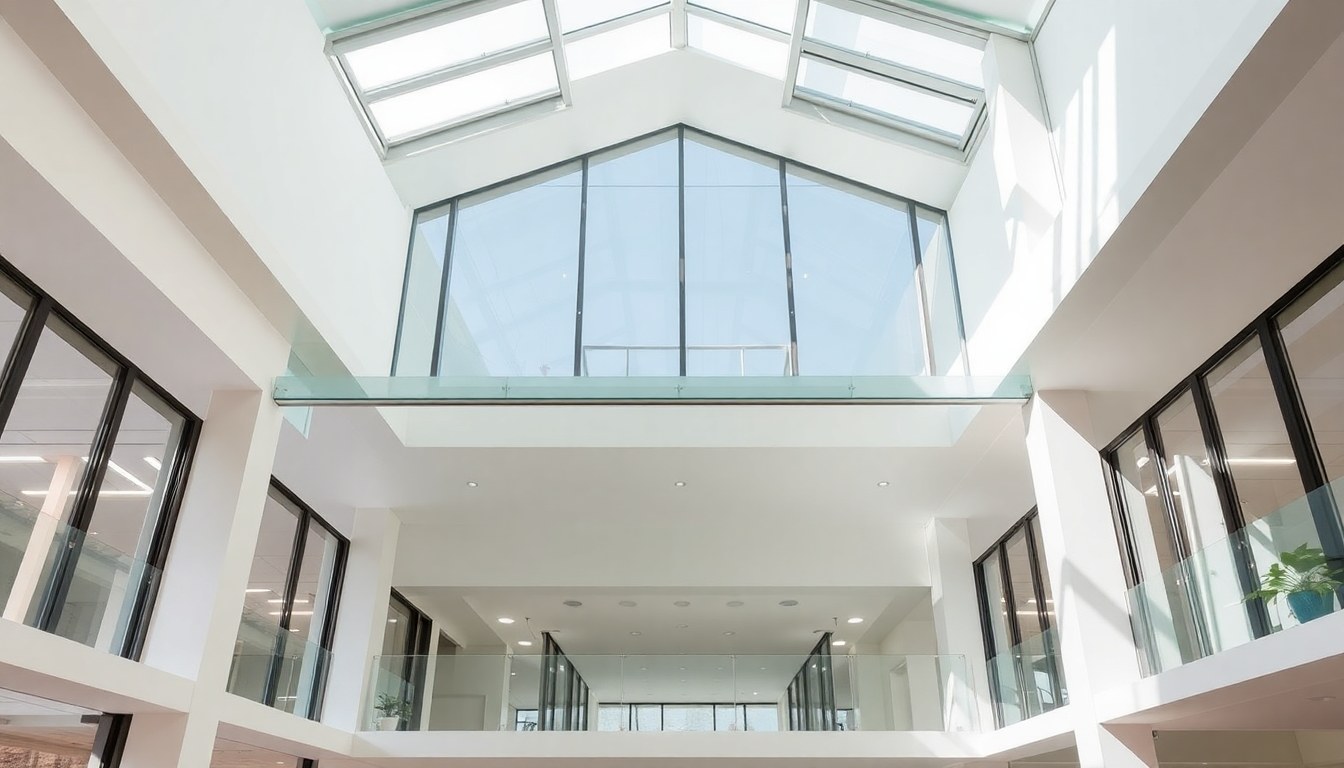
Spandrel glass panels have become essential components in modern commercial facades across Ahmedabad, concealing structural elements while maintaining aesthetic continuity. With the city's rapid commercial development and extreme climate conditions—summer temperatures exceeding 45°C—proper spandrel panel installation requires careful attention to structural engineering, thermal performance, and local building codes. This comprehensive guide addresses the critical requirements for specifying and installing spandrel glass systems in Ahmedabad's commercial construction projects.
Understanding Spandrel Glass Systems in Commercial Applications
Spandrel panels are opaque or translucent glass units installed in non-vision areas of a building facade, typically concealing floor slabs, columns, mechanical systems, and insulation. Unlike vision glass that allows transparency, spandrel glass serves both aesthetic and functional purposes by creating a uniform exterior appearance while protecting interior structural elements from weather exposure.
In Ahmedabad's commercial buildings, spandrel glass most commonly appears in curtain wall systems, unitized facade assemblies, and structural glazing applications. The panels must withstand significant thermal stress due to the city's intense solar radiation, particularly on west and south-facing elevations. Standard spandrel configurations include back-painted glass, ceramic-fritted glass, or shadow box assemblies that incorporate insulation behind clear or tinted glass.
The selection between different spandrel types depends on performance requirements, budget constraints, and architectural intent. Shadow box spandrels, while more expensive, offer superior thermal performance by creating an air gap between the exterior glass and interior insulation. Back-painted or fritted spandrel glass provides a more economical solution but requires careful specification to prevent heat buildup and potential thermal breakage.
Structural Load Requirements and Wind Pressure Calculations
Ahmedabad falls within wind zone II according to IS 875 Part 3, requiring spandrel glass systems to withstand wind pressures typically ranging from 1.2 to 1.8 kN/m² depending on building height and location. Commercial buildings exceeding 15 meters require detailed wind tunnel studies or computational fluid dynamics analysis to determine accurate pressure coefficients for facade design.
Spandrel glass thickness selection must account for panel dimensions, support conditions, and calculated wind loads. For typical commercial applications in Ahmedabad, minimum glass thickness ranges from 6mm for small panels with closely-spaced supports to 12mm or greater for larger spans. Laminated or heat-strengthened glass is often specified to improve post-breakage performance and reduce thermal stress failure risk.
Dead Load and Seismic Considerations
The self-weight of spandrel assemblies—including glass, framing, insulation, and ancillary components—must be properly transferred to the building structure through appropriately designed connections. Shadow box spandrel systems can weigh 40-60 kg/m², requiring robust attachment details and adequate structural capacity at floor slab edges. Ahmedabad's location in seismic zone III necessitates drift accommodation details that allow facade movement without glass-to-frame contact during seismic events, typically requiring 15-20mm clearance gaps.
Thermal Performance and Heat Management
Spandrel areas absorb significantly more solar radiation than vision glass due to the opaque backing, often reaching surface temperatures of 80-90°C on Ahmedabad's west-facing facades during summer afternoons. This extreme heat gain creates three critical challenges: thermal stress on the glass itself, heat transfer to interior spaces, and potential damage to concealed insulation or structural elements.
Heat-strengthened or fully tempered glass should be specified for most spandrel applications to resist thermal breakage. The heat-treatment process increases the glass's ability to withstand temperature differentials of 100°C or more, compared to 40°C for annealed glass. Additionally, ceramic frit patterns or reflective coatings can reduce solar absorption by 20-30%, lowering surface temperatures and improving overall thermal performance.
Insulation and Vapor Barrier Requirements
Adequate insulation behind spandrel panels is essential to prevent heat transfer and condensation issues. Mineral wool or rigid foam insulation with minimum R-value of 2.5 m²K/W should be installed between the glass and interior construction. A continuous vapor barrier on the warm (interior) side prevents moisture migration that could lead to condensation on cooler surfaces during Ahmedabad's monsoon season when humidity levels exceed 80%.
Ventilation of the spandrel cavity, particularly in shadow box assemblies, helps dissipate heat buildup. Properly designed weep and vent holes at panel perimeters allow air circulation while maintaining weather-tightness, reducing cavity temperatures by 10-15°C compared to sealed assemblies.
Glass Specifications and Manufacturing Standards
All spandrel glass used in Ahmedabad commercial projects must comply with IS 2835 for flat glass and IS 14900 for processed glass products. Heat-strengthened glass should meet IS 15048, while tempered glass must conform to IS 2553. These standards ensure consistent quality, appropriate edge treatment, and adequate surface compression for thermal stress resistance.
Back-painted spandrel glass requires ceramic or polyester paint applied to the interior surface, with sufficient opacity to prevent light transmission and visual detection of concealed elements. The paint system must withstand temperatures up to 100°C without degradation, blistering, or color shift. Multiple coating layers are typically necessary to achieve complete opacity, particularly with lighter colors.
Quality Control and Testing Requirements
Before installation, spandrel glass panels should undergo inspection for dimensional accuracy, edge quality, coating uniformity, and absence of defects. For large projects, sample testing including thermal cycling, adhesion testing of coatings, and structural load testing provides verification of performance characteristics. Heat-soak testing of tempered spandrel glass, while not always mandatory, reduces the risk of spontaneous breakage due to nickel sulfide inclusions.
Installation Methods and Structural Connections
Spandrel panel installation methods vary based on the facade system type. In unitized curtain wall systems common to Ahmedabad's high-rise commercial buildings, spandrel panels are pre-assembled into factory-fabricated units that interlock on-site. This approach ensures quality control, reduces installation time, and minimizes weather-related delays during the monsoon season from June to September.
Stick-built systems require field glazing of spandrel panels into vertical mullions and horizontal transoms. Structural silicone glazing provides a flush exterior appearance while accommodating thermal movement and maintaining weather seals. The silicone must achieve minimum bite depth of 12mm and width of 6mm, with compatibility testing between the silicone, glass coatings, and aluminum framing confirmed before installation.
Setting Blocks and Edge Clearances
Proper glass support through setting blocks prevents edge contact and stress concentrations. Neoprene or EPDM setting blocks should be positioned at quarter points for horizontal edges, with minimum 3mm edge clearance on all sides to accommodate thermal expansion. In Ahmedabad's climate, glass can expand 0.8-1.0mm per meter of length due to temperature variations, requiring adequate clearance to prevent binding.
Code Compliance and Regulatory Requirements
Commercial building facades in Ahmedabad must comply with the Gujarat Municipal Corporation Development Control Regulations, National Building Code of India 2016, and Energy Conservation Building Code (ECBC) 2017. The ECBC mandates maximum U-values for opaque portions of building envelopes, typically 0.40 W/m²K for climate zone Hot-Dry where Ahmedabad is located.
Fire safety requirements under NBC Part 4 necessitate fire-rated spandrel assemblies in buildings exceeding 15 meters height, particularly at floor-to-floor spandrel areas that could allow vertical fire spread. Wire-reinforced glass or specialized fire-rated glazing systems may be required depending on building occupancy classification and fire engineering analysis.
Building permits from the Ahmedabad Municipal Corporation require submission of detailed facade drawings, structural calculations, material specifications, and third-party testing certificates. Large commercial projects often undergo technical review by empaneled structural consultants before permit approval, with particular scrutiny of wind load calculations and connection details.
Frequently Asked Questions
What is the difference between spandrel glass and vision glass in commercial facades?
Spandrel glass is opaque or translucent glazing used to conceal structural elements, insulation, and mechanical systems in non-vision areas of facades, while vision glass provides transparency for views and daylighting. Spandrel panels typically incorporate back-painting, ceramic frits, or shadow box assemblies to block visibility, and must be specified for higher thermal stress due to increased solar heat absorption compared to vision glass.
How thick should spandrel glass be for a 10-story commercial building in Ahmedabad?
For a 10-story building in Ahmedabad, spandrel glass thickness typically ranges from 8mm to 12mm depending on panel dimensions and wind load calculations. Panels larger than 1.5m x 2.0m generally require 10mm or 12mm heat-strengthened or tempered glass to resist wind pressures of 1.5-1.8 kN/m² and thermal stress from Ahmedabad's intense solar radiation. Laminated configurations may be specified for enhanced safety and acoustic performance.
Can regular annealed glass be used for spandrel panels in Ahmedabad's climate?
Annealed glass is generally not recommended for spandrel applications in Ahmedabad due to high risk of thermal breakage. Surface temperatures on spandrel panels can exceed 80°C, creating thermal stress that annealed glass cannot withstand. Heat-strengthened or fully tempered glass should be specified to resist temperature differentials, with ceramic frit or reflective coatings to reduce solar absorption and lower thermal stress risk.
What insulation R-value is required behind spandrel glass in Ahmedabad?
The Energy Conservation Building Code recommends minimum R-value of 2.5 m²K/W for opaque envelope sections in Ahmedabad's Hot-Dry climate zone. This typically translates to 75-100mm of mineral wool insulation or 50-75mm of rigid foam board behind spandrel panels. Adequate insulation prevents excessive heat transfer to interior spaces and helps maintain comfortable indoor temperatures while reducing air conditioning loads.
How long does spandrel glass installation typically take for commercial projects?
Installation duration depends on facade system type and project scale. Unitized curtain wall systems with pre-assembled spandrel panels can be installed at rates of 150-200 square meters per day for experienced crews, while stick-built systems progress at 80-120 square meters per day. A typical 5,000 square meter commercial facade in Ahmedabad requires 4-8 weeks for complete installation, accounting for weather delays during monsoon season and coordination with other building trades.
For commercial building projects requiring expert spandrel glass installation services in Ahmedabad, connect with qualified facade contractors and glass suppliers through the glassy.in directory. Our platform lists verified professionals specializing in commercial glazing systems, ensuring your project meets structural requirements and performance standards.