
Interior Design
Mirrored Glass Wardrobe Doors: Installation Challenges & Solutions
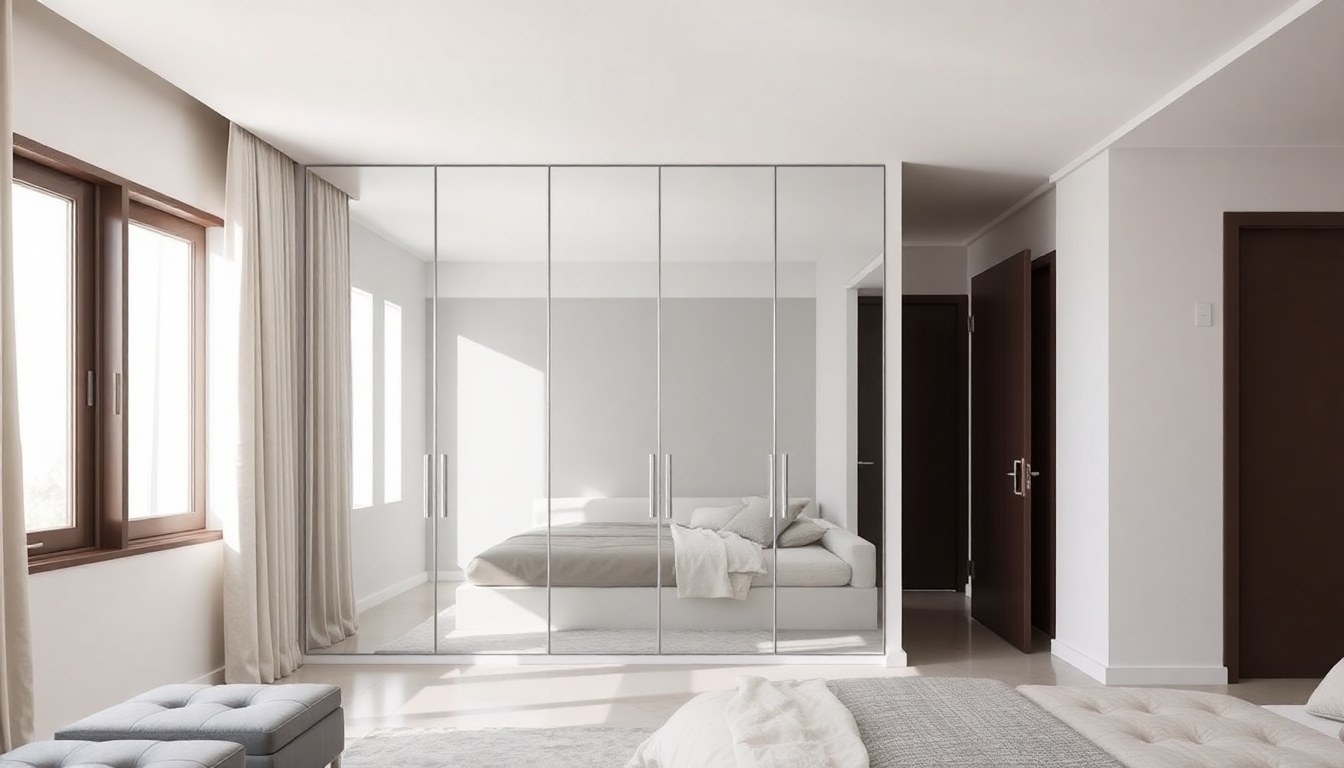
Mirrored glass wardrobe doors add elegance and create an illusion of spaciousness in any bedroom, but their installation is far more complex than standard wooden shutters. From frame alignment to managing India's humid and temperature-variable climate, installers face multiple technical hurdles that can lead to misalignment, adhesive failure, and costly rework. This guide walks you through the real-world challenges and proven solutions to ensure your mirrored wardrobe doors stand straight, stay secure, and reflect perfectly for years to come.
Understanding the Core Installation Challenges
Mirrored glass wardrobe doors differ fundamentally from regular doors. They are heavier, more fragile, and highly sensitive to frame imperfections. A slight deviation in frame squareness—even 3-5 mm—becomes immediately visible as distortion in the reflection. Additionally, the adhesive bond between mirror backing and glass must be perfect; any air pockets or weak spots will eventually cause delamination.
The Indian climate adds another layer of complexity. Monsoon humidity swells wooden frames, summer heat expands metal tracks, and seasonal temperature swings stress adhesive bonds. Many installers underestimate these environmental factors, leading to doors that stick, rattle, or develop cloudy patches where moisture penetrates the mirror backing.
Frame Alignment and Squareness: The Foundation
Before any glass touches the frame, you must verify that the wardrobe cabinet is perfectly square and plumb. Use a digital level and a laser square to check all four corners. Any deviation greater than 2 mm should be corrected before proceeding.
Measuring and Correcting Frame Geometry
Measure the diagonal distances corner-to-corner. Both diagonals must be equal; if they differ by more than 3 mm, the frame is racked (twisted). Adjust by loosening corner brackets and gently tapping the frame until diagonals match. For wooden frames, use shims—thin wooden or plastic wedges—behind the mounting brackets to correct minor tilts. For metal frames, loosen the mounting bolts slightly and realign before re-tightening.
Once the frame is square, install a temporary straightedge across the top and bottom rails. This prevents the frame from shifting during the installation process. Many installers skip this step and regret it when doors bind halfway through installation.
Track Preparation and Lubrication
Clean all tracks thoroughly with a dry cloth and vacuum. Even fine dust affects the smooth operation of heavy mirrored doors. Apply a silicone-based track lubricant—never use oil-based products, as they attract dust and degrade over time in Indian heat. Wipe away excess lubricant; too much causes the doors to slide too freely and become difficult to control during installation.
Adhesive Selection for Mirror-Backed Glass
The adhesive bond between the glass and mirror backing is critical. In India's variable climate, this bond must withstand humidity swings, temperature fluctuations, and vibration from foot traffic. Choosing the wrong adhesive is one of the most common installation failures.
Adhesive Types and Performance in Indian Climates
- Polyurethane-based adhesives (PU): Excellent moisture resistance and flexibility. Cost ranges from ₹500–₹1,500 per litre. Ideal for humid coastal regions and monsoon-prone areas. Curing time is 24–48 hours, which extends the installation timeline but ensures durability.
- Epoxy adhesives: Rigid bond with high shear strength. Better for temperature-stable environments. In Indian climates with high humidity, epoxy can trap moisture and cause delamination. Use only in air-conditioned spaces.
- Silicone-based adhesives: Good flexibility and moisture resistance, but lower shear strength. Suitable for smaller mirror panels (under 1 metre width) but not recommended for full-height wardrobe doors.
- Acrylic adhesives: Fast-curing but poor moisture resistance. Avoid in monsoon seasons or humid regions like Mumbai, Kolkata, and Bangalore.
For most Indian installations, polyurethane adhesive is the safest choice. It tolerates humidity, accommodates thermal expansion, and maintains bond strength over 10+ years. Always buy adhesive from reputable manufacturers; counterfeit or expired adhesive is a leading cause of mirror failure within 2–3 years.
Application Technique
Apply adhesive in a grid pattern—not a continuous bead—to allow trapped air to escape. Space the adhesive beads 10–15 cm apart, using a caulking gun for precision. Too much adhesive creates voids; too little results in weak bonding. Allow the adhesive to reach room temperature (20–25°C) before application. Cold adhesive (below 15°C) has poor flow and incomplete wetting, common in early-morning installations in winter months.
Vibration Damping and Noise Control
Mirrored glass doors are prone to vibration-induced rattling and noise. This is especially problematic in urban apartments where foot traffic, traffic noise, and even washing machine vibrations transmit through the building structure. Without proper damping, the mirror-glass interface resonates, creating an annoying hum or rattle.
Damping Materials and Installation
Install elastomeric damping strips (rubber or neoprene) between the glass door and the metal track. These strips absorb vibration energy and reduce noise by 60–70%. Position them at the top and bottom of the door, and along the side rails where the door meets the frame. Cost is typically ₹200–₹400 per door.
For doors wider than 1.2 metres, add a centre damping guide. This prevents the door from flexing in the middle, which causes rattling and potential glass stress. Centre guides should be installed 1.5–2 metres from the floor to remain invisible but effective.
Isolation from Building Vibration
Mount the wardrobe cabinet on isolation pads if it is freestanding. These pads (₹300–₹800 per set) decouple the cabinet from the floor, preventing vibrations from the building's structure from transferring to the doors. In high-rise apartments and commercial buildings, this step is essential.
Climate-Specific Challenges in India
India's diverse climate zones present distinct installation challenges. Coastal areas (Mumbai, Goa, Chennai) experience high humidity and salt spray. Northern plains (Delhi, Lucknow) face extreme temperature swings. Western Ghats regions (Pune, Bangalore) have moderate humidity but sudden weather shifts. Your installation strategy must account for your local climate.
Monsoon and High-Humidity Regions
In monsoon zones, moisture penetration is the primary risk. Use polyurethane adhesive exclusively; it resists moisture far better than epoxy or acrylic. Ensure the wardrobe cabinet has adequate ventilation—drill small drainage holes (6 mm diameter) at the bottom corners to allow moisture to escape. Install a silica gel packet inside the wardrobe to absorb ambient moisture. Replace packets every 2–3 months during monsoon season.
Avoid installing mirrored doors during peak monsoon (June–September) if possible. Humidity levels above 80% prevent adhesives from curing properly and trap moisture in the mirror backing. If installation is unavoidable, use a dehumidifier in the room for 48 hours after installation to accelerate adhesive curing.
Extreme Temperature Zones
In regions with large temperature swings (Delhi: 5°C winter to 45°C summer), thermal expansion and contraction stress the adhesive bond and frame alignment. Leave a 2–3 mm expansion gap at the top of each door. This accommodates vertical expansion without binding. For metal frames, use stainless steel tracks (not mild steel) to resist corrosion and maintain dimensional stability.
In summer, avoid installing doors between 2 PM and 5 PM when ambient temperature peaks. Hot adhesive has poor viscosity and weak wetting. Install in early morning (6–9 AM) when temperature is stable and the adhesive can cure at consistent conditions.
Common Installation Pitfalls and How to Avoid Them
Years of field experience reveal recurring mistakes that compromise door performance:
- Skipping frame squareness checks: Even 5 mm deviation causes visible distortion and binding. Always measure diagonals and correct before starting.
- Using wrong adhesive for climate: Epoxy in humid regions or acrylic in monsoon zones fails within 2 years. Match adhesive to your climate zone.
- Insufficient curing time: Installing doors before adhesive fully cures (48+ hours) risks delamination. Patience is essential; don't rush.
- Neglecting vibration damping: Doors rattle within weeks without proper damping. Budget for elastomeric strips and centre guides.
- Poor track cleanliness: Even fine dust causes binding and noise. Vacuum and wipe tracks meticulously before installation.
- Inadequate ventilation in wardrobe: Trapped moisture causes mirror backing to cloud and adhesive to weaken. Drill drainage holes and install ventilation strips.
- Using counterfeit or expired adhesive: Buy from authorized distributors only. Counterfeit adhesive fails within 1–2 years.
Step-by-Step Installation Checklist
Follow this checklist to minimize errors:
- Verify frame squareness using diagonal measurements and digital level.
- Correct any frame racking using shims or bracket adjustment.
- Install temporary straightedge to lock frame geometry.
- Clean all tracks with vacuum and dry cloth.
- Apply silicone-based track lubricant sparingly.
- Verify adhesive is at room temperature (20–25°C).
- Apply adhesive in grid pattern (10–15 cm spacing).
- Position glass and mirror backing carefully; avoid air bubbles.
- Install damping strips at top, bottom, and side rails.
- Install centre guide for doors wider than 1.2 metres.
- Allow 48+ hours curing before opening doors.
- Drill drainage holes at wardrobe base for ventilation.
- Test door movement and alignment after curing.
Frequently Asked Questions
How long does mirrored glass wardrobe door installation take?
Installation itself takes 4–6 hours for a standard 2-door wardrobe. However, the total timeline is 3–4 days because adhesive requires 48 hours of curing before the doors can be operated. Plan accordingly and keep the wardrobe closed during this period.
What is the typical cost of installation in India?
Labour costs range from ₹3,000–₹8,000 per door depending on location, door size, and complexity. Material costs (adhesive, damping strips, lubricant) add ₹1,500–₹3,000 per wardrobe. Quality installation is worth the investment; cheap installation leads to costly repairs within 2–3 years.
Can I install mirrored doors in a bathroom or high-moisture area?
Mirrored glass doors are not recommended for bathrooms or areas with constant moisture exposure. Even with polyurethane adhesive, prolonged moisture exposure causes mirror backing deterioration and adhesive failure. Use regular (non-mirrored) glass or moisture-resistant alternatives in bathrooms.
How do I prevent rattling and noise after installation?
Install elastomeric damping strips at all contact points between glass and frame. For doors wider than 1.2 metres, add a centre damping guide. Ensure the frame is perfectly square and all fasteners are tight. Rattle typically indicates frame misalignment or missing damping materials.
What should I do if the mirror develops cloudy patches?
Cloudiness indicates moisture penetration into the mirror backing. This occurs when adhesive fails due to moisture exposure or poor adhesive selection. Unfortunately, this damage is irreversible and requires door replacement. Prevention (proper adhesive choice, ventilation, and climate control) is the only solution.
Mirrored glass wardrobe doors elevate interior aesthetics, but their installation demands precision, quality materials, and climate-aware strategies. Whether you're a homeowner planning a renovation or a contractor seeking reliable installation practices, understanding these challenges and solutions ensures long-lasting, trouble-free performance. Browse the glassy.in directory to connect with experienced glass installers, adhesive suppliers, and damping material manufacturers across India who specialize in mirrored wardrobe door solutions.