
Toughened Glass
Laminated Glass vs Toughened Glass for Balcony Safety: Which Meets Indian Codes?
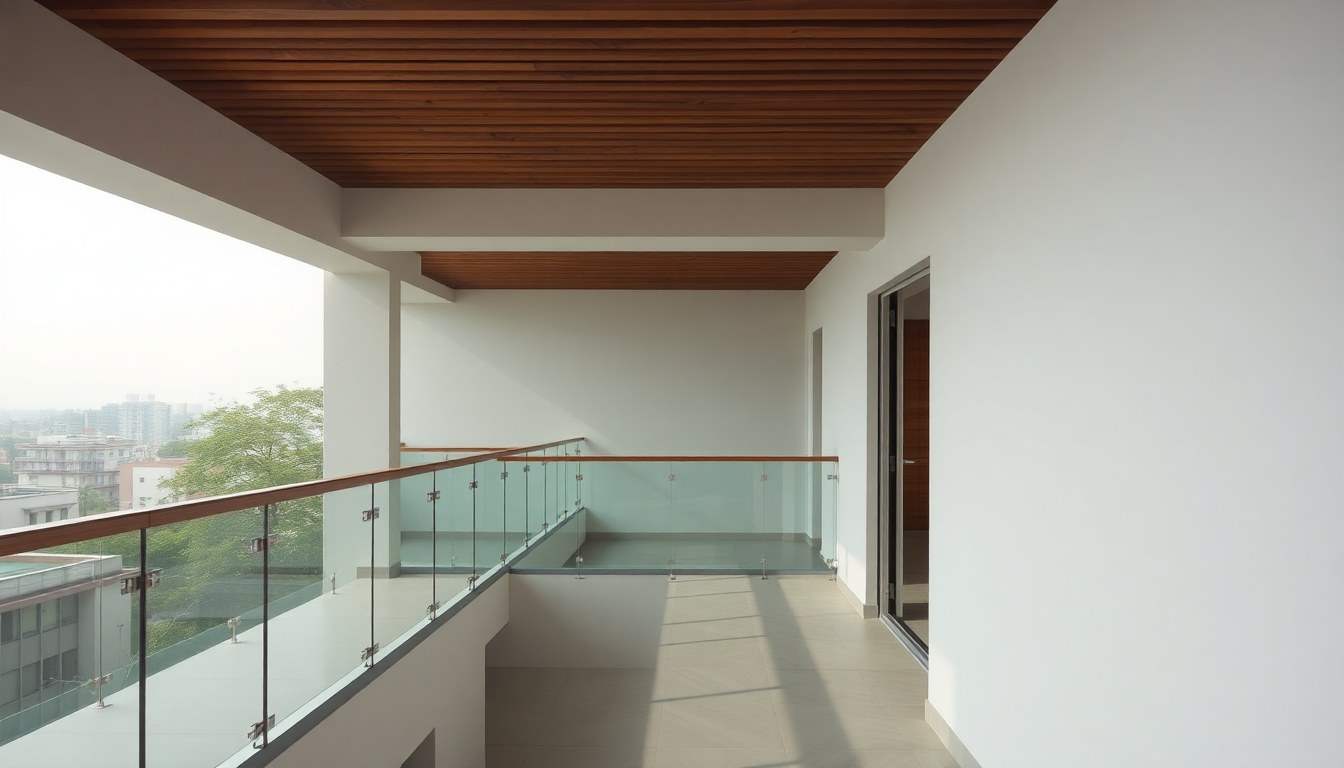
Balcony safety is a critical concern in Indian high-rise residential and commercial buildings, where wind loads, accidental impacts, and occasional extreme weather pose real risks to occupants and pedestrians below. Choosing between laminated and toughened glass for balcony railings and barriers is not just a matter of cost—it directly affects compliance with the National Building Code (NBC) and your legal liability in case of failure. This guide compares both safety glass types, their performance characteristics, and which one aligns with Indian building regulations.
Understanding Toughened Glass and How It Works
Toughened glass, also called tempered glass, is manufactured by heating annealed glass to around 620°C and then cooling it rapidly using jets of cold air. This thermal process creates internal compressive stress on the surface and tensile stress in the core, making the glass significantly stronger than ordinary glass—typically 4 to 5 times more impact-resistant.
When toughened glass breaks, it fragments into small, relatively harmless granular pieces rather than sharp shards. This is a key safety feature: even if the glass fails under extreme impact, the fragments are too small to cause severe lacerations. The typical fragment size is 2–3 mm, which reduces injury severity compared to conventional glass breakage.
Advantages of Toughened Glass for Balconies
- High impact resistance: Withstands accidental collisions, ball impacts, and moderate wind loads without cracking.
- Safe fragmentation: Breaks into small, blunt pieces instead of dangerous shards.
- Cost-effective: Generally 20–40% cheaper than laminated glass of equivalent thickness.
- Clear visibility: No interlayer means unobstructed views and better optical clarity.
- Lightweight: Easier to install and requires less structural support.
Limitations of Toughened Glass
The main drawback of toughened glass is that once it shatters, it offers no barrier—all the glass falls away, leaving an open gap. In a balcony railing, this means a person or object can pass through the opening after breakage. Additionally, toughened glass can spontaneously break due to nickel sulfide inclusions (a rare manufacturing defect), which poses unpredictable safety risks in some cases.
Understanding Laminated Glass and Its Safety Benefits
Laminated glass consists of two or more glass panes bonded together with a polyvinyl butyral (PVB) interlayer—typically 0.76 mm thick per layer. The interlayer acts as a strong adhesive, holding the glass together even after impact, so the glass remains in the frame as a cohesive unit rather than falling apart.
When laminated glass breaks, the cracks radiate from the impact point, but the interlayer prevents the fragments from separating. This means the barrier remains intact, protecting people below from falling glass and preventing passage through the opening. The impact energy is absorbed by the interlayer, which also provides sound insulation and UV protection as a bonus.
Advantages of Laminated Glass for Balconies
- Remains in frame after breakage: The interlayer holds fragments together, maintaining the barrier function.
- Superior safety on failure: No falling glass shards—critical for high-rise buildings where debris can harm people below.
- Sound insulation: The PVB layer reduces external noise by 30–50%.
- UV protection: Blocks harmful ultraviolet rays, protecting furnishings from fading.
- Predictable failure: No risk of spontaneous breakage from internal defects.
Limitations of Laminated Glass
Laminated glass is heavier and more expensive—typically ₹800–1,200 per square meter compared to ₹500–800 for toughened glass. It also requires more robust frame installation due to its weight. Over time, the interlayer can degrade if exposed to prolonged moisture or direct sunlight, though modern PVB formulations have significantly improved durability. The interlayer is also visible at the edges, which some consider less aesthetically pleasing.
Indian Building Codes and Regulatory Requirements
The National Building Code (NBC) of India, updated in 2016, specifies safety requirements for glazing in buildings. For balconies and railings in residential buildings, the NBC recommends safety glazing to prevent injuries from impact and breakage. However, the code does not explicitly mandate one type over the other—it allows both toughened and laminated glass, provided they meet specific performance standards.
Key regulatory points from NBC and local building bylaws include:
- Minimum thickness: For balcony railings, 6 mm toughened glass or 6 mm laminated glass (3+3 mm with PVB interlayer) is typically required.
- Height requirement: Glazing barriers on balconies must extend at least 1.1 meters from the floor level.
- Wind load compliance: Glass must withstand wind pressures specified for the building's location and height (IS 875 Part 3 standards).
- Impact resistance: Both glass types must pass impact tests as per IS 16537 (Indian Standard for safety glazing).
Some municipal corporations—such as those in Mumbai, Delhi, and Bangalore—have issued specific guidelines favoring laminated glass for high-rise buildings (above 15 stories) due to the critical safety advantage of retained fragments. Always verify your local building authority's requirements before finalizing your choice.
Comparing Safety Performance in Real-World Scenarios
Scenario 1: Accidental Ball Impact
A cricket ball or football strikes the balcony railing at moderate speed. Toughened glass will likely crack but hold in place. If the impact is severe enough to break it completely, the glass fragments fall away, leaving an open gap. Laminated glass will crack but remain in the frame, maintaining the barrier and preventing the ball from passing through.
Scenario 2: High Wind Load
During a severe storm, sustained wind pressure exceeds the glass's design load. Both toughened and laminated glass of adequate thickness will resist the load if properly installed. However, if failure occurs, laminated glass retains its barrier function, while toughened glass falls away, potentially injuring people below.
Scenario 3: Seismic Activity
During an earthquake, building movement can stress the glass and frame. Toughened glass may shatter into fragments that fall. Laminated glass, with its flexible interlayer, absorbs some of the movement and keeps fragments contained, reducing injury risk and debris hazard.
Cost Comparison and Installation Considerations
For a typical 100 square meter balcony area with 1.2 meter high glazing barrier, here's an approximate cost breakdown in Indian rupees:
- 6 mm Toughened Glass: ₹50,000–80,000 (material + installation)
- 6 mm Laminated Glass (3+3 with PVB): ₹70,000–120,000 (material + installation)
The cost difference reflects laminated glass's superior safety performance and more complex manufacturing. Installation costs are similar, but laminated glass may require reinforced aluminum or steel frames due to its weight. Both types require professional installation by certified glaziers to ensure proper sealing and structural integrity.
Maintenance is minimal for both types. Toughened glass needs only regular cleaning with mild detergent. Laminated glass requires the same care, with attention to edge seals to prevent moisture ingress into the interlayer.
Which Type Should You Choose for Your Balcony?
Choose Toughened Glass if: You have a low-rise building (up to 6 stories) in a low-wind zone, your local building code permits it, and cost is a primary concern. Toughened glass is suitable for areas with moderate climate and lower foot traffic density below the balcony.
Choose Laminated Glass if: You have a high-rise building (above 15 stories), your building is in a high-wind or seismic zone, local codes recommend or mandate it, or safety is your top priority. Laminated glass is the safer choice for buildings in metropolitan areas like Mumbai, Delhi, and Bangalore where pedestrian density below balconies is high.
For most modern residential projects in India, especially in metropolitan cities, laminated glass is increasingly preferred by architects and builders due to its superior safety profile and reduced liability risk. However, toughened glass remains compliant with NBC for lower-rise buildings when properly specified.
Frequently Asked Questions
Is toughened glass compliant with Indian building codes for balconies?
Yes, toughened glass is compliant with the National Building Code (NBC) of India for balcony glazing, provided it meets the specified thickness (typically 6 mm), impact resistance standards (IS 16537), and wind load requirements for your building's height and location. However, some municipal corporations in high-density urban areas recommend laminated glass for buildings above 15 stories. Always check with your local building authority before finalizing your choice.
Can laminated glass spontaneously break like toughened glass?
No, laminated glass is much less prone to spontaneous breakage. Toughened glass can occasionally break without external impact due to nickel sulfide inclusions—a manufacturing defect that causes internal stress release. Laminated glass, with its interlayer design, does not have this vulnerability and fails only under actual impact or excessive load.
Which glass type is better for sound insulation on balconies?
Laminated glass provides superior sound insulation due to the PVB interlayer, which absorbs sound vibrations. It can reduce external noise by 30–50%, making it ideal for balconies facing busy roads or traffic. Toughened glass offers minimal sound dampening compared to laminated glass.
How long do the interlayers in laminated glass last?
Modern PVB interlayers in laminated glass are designed to last 20–30 years or more with proper installation and maintenance. Edge seals are critical—if moisture enters the interlayer over time, it may degrade. Regular inspection and maintenance of edge seals can extend the life significantly. High-quality laminated glass with UV-resistant interlayers performs better in tropical climates like India's.
What happens if toughened glass breaks on a high-rise balcony?
If toughened glass breaks on a high-rise balcony, the fragments fall away completely, leaving an open gap. This creates two hazards: glass shards and debris falling on people and property below, and an unguarded opening that poses a fall risk. This is why laminated glass is increasingly recommended for high-rise buildings in India, where the consequences of falling glass are more severe.
Choosing the right safety glass for your balcony is a decision that affects occupant safety, legal compliance, and long-term liability. Whether you select toughened or laminated glass, ensure it meets your local building code and is installed by certified professionals. Explore verified glass suppliers and manufacturers in your area through glassy.in, India's largest glass-business directory, where you can compare products, prices, and certifications from trusted vendors across the country.