
Toughened Glass
How to Choose the Right Toughened Glass Thickness for Balcony Railings
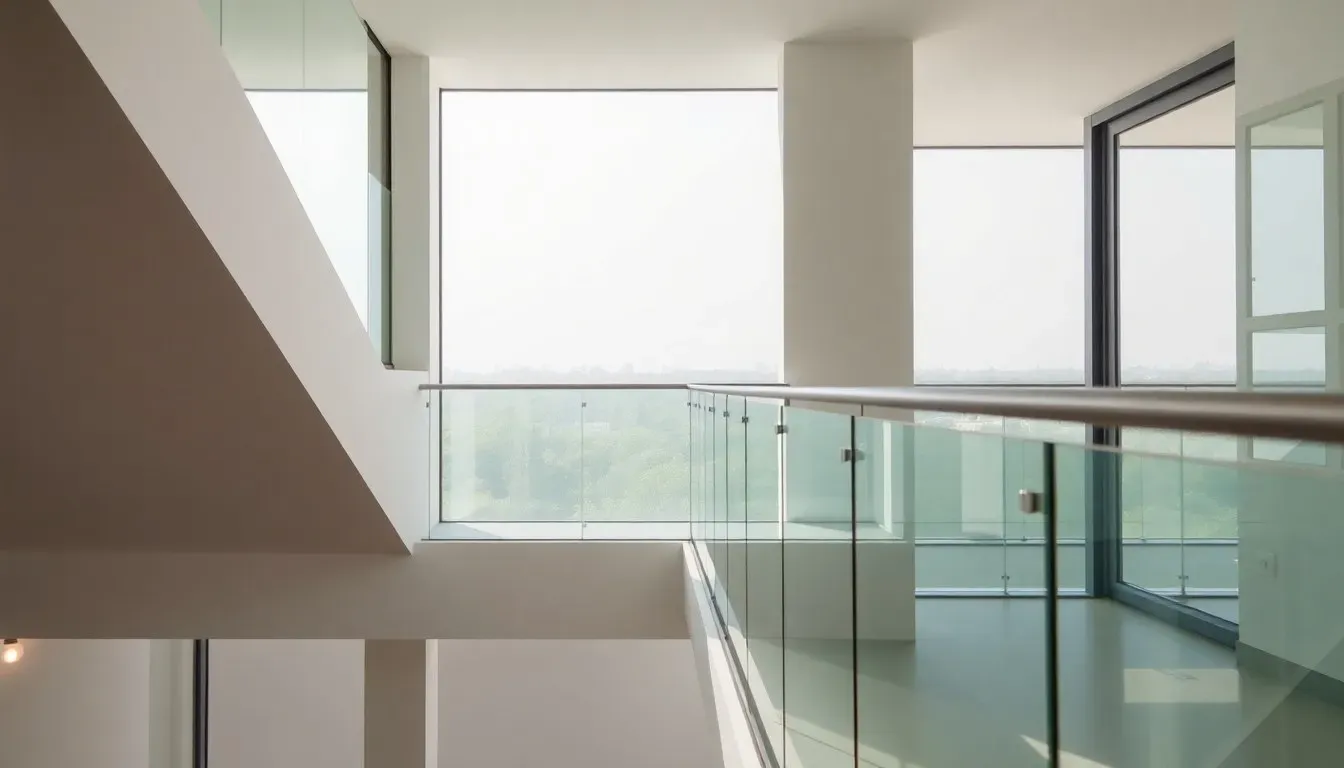
How to Choose the Right Toughened Glass Thickness for Balcony Railings
Selecting the appropriate toughened glass thickness for balcony railings is critical for ensuring both safety and regulatory compliance in Indian homes. While balcony glass railings offer unobstructed views and modern aesthetics, the wrong thickness choice can compromise structural integrity and put residents at risk. This comprehensive guide walks you through the technical considerations, Indian Standard codes, and practical factors that determine the ideal glass thickness for your balcony project.
Understanding Toughened Glass and Its Importance for Balconies
Toughened glass, also known as tempered glass, undergoes a thermal treatment process that makes it four to five times stronger than regular annealed glass. When broken, it shatters into small, blunt fragments rather than dangerous shards, making it the mandatory choice for balcony railings across India. The toughening process involves heating glass to approximately 650-700°C and then rapidly cooling it, creating surface compression that gives the material its characteristic strength.
For balcony applications, toughened glass must withstand various forces including wind loads, accidental impacts, and the horizontal thrust from people leaning against the railing. The glass also faces thermal stress from India’s diverse climate zones, from the hot summers of Rajasthan to the humid coastal regions of Kerala. These demanding conditions make thickness selection a critical engineering decision rather than merely an aesthetic choice.
Indian Standard Codes and Safety Requirements
The Bureau of Indian Standards (BIS) provides specific guidelines for glass railings through IS 12600:2002 and IS 2553:1990. According to these standards, toughened glass used in balcony railings must meet minimum thickness requirements based on the panel dimensions and the building’s height. For residential balconies, IS 12600 classifies toughened glass performance into three categories based on impact resistance, with balcony railings requiring Class 1 or Class 2 classification.
The National Building Code of India (NBC) 2016 mandates that balcony railings must be at least 1050mm high for residential buildings. When using glass as the primary railing material, the glass panel must be capable of withstanding a horizontal load of at least 0.75 kN/m applied at the top edge. This requirement directly influences the minimum thickness needed for safe installation.
Key Regulatory Standards to Consider
- IS 2553:1990 – Safety glass specifications for architectural glazing
- IS 12600:2002 – Pendulum test method for impact resistance classification
- NBC 2016 Part 6 – Structural design requirements including loads on railings
- IS 875 (Part 3) – Wind load calculations for external glass installations
Common Thickness Options: 10mm, 12mm, and 15mm
Indian manufacturers and glass suppliers typically offer three standard thickness options for balcony railing applications, each suited to different scenarios and requirements. Understanding when to use each thickness ensures both safety and cost-effectiveness.
10mm Toughened Glass
The 10mm thickness represents the absolute minimum for balcony railings in most residential applications. This option works best for smaller balconies with maximum glass panel widths of 1200mm and heights not exceeding 1200mm. It’s commonly used in low-rise buildings (up to three floors) in areas with moderate wind exposure. The approximate cost ranges from ₹350 to ₹500 per square foot, making it the most economical choice.
However, 10mm glass has limitations. It’s not recommended for balconies above the fourth floor, large panel installations, or buildings in coastal areas with high wind loads. The reduced thickness also means less sound insulation, which may be a consideration for balconies facing busy streets in cities like Mumbai or Bangalore.
12mm Toughened Glass
The 12mm thickness is the most popular choice for residential balcony railings across India. It offers an excellent balance between structural performance, safety margins, and cost. This thickness can accommodate panel dimensions up to 1500mm in width and 1400mm in height, making it suitable for most standard balcony configurations in mid-rise buildings up to 15 floors.
Architects and builders prefer 12mm glass because it provides adequate safety factors while remaining economically viable. The typical cost ranges from ₹450 to ₹650 per square foot. This thickness also offers better acoustic insulation and has sufficient rigidity to minimize visible deflection when loads are applied, maintaining the aesthetic appeal of the installation.
15mm Toughened Glass
For high-rise buildings, large panel installations, or areas with extreme wind exposure, 15mm toughened glass provides superior strength and safety margins. This thickness is mandatory for buildings above 15 floors in most metropolitan areas and for any installation with panel dimensions exceeding 1500mm in either direction. Coastal properties in cities like Chennai, Visakhapatnam, or Goa typically require 15mm glass due to cyclonic wind loads.
The cost for 15mm toughened glass ranges from ₹600 to ₹850 per square foot. While more expensive, the additional thickness significantly reduces the risk of breakage and provides enhanced sound insulation—a valuable feature for balconies in noisy urban environments. The increased weight does require more robust mounting hardware and careful structural assessment of the balcony edge.
Factors That Determine Your Ideal Thickness Choice
Beyond the basic thickness categories, several project-specific factors influence the optimal choice for your balcony railing. A thorough assessment of these variables ensures compliance with safety standards while avoiding unnecessary costs from over-specification.
Building Height and Wind Load
Wind pressure increases exponentially with building height, making this the primary consideration for high-rise installations. For buildings above 20 meters, wind load calculations per IS 875 (Part 3) become mandatory. Coastal regions and open terrain locations experience higher wind speeds than sheltered urban areas. A 10-story building in Pune’s sheltered areas might safely use 12mm glass, while a similar height building on Mumbai’s Marine Drive would require 15mm glass to withstand sea-facing wind loads.
Panel Dimensions and Aspect Ratio
Larger glass panels require thicker material to prevent excessive deflection and maintain structural integrity. The aspect ratio—the relationship between height and width—also matters significantly. A panel that’s 1000mm wide by 1200mm high experiences different stress patterns than one that’s 1500mm wide by 1000mm high. Generally, as the unsupported span increases, thickness must increase proportionally to maintain the required load-bearing capacity.
Support System and Mounting Method
The type of mounting system affects stress distribution across the glass. Point-fixed systems using spider fittings concentrate loads at specific points, typically requiring thicker glass (12mm minimum, often 15mm) compared to channel-mounted systems where the load distributes along the entire edge. U-channel bottom-mounted railings with minimal side support may need an additional 2mm thickness compared to fully framed installations.
Budget and Long-term Value
While initial cost is a consideration, balcony glass railings represent a long-term investment. Upgrading from 10mm to 12mm glass adds approximately ₹100-150 per square foot but provides significantly better safety margins and durability. For a typical 10 square meter balcony, this translates to an additional ₹10,000-16,000—a modest increase considering the 15-20 year lifespan of the installation and the enhanced peace of mind.
Installation Considerations and Professional Assessment
Proper installation is as critical as choosing the correct thickness. Even the thickest, highest-quality toughened glass will fail if improperly installed. All installations should begin with a structural assessment by a qualified engineer who can evaluate the balcony’s load-bearing capacity, calculate wind loads specific to your location and height, and specify the appropriate thickness and mounting system.
The installation process requires specialized hardware including stainless steel (grade 304 or 316) clamps, spigots, or channels that are corrosion-resistant for India’s humid climate. The glass edges must be properly polished and any drill holes for point-fixings must be precision-made during the toughening process—field drilling toughened glass is impossible and will cause immediate shattering. A minimum edge clearance of 50mm from any fixing point is standard practice to prevent stress concentration.
Professional installers should provide compliance certificates confirming that the glass meets IS 2553 standards and that the installation follows NBC guidelines. They should also apply safety decals or etch patterns at eye level to prevent accidental collisions—a requirement often overlooked but mandated for transparent barriers in public and residential buildings.
Maintenance and Long-term Performance
Toughened glass balcony railings require minimal maintenance but benefit from regular inspection and cleaning. Clean the glass monthly using a soft cloth and mild detergent solution to remove dust, salt deposits (especially in coastal areas), and pollution residue. Avoid abrasive cleaners or metal scrapers that can create surface scratches, which, while not compromising structural integrity, can accumulate dirt and affect appearance.
Inspect the mounting hardware quarterly for signs of corrosion, loose fittings, or rubber gasket deterioration. Stainless steel fittings can develop surface rust in coastal environments despite their corrosion resistance, requiring cleaning and occasional replacement. Check for any chips or edge damage to the glass panels—while small surface scratches are harmless, edge damage can propagate and potentially compromise the panel’s strength.
Toughened glass has an indefinite lifespan when properly maintained and protected from edge impacts. However, the mounting system typically requires hardware replacement or servicing every 10-15 years depending on environmental exposure. Budget for this periodic maintenance to ensure continued safety and performance throughout the installation’s life.
Frequently Asked Questions
What is the minimum thickness of toughened glass required for balcony railings in India?
The minimum thickness for balcony railings in residential buildings is typically 10mm toughened glass, but this applies only to low-rise buildings (up to three floors) with small panel dimensions. For most applications, 12mm is considered the practical minimum, and buildings above 15 floors or in high-wind zones require 15mm thickness. Always consult a structural engineer for your specific project, as local building regulations and site conditions may mandate thicker glass.
Can I use 10mm toughened glass for a 10th-floor balcony?
No, 10mm toughened glass is generally not recommended for balconies on the 10th floor or higher. At this height, wind loads increase significantly, and the glass must withstand greater horizontal forces. Most structural engineers specify 12mm minimum for floors 4-15 and 15mm for higher floors. Using inadequate thickness violates safety standards and puts occupants at risk, regardless of cost savings.
How much does toughened glass for balcony railings cost in India?
Toughened glass for balcony railings costs approximately ₹350-500 per square foot for 10mm, ₹450-650 per square foot for 12mm, and ₹600-850 per square foot for 15mm thickness. These prices include the glass but typically exclude mounting hardware, installation labor, and structural components. Total project costs including installation usually range from ₹800-1,400 per square foot depending on thickness, mounting system complexity, and location.
What is the difference between toughened glass and laminated glass for balconies?
Toughened glass is heat-treated single-layer glass that’s 4-5 times stronger than regular glass and shatters into small, blunt pieces when broken. Laminated glass consists of two or more glass layers bonded with an interlayer that holds fragments together if broken. For balcony railings, toughened glass is the standard choice due to its strength and cost-effectiveness. Laminated toughened glass (combining both technologies) is used in overhead applications or where post-breakage retention is critical, but it’s more expensive and typically unnecessary for vertical balcony railings.
How do I verify that my balcony glass meets Indian safety standards?
Verify compliance by requesting the manufacturer’s test certificates showing conformity to IS 2553:1990 and IS 12600:2002 standards. Reputable manufacturers stamp each glass panel with permanent markings indicating the standard, manufacturer name, and glass type. Additionally, ask your installer for structural calculations signed by a qualified engineer confirming that the chosen thickness meets load requirements per NBC 2016. Retain all compliance documentation, as building authorities may request these during occupancy certification or resale inspections.
Choosing the right toughened glass thickness for your balcony railing requires careful consideration of building height, panel dimensions, local wind conditions, and regulatory requirements. When in doubt, consult experienced professionals who can assess your specific situation and recommend the optimal solution. Visit the Glassy.in directory to connect with certified glass suppliers, manufacturers, and installation experts across India who can guide you through the selection and installation process, ensuring your balcony railing is both beautiful and safe.