
Glass Railings
How to Choose the Right Glass Railing Thickness for Balconies
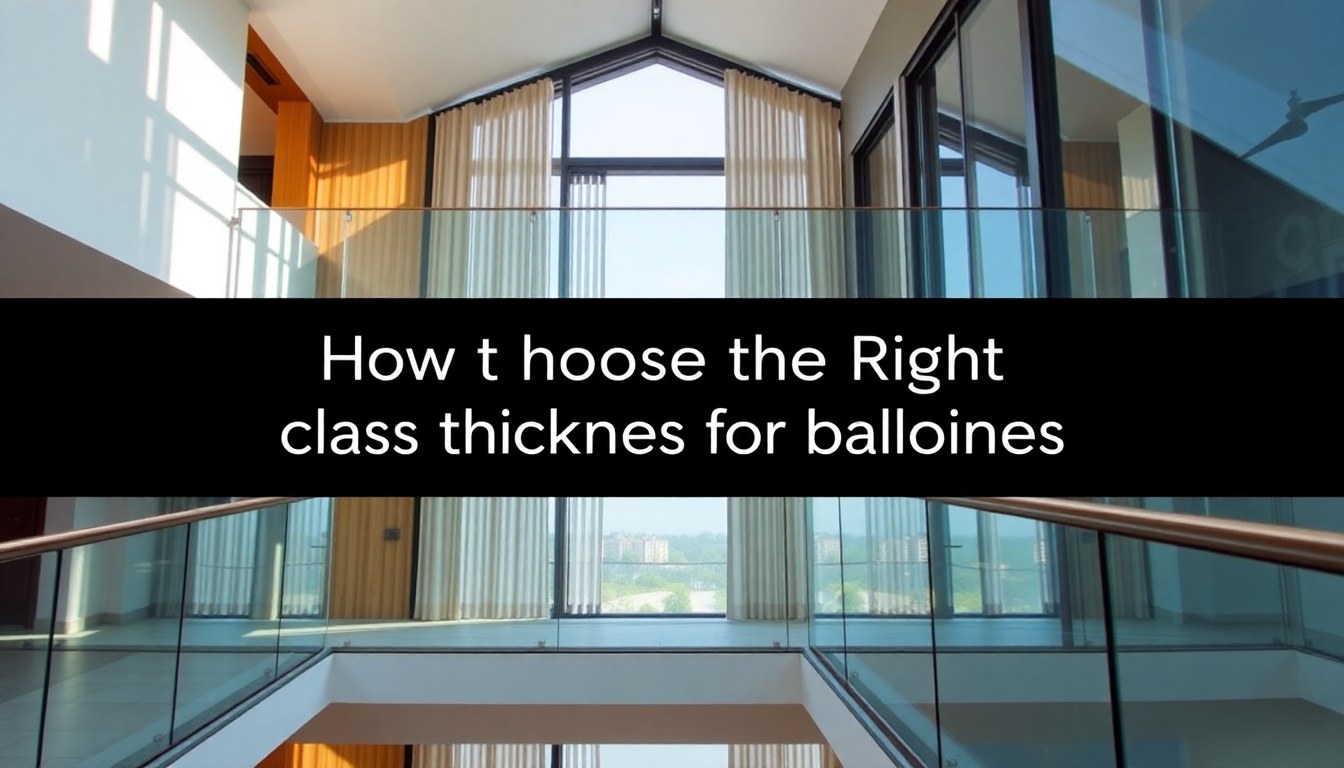
Choosing the correct glass railing thickness for your balcony isn't just about aesthetics—it's a critical safety decision that must comply with building codes and withstand daily use. In India, balcony glass railings typically range from 10mm to 21mm in thickness, with the right choice depending on factors like height, wind load, and whether you're using toughened or laminated glass. This comprehensive guide will help you make an informed decision that balances safety, compliance, and budget.
Understanding Indian Safety Standards for Glass Railings
The Bureau of Indian Standards (BIS) provides guidelines for glass railings through IS 14900, which specifies requirements for structural glass in buildings. According to these standards, any glass used as a protective barrier must be safety glass—either toughened (tempered) or laminated—to prevent catastrophic failure. The National Building Code of India (NBC) 2016 further mandates that balcony railings must be at least 1050mm high for residential buildings and capable of withstanding a horizontal load of 0.75 kN per meter.
These regulations exist because glass railings must protect occupants from falls while resisting impacts, wind pressure, and thermal stress. Unlike European or American standards, Indian codes also account for extreme temperature variations and monsoon conditions common across different regions. Compliance isn't optional—municipal authorities in cities like Mumbai, Bangalore, and Delhi increasingly scrutinize building permits and can reject installations that don't meet specifications.
When selecting glass thickness, always verify that your supplier provides test certificates confirming the glass meets IS 2553 (for toughened glass) or IS 2835 (for laminated glass). These certifications ensure the material has undergone proper heat treatment or lamination processes and will perform as expected under stress.
Minimum Thickness Requirements for Balcony Glass Railings
For residential balconies in India, the minimum recommended thickness is 12mm for toughened glass when used as a single pane. However, this baseline varies based on several factors including the unsupported height of the glass panel, the spacing between support posts, and the building's exposure to wind. High-rise buildings above the seventh floor typically require thicker glass or laminated alternatives due to increased wind loads.
Here's a practical breakdown of thickness recommendations based on common scenarios:
- Ground to 3rd floor: 12mm toughened glass is generally adequate for panels up to 1200mm in height with posts spaced at 1000-1200mm intervals
- 4th to 7th floor: 13.5mm toughened glass or 12mm laminated glass (6mm+6mm) provides better wind resistance
- 8th floor and above: 17.5mm toughened glass or laminated configurations like 10mm+8mm are recommended
- Coastal or high-wind areas: Add 1.5-2mm to the above recommendations regardless of floor level
These are conservative guidelines that prioritize safety. Some architects specify thinner glass with more frequent support posts, but this approach may compromise the clean, unobstructed views that make glass railings desirable in the first place. Always consult a structural engineer for buildings in cyclone-prone zones or areas with unique wind patterns.
Toughened Glass vs Laminated Glass: Which Thickness Works Best
The choice between toughened and laminated glass significantly impacts the thickness you'll need. Toughened glass is heat-treated to be four to five times stronger than ordinary glass of the same thickness. When it breaks, it shatters into small, relatively harmless granules rather than dangerous shards. For balcony railings, 12mm or 13.5mm toughened glass offers excellent strength-to-weight ratios and is the most cost-effective option for mid-rise residential buildings.
Laminated glass consists of two or more glass layers bonded with a plastic interlayer (typically PVB—polyvinyl butyral). Even when broken, the fragments adhere to the interlayer, maintaining barrier integrity. A 12mm laminated glass panel (6mm+6mm) provides superior safety compared to 12mm toughened glass because it won't fall away completely if shattered. For this reason, many premium projects and high-rises prefer laminated glass despite the 15-25% cost premium.
Comparing Performance Characteristics
Toughened glass excels in impact resistance and can handle point loads better, making it suitable for areas where objects might strike the railing. It's also lighter, which reduces the load on mounting hardware and building structure. However, once toughened glass breaks, the entire panel must be replaced immediately as it loses all structural integrity.
Laminated glass offers redundancy—if one layer cracks, the other continues to provide protection. This is particularly valuable for balconies in homes with children or in high-traffic areas. The interlayer also provides UV filtering and sound dampening benefits. For balconies facing busy streets in cities like Pune or Hyderabad, a 10.76mm laminated glass (5mm+5mm with 0.76mm interlayer) can reduce noise transmission by 30-35 decibels while meeting safety requirements.
Calculating Load Requirements for Your Specific Balcony
Professional glass thickness selection requires calculating the specific loads your railing will experience. The three primary forces are horizontal loads (people leaning), vertical loads (objects placed on top rails), and wind loads (particularly critical for high-rises). The NBC specifies a minimum horizontal load of 0.75 kN/m, but this is a baseline—actual requirements depend on your building's characteristics.
Wind load calculations follow IS 875 (Part 3) and consider factors like building height, terrain category, and local wind zone. Mumbai, Chennai, and Kolkata fall in higher wind zones due to coastal exposure, requiring more robust glass specifications. A structural engineer uses these calculations to determine the maximum span between supports and minimum glass thickness. For a typical 1200mm high glass panel with 1000mm spacing between posts, the glass must resist a bending moment that increases exponentially with unsupported height.
Temperature-induced stress is another consideration often overlooked in thickness selection. Dark-tinted glass or panels with one edge shaded can develop thermal stress cracks if undersized. In regions with high temperature variations like Delhi or Rajasthan, adding 1-2mm to the minimum calculated thickness provides a safety margin against thermal breakage.
Cost Considerations and Value Engineering
Glass thickness directly impacts project costs, with prices increasing approximately 15-20% for each 1.5mm increment in thickness. As of 2024, 12mm toughened glass typically costs ₹450-650 per square foot in major metros, while 13.5mm ranges from ₹550-750 per square foot. Laminated glass commands a premium, with 12.52mm (6mm+6mm+0.52mm PVB) costing ₹700-950 per square foot depending on the supplier and order volume.
While it might be tempting to select the minimum permissible thickness to reduce costs, this approach can be shortsighted. Thicker glass requires replacement less frequently, withstands accidental impacts better, and provides better acoustic insulation. Over a 15-20 year lifespan, the marginal upfront cost difference becomes negligible when factored against potential replacement costs and improved safety.
Value engineering opportunities exist in optimizing post spacing rather than just selecting thinner glass. By reducing spans from 1200mm to 900mm, you may be able to use 12mm glass instead of 13.5mm in certain applications. However, this increases hardware costs and can interrupt sightlines, so the trade-off must be evaluated holistically. Working with experienced glass railing fabricators who understand both structural requirements and aesthetic goals typically yields the best balance.
Installation Factors That Affect Thickness Selection
The mounting system you choose influences the effective thickness requirements. Frameless glass railings with spigot or clamp mounts place greater stress on the glass edges, often necessitating thicker panels or laminated construction. A 12mm toughened glass panel in a channel-mounted system (where the bottom edge sits in an aluminum channel) can perform equivalently to 13.5mm glass in a point-fixed system.
Edge finishing quality also matters significantly. All glass edges must be polished and free from chips, as even minor edge defects can become stress concentration points leading to spontaneous breakage. Quality fabricators use CNC machines for precise hole drilling and edge work, ensuring consistent results. When evaluating quotes, verify that edge polishing and hole reinforcement (for point-fixed systems) are included in the scope.
Local installation conditions matter too. Balconies with existing waterproofing or unusual floor-to-ceiling heights may require custom solutions that affect glass thickness choices. Always have your fabricator conduct a site survey before finalizing specifications, as field conditions often reveal factors not apparent in architectural drawings.
Frequently Asked Questions
What is the minimum glass thickness for a balcony railing in India?
The minimum recommended thickness for balcony glass railings in India is 12mm toughened glass for residential applications up to three floors. However, higher floors, coastal locations, and specific mounting systems may require 13.5mm or thicker glass. Always consult with a structural engineer and ensure compliance with local building codes and NBC 2016 requirements.
Is 10mm toughened glass safe for balcony railings?
While 10mm toughened glass meets minimum safety standards for certain applications, it is generally not recommended for balcony railings in India. The NBC 2016 and most municipal building codes effectively require 12mm minimum for protective barriers. Using 10mm glass may result in permit rejection and poses greater risk of breakage under impact or wind loads.
Which is better for balcony railings: toughened or laminated glass?
Both are safe when properly specified, but laminated glass offers superior safety because it holds together when broken, maintaining barrier integrity. For high-rises above seven floors, homes with children, or premium installations, laminated glass is preferable despite costing 15-25% more. For mid-rise buildings (3-7 floors) with standard exposure, 12-13.5mm toughened glass provides excellent performance at a lower cost.
How do I calculate the right glass thickness for my specific balcony?
Proper calculation requires considering panel height, spacing between posts, floor level, wind zone, and mounting system. This should be done by a qualified structural engineer using IS 875 for wind loads and NBC 2016 guidelines. As a general rule, panels over 1200mm high or post spacing exceeding 1200mm require engineering analysis beyond standard recommendations.
Does glass thickness affect the clarity or view from my balcony?
Thickness has minimal impact on clarity for standard clear glass up to 19mm. However, thicker glass does have slightly more green tint when viewed from the edge due to increased iron content. For the clearest views, specify low-iron (ultra-clear) glass, which costs 20-30% more but eliminates the green tint regardless of thickness. The visual difference between 12mm and 17.5mm standard clear glass is negligible when looking through the panel face.
Selecting the right glass railing thickness requires balancing safety standards, structural requirements, aesthetics, and budget. If you're planning a glass railing installation, connect with experienced fabricators and suppliers through the glassy.in directory to get expert guidance tailored to your specific project requirements and location.