
Glass Railings
Glass Balustrade Post Spacing: Structural Requirements for Surat Terraces
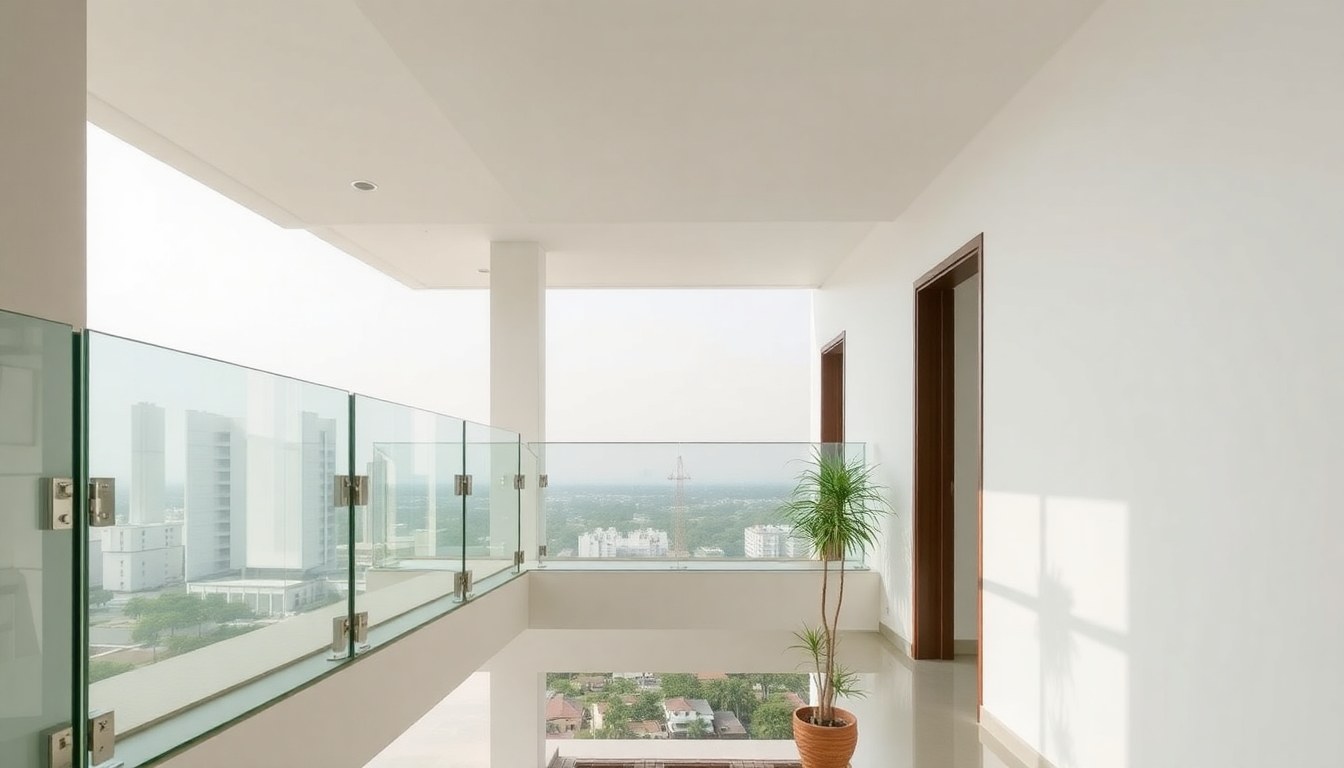
Proper post spacing is the foundation of safe and compliant glass balustrade installations on Surat terraces. Getting the calculations wrong can lead to structural failure, legal liability, and costly repairs. This comprehensive guide walks you through the exact spacing requirements, load calculations, and material specifications needed to ensure your glass railing system meets both safety standards and local building codes in Surat's unique climate conditions.
Understanding Load Requirements for Glass Balustrades
The first step in calculating post spacing is understanding the loads your balustrade must withstand. Indian Standard IS 875 (Code of Practice for Design Loads) specifies that residential balustrades must resist a horizontal load of 0.75 kN per linear meter applied at handrail height. For commercial applications, this increases to 1.5 kN per linear meter. These loads account for people leaning against or pushing on the railing during normal use.
Wind load is particularly critical for terrace installations in Surat. The coastal location means your balustrade faces higher wind pressures than inland areas. According to IS 875 Part 3, Surat falls under wind zone with basic wind speeds requiring careful consideration in exposed terrace locations. The glass panels act as solid barriers, creating significant wind pressure that transfers directly to the posts.
Dead load includes the weight of the glass panels themselves, mounting hardware, and handrails. Tempered glass panels typically weigh 25 kg per square meter for 12mm thickness, while laminated glass weighs approximately 30 kg per square meter. This weight must be distributed across the post system to prevent deflection or failure.
Standard Post Spacing Calculations
The maximum post spacing for glass balustrades depends on several interconnected factors: glass thickness, post material and dimensions, mounting method, and total balustrade height. For residential terraces using 12mm tempered glass with standard stainless steel posts (50mm diameter, 2mm wall thickness), the maximum recommended spacing is 1200mm center-to-center.
Calculating Maximum Span
To calculate the maximum allowable span, you need to consider the bending moment created by horizontal loads. The formula for maximum bending moment is M = (w × L²) / 8, where w is the uniformly distributed load and L is the span between posts. The post and glass system must resist this moment without exceeding allowable stress limits or deflection criteria.
For a typical residential installation with 0.75 kN/m horizontal load and 1200mm spacing, the bending moment at mid-span equals approximately 135 Nm. Your glass thickness and mounting system must handle this moment while keeping deflection under L/125 (approximately 9.6mm for a 1200mm span), which is the maximum deflection permitted under most building codes.
Adjusting for Glass Thickness
Thicker glass allows wider post spacing. While 12mm glass works well at 1200mm spacing, 15mm tempered glass can extend to 1400mm, and 17.5mm laminated glass can reach 1500mm spacing under residential loads. However, increasing spacing also increases the load on each post, requiring stronger post materials or larger diameters.
- 10mm tempered glass: Maximum 1000mm post spacing
- 12mm tempered glass: Maximum 1200mm post spacing
- 15mm tempered glass: Maximum 1400mm post spacing
- 17.5mm laminated glass: Maximum 1500mm post spacing
- 21.5mm laminated glass: Maximum 1800mm post spacing
Post Material Selection and Sizing
Stainless steel grades 304 and 316 are the preferred materials for glass balustrade posts in Surat due to excellent corrosion resistance in the humid coastal climate. Grade 316 offers superior resistance to chloride corrosion from sea air, making it worth the additional cost for terrace installations near the coast. Aluminum posts are lighter and more economical but require larger diameters to achieve equivalent strength.
Standard post sizes for residential glass balustrades include 50mm diameter with 2mm wall thickness for spacings up to 1200mm, 60mm diameter with 2.5mm wall thickness for spacings up to 1500mm, and 75mm diameter for wider spans or commercial applications. The post must extend at least 100mm below the mounting surface for core-mounted installations, with longer embedment required for higher balustrades or exposed locations.
When working with experienced professionals like Elvenwood Interiors, you can ensure proper material selection based on your specific terrace conditions and aesthetic preferences. Quality suppliers understand the relationship between post sizing, spacing, and overall system performance.
Foundation and Mounting Requirements
The foundation must transfer all loads from the balustrade to the building structure without failure or excessive movement. For terrace installations, this typically means anchoring posts into the concrete slab or parapet wall. Core-drilled mounting requires holes at least 100mm deep and 10mm larger than the post diameter, filled with high-strength chemical anchor resin rated for outdoor exposure.
Surface-mounted base plates offer an alternative where core drilling is not feasible. Base plates must be minimum 120mm × 120mm for 50mm posts, with four anchor bolts positioned in a square pattern. Each bolt must achieve minimum 15 kN pull-out strength, verified through testing where possible. The mounting surface must be structurally sound concrete at least 100mm thick.
Waterproofing Considerations
Surat's monsoon climate demands careful waterproofing around post penetrations. Any breach in the terrace waterproofing membrane can lead to water infiltration and structural damage. Use flexible waterproofing collars around each post, with overlap onto the existing membrane. Chemical anchors should be applied above the waterproofing layer when possible, with proper sealing of all penetrations.
For new construction, coordinate with waterproofing contractors to integrate post mounting details into the overall waterproofing system. Retrofit installations require cutting and patching the existing membrane, making surface-mounted base plates often preferable despite their larger visual footprint.
Surat Building Code Compliance
Glass balustrade installations in Surat must comply with the National Building Code of India (NBC) 2016 and Gujarat state amendments. The NBC requires all balustrades on terraces and balconies to be minimum 1050mm high measured from the finished floor level. Glass infill must be safety glazing material—either tempered or laminated glass meeting IS 2553 standards.
The Surat Municipal Corporation requires building permits for new balustrade installations and major renovations. Submit structural calculations signed by a qualified engineer, showing compliance with load requirements and proper post spacing. Include material specifications, installation drawings, and waterproofing details. Expect a site inspection before final approval, particularly for high-rise buildings or commercial properties.
Local wind zone classifications may require additional engineering for terraces above certain heights or in exposed locations. Buildings taller than 15 meters typically need certified wind load calculations specific to the site. Professional design services from firms like MARUTHI INTERIORS KARUR can navigate these requirements and ensure full compliance.
Installation Best Practices for Surat Climate
Surat's high humidity and temperature variations create specific installation challenges. Stainless steel components must be passivated after welding or cutting to restore corrosion resistance. All fasteners should be marine-grade stainless steel with matching or higher corrosion resistance than the posts. Avoid mixing dissimilar metals that can create galvanic corrosion in the humid environment.
Glass panels should have minimum 5mm clearance from posts and floors to allow thermal expansion. Use setting blocks and spacers made from EPDM rubber or similar weather-resistant materials. Silicone sealants must be neutral-cure formulations compatible with both glass and metal surfaces. Apply sealant in continuous beads without gaps to prevent water infiltration.
- Mark post locations accurately using a chalk line and verify spacing with measurements
- Core drill holes perpendicular to the mounting surface, using water cooling to prevent concrete damage
- Clean holes thoroughly and allow to dry before applying chemical anchor
- Install posts plumb and at consistent height using temporary bracing
- Allow chemical anchor to cure fully (typically 24-72 hours depending on temperature) before loading
- Install glass panels with proper edge clearance and support
- Apply all sealants in dry conditions and allow full cure before exposure to water
Common Spacing Mistakes to Avoid
The most frequent error is exceeding maximum spacing to reduce material costs or achieve a more minimal aesthetic. While wider spacing looks cleaner, it compromises structural integrity and can lead to glass failure or excessive deflection. Always calculate spacing based on actual loads and material properties, not visual preferences alone.
Ignoring corner conditions is another common mistake. Corner posts experience loads from two directions and typically require larger diameters or reduced spacing to adjacent posts. The first post on each side of a corner should be positioned maximum 600mm from the corner post for residential applications, less for commercial installations.
Failing to account for end conditions where balustrades terminate at walls or columns can create weak points. End posts must be securely anchored with the same or greater strength as intermediate posts. Where a balustrade ends at a wall, the connection detail must transfer horizontal loads into the wall structure, requiring proper engineering and installation.
Frequently Asked Questions
What is the maximum post spacing allowed for 12mm glass balustrades?
For 12mm tempered glass in residential applications, the maximum recommended post spacing is 1200mm center-to-center using standard 50mm diameter stainless steel posts. This spacing meets IS 875 load requirements while maintaining deflection within acceptable limits. Commercial installations or exposed locations may require reduced spacing to 1000mm or less depending on specific wind loads and safety factors.
How deep should glass balustrade posts be anchored in concrete?
Core-mounted posts require minimum 100mm embedment depth into structurally sound concrete for standard residential installations up to 1200mm height. Higher balustrades, commercial applications, or locations with higher wind exposure may require 150mm or deeper embedment. The hole diameter should be 10mm larger than the post diameter, filled with structural chemical anchor resin rated for outdoor exposure and minimum 20 MPa bond strength.
Can I increase post spacing by using thicker glass?
Yes, thicker glass allows wider post spacing because it has greater resistance to bending under horizontal loads. Moving from 12mm to 15mm tempered glass increases maximum spacing from 1200mm to approximately 1400mm, while 17.5mm laminated glass can span up to 1500mm. However, you must also verify that posts and foundations can handle the increased weight and concentrated loads at wider spacing intervals.
Do glass balustrades in Surat require special corrosion protection?
Yes, Surat's coastal climate with high humidity and salt air requires enhanced corrosion protection. Use stainless steel grade 316 instead of 304 for superior chloride resistance, especially for properties within 5 kilometers of the coast. All fasteners must be marine-grade stainless steel, and welded areas should be passivated to restore the protective oxide layer. Regular cleaning and inspection help maintain long-term performance.
What building permits are needed for terrace glass balustrade installation in Surat?
Surat Municipal Corporation requires building permits for new balustrade installations and major renovations. You must submit structural calculations, installation drawings, material specifications, and waterproofing details. For buildings over 15 meters or in exposed locations, certified wind load calculations may be required. Expect site inspections before final approval, and allow 2-4 weeks for permit processing depending on project complexity.
Ready to install a safe and compliant glass balustrade on your Surat terrace? Connect with experienced glass professionals, structural engineers, and certified installers through the glassy.in directory. Our comprehensive listings help you find qualified experts who understand local building codes, climate considerations, and proper post spacing calculations for long-lasting, beautiful glass railing systems.