
Glass Facades
Curved Glass Facades for Modern Retail: Design Trends & Manufacturing
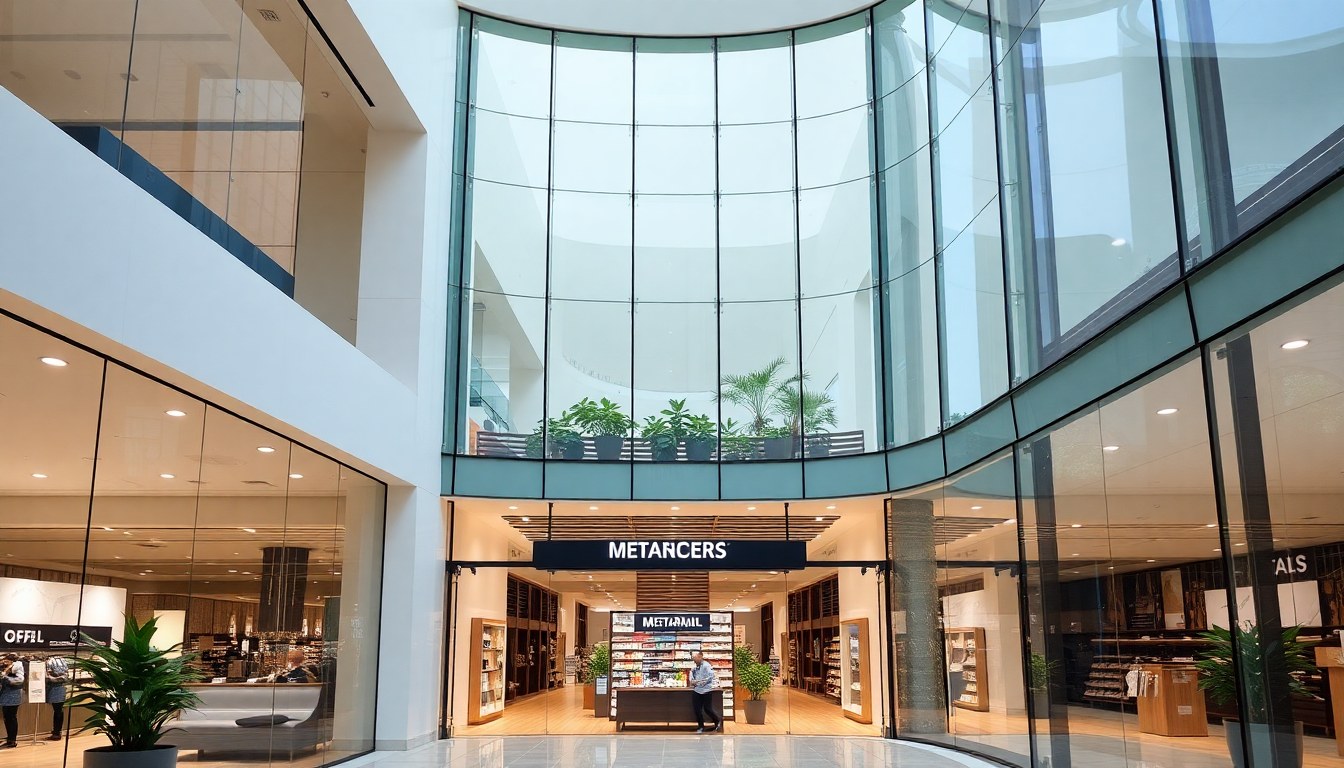
Curved glass facades have become the hallmark of premium retail experiences, transforming storefronts across India's metropolitan centers into architectural statements that captivate customers before they step inside. As shopping centers and flagship stores compete for attention, curved and bent glass installations offer a perfect blend of aesthetic sophistication and functional transparency. This guide explores the latest design trends, manufacturing complexities, and cost considerations that retailers and architects must understand when planning curved glass facades.
The Rise of Curved Glass in Retail Architecture
Modern retail design has shifted dramatically from flat, linear storefronts toward dynamic curved forms that create visual interest and psychological engagement. Curved glass facades work with light differently than flat surfaces—they bend, refract, and reflect illumination in ways that draw the eye and create dynamic visual experiences throughout the day. Major shopping centers in Delhi, Mumbai, Bangalore, and Pune have adopted curved glass designs as a competitive differentiator, recognizing that architectural excellence directly influences customer perception and foot traffic.
The appeal extends beyond aesthetics. Curved facades provide superior structural performance in certain applications, distribute wind loads more effectively, and create unique interior spatial experiences. Retailers report that curved glass storefronts generate higher engagement rates and longer customer dwell times compared to conventional flat installations. This architectural evolution reflects broader consumer expectations for premium, Instagram-worthy retail environments.
Contemporary Design Trends for Curved Glass Facades
Minimalist Curved Geometry
Contemporary retail design favors subtle, elegant curves over dramatic arcs. Gentle radius bends create sophisticated facades that feel modern without appearing experimental. This trend aligns with minimalist interior design philosophy—the curve itself becomes the design statement, often paired with minimal framing and clean material transitions. Luxury brands particularly favor this approach, using understated curves to convey refinement and exclusivity.
Parametric and Organic Forms
Advances in design software have enabled architects to create complex, parametric curves that respond to site conditions, solar orientation, and spatial context. Organic, flowing forms inspired by natural elements—water, wind, botanical structures—appear increasingly in high-end retail developments. These designs require sophisticated manufacturing but deliver unmistakable brand identity and architectural distinctiveness.
Double-Curved (Compound Curve) Installations
Beyond simple cylindrical curves, double-curved glass—where the surface curves in two directions simultaneously—represents the frontier of retail glass design. These installations create dramatic, sculptural facades that function as three-dimensional design elements. While technically demanding and expensive, double-curved glass installations have become signature features in flagship stores for luxury and premium lifestyle brands across Indian metros.
Integrated Lighting and Smart Glass
Curved facades increasingly incorporate integrated LED lighting systems that follow the glass contours, creating dynamic illumination effects. Smart glass technology—electrochromic or thermochromic coatings—adds another dimension, allowing facades to respond to temperature, time of day, or programmed sequences. These technologies elevate curved glass from static architectural elements to interactive brand experiences.
Manufacturing Complexity and Technical Considerations
The Bending Process
Creating curved glass requires specialized manufacturing processes that fundamentally differ from standard flat glass production. The primary method is heat bending, where glass sheets are heated to approximately 600-700°C and bent over custom molds. Precision is critical—even minor deviations affect the final geometry, structural performance, and aesthetic quality. Indian manufacturers increasingly invest in advanced bending furnaces and computer-controlled forming systems to achieve consistent results.
The bending process introduces stress into the glass structure, which must be carefully managed through annealing—a controlled cooling process that relieves internal stresses. Improper annealing can result in spontaneous breakage after installation, a catastrophic failure mode that manufacturers work extensively to prevent through rigorous quality control.
Lamination and Safety Requirements
Curved glass facades in retail environments typically require lamination—bonding two or more glass layers with polyvinyl butyral (PVB) interlayers. Lamination serves multiple purposes: it enhances safety (if glass breaks, shards adhere to the interlayer), improves acoustic performance, and allows for integrated solar control or smart glass functions. Laminating curved glass presents additional challenges because the layers must remain perfectly aligned throughout the bonding and curing process, requiring specialized equipment and skilled technicians.
Structural Engineering and Load Distribution
Curved glass facades must be engineered to handle wind loads, thermal stresses, and their own weight. The curvature affects how forces distribute through the structure—curved surfaces actually distribute loads more efficiently than flat surfaces in many applications, but this requires precise structural analysis. Architects and engineers must calculate stress distribution, determine appropriate glass thickness (typically 10-19mm for retail facades), and design supporting framing systems that accommodate the curved geometry without creating stress concentrations.
Precision Fabrication and Tolerances
Manufacturing curved glass requires maintaining extremely tight tolerances. Radius accuracy typically must be held within ±2-3mm across the entire panel, and flatness in the curved direction must be controlled to prevent optical distortion or alignment issues with framing systems. Achieving these tolerances demands advanced measurement equipment, skilled fabricators, and rigorous quality control protocols. Indian glass manufacturers have made significant investments in precision fabrication capabilities to compete with international standards.
Design Inspiration: Real-World Applications
Premium shopping centers across India demonstrate the effective application of curved glass facades. High-end retail developments in Bangalore's commercial districts feature gentle curved storefronts that create visual continuity while maintaining brand differentiation. Mumbai's luxury shopping centers incorporate more dramatic curves that serve as architectural anchors for entire retail blocks. Delhi's contemporary malls showcase double-curved installations that create signature visual identities.
Beyond shopping centers, flagship brand stores utilize curved glass as a brand expression tool. Luxury watch and jewelry retailers favor subtle curves that enhance product display lighting. Fashion brands employ more dramatic curves to create theatrical, experiential storefronts. Automotive showrooms use curved glass to create dynamic, forward-looking facades that reflect brand innovation and premium positioning.
Cost Implications and Investment Considerations
Material and Manufacturing Costs
Curved glass facades command premium pricing compared to flat glass installations. Material costs typically range from ₹800 to ₹2,500 per square meter depending on glass type, thickness, and curvature complexity. Simple cylindrical curves fall at the lower end of this range, while double-curved installations can exceed ₹3,000 per square meter. Lamination adds ₹300-₹800 per square meter depending on interlayer type and thickness.
Manufacturing costs include custom mold creation, which represents a significant fixed investment (₹2-5 lakhs for simple curves, substantially more for complex geometries). These mold costs are amortized across production volume, making smaller projects proportionally more expensive. Lead times typically extend 8-12 weeks for custom curved installations, compared to 3-4 weeks for standard flat glass, reflecting the additional engineering and fabrication requirements.
Installation and Structural Support
Installation complexity directly impacts project costs. Curved facades require custom framing systems, specialized installation equipment, and highly skilled installation teams. Installation costs typically range from ₹400 to ₹1,200 per square meter, significantly higher than flat glass installation. Structural engineering, custom framing fabrication, and site-specific modifications add further expenses that can total ₹150-₹400 per square meter.
Total Project Economics
A typical curved glass facade project for a mid-sized retail storefront (100-150 square meters) involves total costs of ₹1.5-3 lakhs for materials and ₹80,000-1.8 lakhs for installation and engineering. Luxury installations with double-curved geometry and integrated smart glass can exceed ₹5 lakhs total. While these represent significant investments, retailers report that distinctive curved facades generate measurable returns through increased customer traffic, enhanced brand perception, and premium pricing capabilities for retail space.
Sustainability and Performance Considerations
Modern curved glass facades increasingly incorporate sustainability features. Low-emissivity (Low-E) coatings reduce thermal transfer, lowering HVAC demands in retail spaces. Curved geometry can be optimized for solar orientation, minimizing heat gain in summer while maximizing beneficial winter solar exposure. These performance enhancements add ₹100-₹300 per square meter but deliver long-term operational savings and support sustainability certifications like LEED.
Curved glass facades also support biophilic design principles—the psychological connection to natural forms through curved, organic geometry has been shown to enhance customer well-being and increase retail engagement. This intangible benefit contributes to the growing adoption of curved facades in premium retail environments.
Frequently Asked Questions
What is the typical radius for curved glass retail facades?
Curved retail facades typically employ radii ranging from 2 to 10 meters, depending on design intent and space constraints. Gentle curves (larger radii, 6-10m) create subtle sophistication, while tighter curves (2-4m) produce more dramatic visual impact. The radius is determined during the design phase based on architectural vision, structural requirements, and manufacturing capabilities. Extremely tight radii (under 1.5m) become increasingly difficult and expensive to manufacture.
How long does a curved glass facade installation take?
Total project timeline typically spans 16-24 weeks from design finalization to installation completion. This includes 2-4 weeks for engineering and design refinement, 8-12 weeks for manufacturing (including custom mold creation), 2-4 weeks for structural framing fabrication, and 2-3 weeks for on-site installation. Expedited timelines are possible but incur significant cost premiums. Complex double-curved installations may require 28-32 weeks total.
Can curved glass facades be retrofitted to existing storefronts?
Retrofitting curved glass to existing storefronts is technically possible but challenging and expensive. The existing structural frame typically requires modification or replacement to accommodate curved geometry and distribute loads appropriately. Retrofits often cost 30-50% more than new installations due to site constraints, structural modifications, and coordination complexity. New construction or major renovation projects provide better opportunities for curved glass integration.
What maintenance is required for curved glass facades?
Curved glass facades require maintenance similar to flat glass installations—regular cleaning to maintain transparency and appearance. The curved geometry can make cleaning slightly more challenging, particularly for double-curved surfaces. Professional cleaning services are recommended every 3-6 months. Inspect framing connections and sealants annually for any degradation. The laminated glass layers and coatings typically perform reliably for 15-20+ years with proper maintenance.
Are there any limitations on the size of curved glass panels?
Manufacturing constraints limit individual curved glass panel sizes. Most fabricators can produce panels up to approximately 2.5m x 4m, though larger panels are possible with specialized equipment. Larger facades are typically composed of multiple curved panels joined with minimal visible framing. Seaming multiple panels requires precision alignment and careful sealant application to maintain visual continuity. Panel size decisions significantly impact both aesthetics and cost.
Connect with Curved Glass Specialists on Glassy.in
Curved glass facades represent a significant investment in retail architecture, requiring expertise spanning design, engineering, and precision manufacturing. Whether you're planning a flagship retail space or renovating an existing storefront, connecting with experienced curved glass manufacturers and installers is essential for successful project execution. Explore India's leading glass fabricators, designers, and installation specialists through the Glassy.in directory, where you'll find verified professionals ready to transform your retail vision into architectural reality.