
Shower Enclosures
Laminated Glass vs Toughened Glass for Shower Doors: Complete Comparison
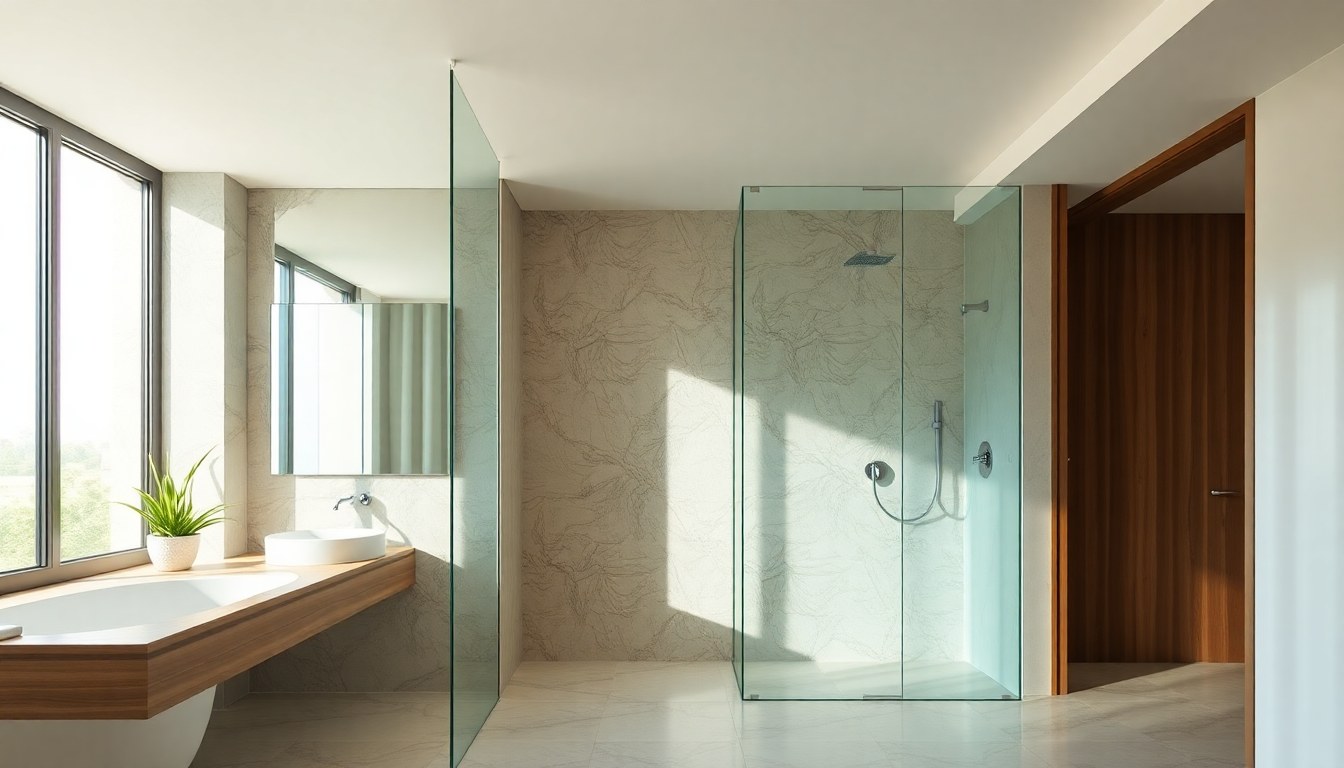
When renovating your bathroom or installing a new shower enclosure, one of the most critical decisions you'll face is choosing between laminated glass and toughened glass for your shower doors. Both options offer distinct advantages in terms of safety, aesthetics, and performance, but understanding their differences will help you make an informed choice that suits your budget, bathroom layout, and safety requirements. This comprehensive guide breaks down everything you need to know about these two popular glass types for Indian bathrooms.
Understanding Toughened Glass for Shower Doors
Toughened glass, also known as tempered glass, is the most commonly used glass type for shower enclosures in India. This glass undergoes a controlled thermal treatment process where it is heated to approximately 620°C and then rapidly cooled. This process creates surface compression and internal tension, making the glass four to five times stronger than ordinary annealed glass of the same thickness.
The defining characteristic of toughened glass is how it breaks. When subjected to extreme force or impact at a vulnerable edge, it shatters into thousands of small, relatively harmless pebble-like fragments rather than dangerous sharp shards. This safety feature makes it the preferred choice for most bathroom applications. In India, toughened glass for shower doors typically comes in thicknesses of 8mm, 10mm, or 12mm, with 10mm being the most popular choice for residential installations.
Most building codes and safety standards in Indian cities like Mumbai, Bangalore, Delhi, and Chennai require the use of safety glass in wet areas. Toughened glass meets these requirements and has become the industry standard for shower enclosures across the country.
Understanding Laminated Glass for Shower Doors
Laminated glass consists of two or more glass panes bonded together with an interlayer, typically made of polyvinyl butyral (PVB). This interlayer acts as an adhesive that holds the glass fragments together even when the glass is broken. The manufacturing process involves bonding the glass layers under heat and pressure, creating a single, integrated unit.
The primary advantage of laminated glass is its post-breakage behavior. When laminated glass breaks, the fragments adhere to the PVB interlayer, and the glass panel typically remains in its frame rather than collapsing. This makes it exceptionally safe, which is why it's commonly used in car windshields and high-security applications. For shower doors, laminated glass can be configured in various combinations, such as 5mm+5mm or 6mm+6mm, with the PVB interlayer sandwiched between.
While less common than toughened glass in Indian shower applications, laminated glass is gaining popularity in premium residential projects and luxury hotels where enhanced safety, sound insulation, and security are priorities.
Safety Comparison: Which Glass is Safer?
Both laminated and toughened glass are considered safety glass, but they offer different types of protection. Toughened glass provides excellent impact resistance during normal use and breaks into small, less harmful pieces when it fails. The risk with toughened glass is that once it shatters, the entire panel disintegrates, potentially leaving your shower enclosure temporarily open.
Laminated glass, on the other hand, offers superior post-breakage safety. Even after impact, the glass remains largely intact within its frame, held together by the PVB interlayer. This characteristic makes it particularly valuable in situations where maintaining a barrier is important, such as in homes with elderly residents or young children who might slip and fall against the glass.
Key Safety Considerations
- Toughened glass: Excellent pre-breakage strength, minimal injury risk from fragments, complete panel failure when broken
- Laminated glass: Good impact resistance, fragments remain bonded to interlayer, maintains barrier even after breakage
- Spontaneous breakage: Toughened glass has a small risk of spontaneous breakage due to nickel sulfide inclusions; laminated glass does not share this risk
- Edge safety: Both require proper edge treatment and installation to prevent stress concentration points
Cost Analysis for Indian Markets
Cost is often a deciding factor for homeowners in India, and there's a significant price difference between these two options. Toughened glass is generally more economical, with prices ranging from ₹350 to ₹650 per square foot for 10mm thickness, depending on the city, supplier, and whether you choose clear, frosted, or tinted variants. Installation costs typically add another ₹150 to ₹300 per square foot.
Laminated glass is considerably more expensive due to its complex manufacturing process. Expect to pay between ₹800 and ₹1,400 per square foot for laminated glass suitable for shower applications, with installation adding a similar amount. For a standard shower enclosure of approximately 40-50 square feet, this translates to a difference of ₹20,000 to ₹35,000 in material costs alone.
However, the initial cost difference should be weighed against long-term benefits. Laminated glass offers better sound insulation, enhanced security, and superior UV protection, which might justify the premium for some homeowners. In luxury apartments and villas in cities like Gurgaon, Pune, and Hyderabad, the additional investment in laminated glass is often considered worthwhile for the added peace of mind and acoustic benefits.
Maintenance and Durability Factors
Both laminated and toughened glass require similar routine maintenance for shower applications. Regular cleaning with a squeegee after each use and weekly cleaning with mild glass cleaner will keep either type looking pristine. Hard water stains, common in many Indian cities, affect both glass types equally and can be removed with vinegar solutions or specialized cleaners.
Toughened glass has a slight edge in terms of surface durability. Its hardened surface is more resistant to scratches from daily use, though both types should be cleaned with soft cloths to avoid abrasion. The edges of toughened glass are its vulnerable points and must be protected during installation and use.
Laminated glass requires attention to the edges and seals to prevent moisture from penetrating between the layers, which could cause delamination over time. Quality laminated glass with proper edge sealing should last 15-20 years without issues in a shower environment. Toughened glass, when properly installed and maintained, can last indefinitely, as it doesn't degrade over time like the PVB interlayer in laminated glass might in extreme humidity conditions.
Sound Insulation and Additional Benefits
One often overlooked advantage of laminated glass is its superior sound insulation properties. The PVB interlayer acts as a dampening layer that significantly reduces sound transmission. For master bathrooms attached to bedrooms or bathrooms shared between rooms, this can be a valuable feature. Laminated glass can reduce noise transmission by 3-5 decibels compared to toughened glass of equivalent total thickness.
Laminated glass also offers better UV protection, blocking up to 99% of harmful UV rays. While this matters less in an enclosed shower than in windows, it can help prevent yellowing of bathroom fixtures, fading of towels, and degradation of bathroom materials exposed to sunlight coming through bathroom windows.
Toughened glass, while not offering the same acoustic benefits, provides excellent clarity and can be easily customized with various finishes. Acid-etched, sandblasted, or digitally printed toughened glass options are widely available in India and often more affordable than similar treatments on laminated glass.
Which Glass Type Suits Your Bathroom?
The right choice depends on your specific requirements, budget, and bathroom layout. Toughened glass is ideal for most residential shower installations in India. It meets all safety standards, offers excellent durability, and comes at a reasonable price point. It's particularly suitable for standard bathrooms in apartments and independent houses where budget is a consideration.
Choose laminated glass if you prioritize maximum safety (especially with elderly family members or young children), require enhanced sound insulation for shared or master bathrooms, or are designing a luxury bathroom where the premium features justify the additional cost. Laminated glass is also preferable in high-rise buildings where the consequences of glass failure could be more serious.
Decision Matrix
- Budget-conscious projects: Toughened glass (10mm)
- Maximum safety priority: Laminated glass (6mm+6mm or higher)
- Noise reduction needed: Laminated glass
- Standard residential bathrooms: Toughened glass (10mm or 12mm)
- Luxury or high-end projects: Laminated glass or extra-thick toughened glass (12mm)
- Commercial installations: Either type, depending on specific safety and insurance requirements
Frequently Asked Questions
Is laminated glass better than toughened glass for shower doors?
Neither is universally "better"—each serves different needs. Laminated glass offers superior post-breakage safety and sound insulation but costs significantly more. Toughened glass provides excellent safety, durability, and value for money, making it the standard choice for most Indian bathrooms. Your decision should be based on budget, safety priorities, and specific bathroom requirements.
Can toughened glass break spontaneously in shower doors?
Spontaneous breakage of toughened glass is rare but possible, occurring in approximately 1 in 10,000 panels due to nickel sulfide inclusions. Quality manufacturers minimize this risk through heat-soak testing. Proper installation that avoids stress points and edge damage further reduces this already minimal risk. Laminated glass does not have this risk factor.
What thickness of glass should I use for my shower door?
For toughened glass shower doors in India, 10mm is the most common and recommended thickness for standard residential installations. Larger or frameless designs may require 12mm for adequate rigidity. For laminated glass, a 6mm+6mm configuration (total 12mm plus interlayer) provides comparable strength and is suitable for most shower applications.
How much does it cost to install a shower door with safety glass in India?
For toughened glass, expect to pay ₹500-950 per square foot including material and installation (10mm thickness). Laminated glass installations typically cost ₹950-1,700 per square foot. A standard shower enclosure of 40-50 square feet would cost approximately ₹20,000-45,000 for toughened glass and ₹38,000-85,000 for laminated glass, depending on your city and design complexity.
Does laminated glass prevent water leakage better than toughened glass?
Water leakage prevention depends primarily on the quality of installation, seals, and door design rather than the glass type itself. Both laminated and toughened glass, when properly installed with appropriate seals and sweeps, provide excellent water containment. The glass type does not significantly impact water-tightness of the shower enclosure.
Ready to install your shower enclosure? Connect with verified glass suppliers and shower door specialists on glassy.in, India's most comprehensive glass business directory. Compare quotes, view portfolios, and find experienced professionals in your city who can help you choose and install the perfect glass solution for your bathroom.