
Shower Enclosures
Curved Glass Shower Enclosures: Design Possibilities and Cost for Luxury Bathrooms
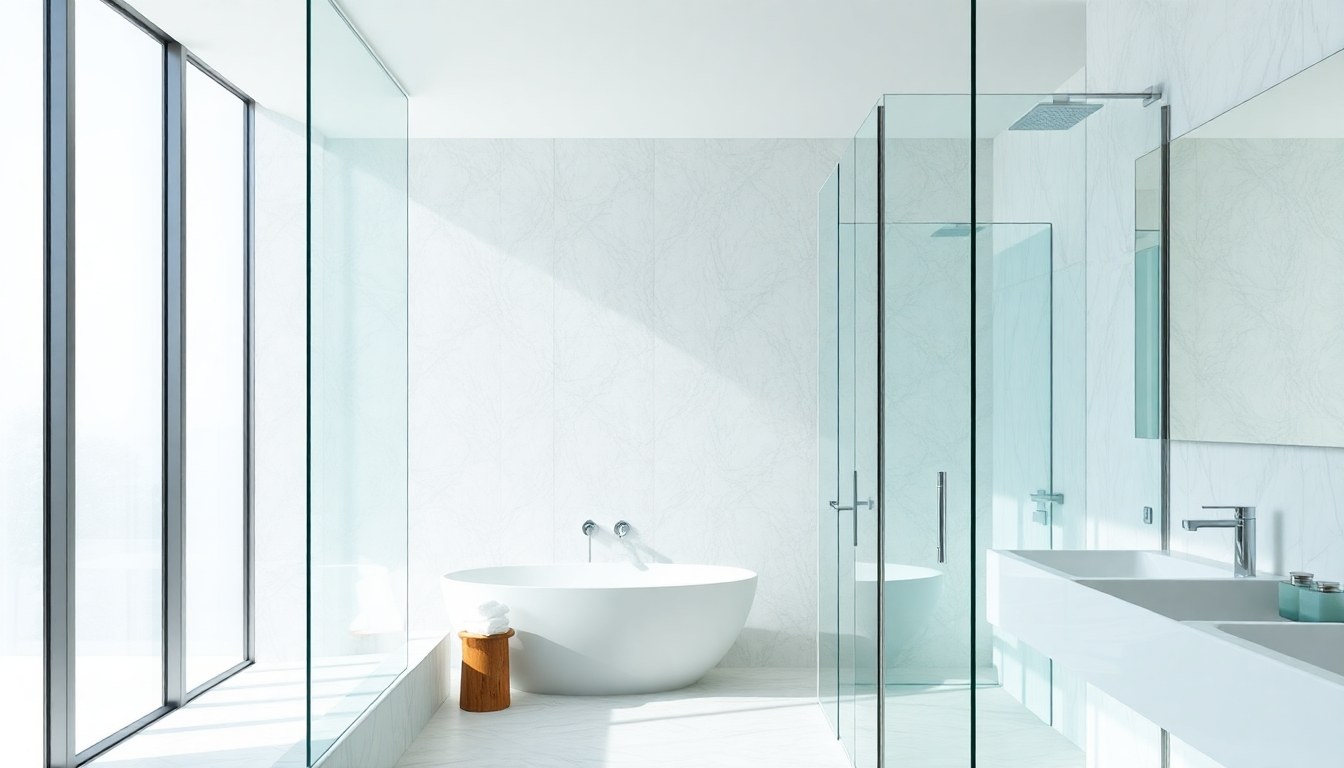
Curved glass shower enclosures represent the pinnacle of bathroom luxury, transforming ordinary wet spaces into sculptural statements that blend form and function. Unlike standard rectangular enclosures, curved glass panels create soft, flowing lines that maximize space efficiency while delivering a spa-like aesthetic. This comprehensive guide explores the design possibilities, technical manufacturing constraints, installation complexities, and premium pricing associated with custom curved glass shower installations in India's high-end residential market.
Understanding Curved Glass Manufacturing for Shower Enclosures
Creating curved glass panels for shower applications requires specialized heat-bending processes that fundamentally differ from standard flat glass production. Manufacturers heat tempered or annealed glass to approximately 600-650 degrees Celsius in custom-built furnaces, then carefully shape the softened glass over precision molds. Once cooled and tempered, these panels achieve the structural strength required for daily shower use while maintaining their graceful curves.
The manufacturing process imposes specific limitations on what's achievable. Minimum radius curves typically range from 300mm to 500mm depending on glass thickness, with tighter curves requiring thinner glass that may compromise structural integrity. Most luxury shower enclosures use 10mm or 12mm tempered glass, which limits the minimum practical radius to approximately 400mm. Attempting tighter curves risks optical distortion, uneven tempering, or structural weakness.
Indian glass processors equipped for curved shower glass production remain concentrated in major metros including Mumbai, Delhi NCR, Bangalore, and Hyderabad. The specialized equipment investment—often exceeding ₹50 lakhs for industrial bending furnaces—means only established fabricators offer this service, directly impacting availability and pricing across different regions.
Design Possibilities and Configuration Options
Curved glass shower enclosures offer remarkable design flexibility for luxury bathroom projects. The most common configurations include quadrant enclosures that fit neatly into corners, D-shaped enclosures that maximize interior shower space, and full curved walls that create dramatic focal points in spacious master bathrooms.
Quadrant and Corner Configurations
Quadrant enclosures feature two curved glass panels meeting at a corner, creating a quarter-circle footprint. These designs work exceptionally well in bathrooms where space optimization matters, as the curved profile eliminates sharp corners while providing generous interior dimensions. Standard quadrant sizes range from 900mm × 900mm to 1200mm × 1200mm, though custom dimensions accommodate virtually any corner space.
Designers can specify single-radius curves for uniform geometry or compound curves that transition between different radii for more organic shapes. The curved panels typically pair with fixed glass side panels and frameless or minimally-framed hardware for clean, contemporary aesthetics.
Walk-In Curved Panels and Wet Room Designs
Walk-in configurations using freestanding curved panels have gained popularity in luxury wet room designs. A single curved glass panel acts as a splash guard while maintaining visual openness throughout the bathroom. These installations require careful planning for water management, typically incorporating linear drains and precisely sloped floors to contain water within the shower zone.
Curved walk-in panels range from subtle 1500mm radius gentle curves to dramatic 600mm radius semicircular shields. The panel height usually extends to 2000mm or 2100mm, with 10mm tempered glass providing adequate rigidity without floor-to-ceiling bracing in most residential applications.
Technical Considerations and Installation Complexity
Installing curved glass shower enclosures demands significantly greater precision than standard rectangular installations. The curved geometry means traditional square-and-level methods don't apply—installers must work with radius measurements, arc calculations, and custom-fabricated mounting hardware designed specifically for each project.
Wall and floor preparation becomes critical. Any deviation from specified measurements or out-of-plumb walls creates gaps that compromise both aesthetics and water-tightness. Professional installers typically create detailed site templates before glass fabrication begins, using flexible materials to capture exact dimensions and transfer them to the manufacturing facility. This templating process alone can add 3-5 days to project timelines.
Hardware and Sealing Challenges
Standard shower door hardware won't accommodate curved glass panels. Manufacturers must provide specialized hinges, clamps, and support bars engineered for specific radius curves. These components typically cost 2-3 times more than equivalent straight-panel hardware, and availability often depends on international suppliers given limited domestic production of curved-specific fittings.
Sealing curved glass presents unique challenges. Flexible silicone seals must compress uniformly along the entire curve, requiring careful selection of durometer hardness and profile design. Bottom seals for curved sliding doors need custom extrusions that match the panel radius while maintaining consistent water-tightness throughout the arc. Premium installations use continuous seals custom-cut to exact dimensions rather than adjustable generic products.
Cost Breakdown for Curved Glass Shower Enclosures
Curved glass shower enclosures command premium pricing reflecting the specialized manufacturing, custom hardware, and installation expertise required. Understanding the cost structure helps homeowners and designers budget appropriately for luxury bathroom projects.
Basic curved glass panels start at approximately ₹15,000-₹20,000 per square meter for 10mm tempered clear glass with standard radius curves. This base price covers material and basic bending but excludes hardware, finishing treatments, or installation. Comparable flat glass panels cost ₹4,000-₹6,000 per square meter, illustrating the significant premium for curved work.
Complete System Pricing
A complete curved glass shower enclosure system for a standard 900mm × 900mm quadrant configuration typically ranges from ₹85,000 to ₹1,50,000 depending on specifications. This includes curved and flat glass panels, all mounting hardware, handles, hinges, seals, and basic installation. Premium specifications incorporating low-iron ultra-clear glass, specialized coatings, or complex multi-panel designs can push costs to ₹2,00,000-₹3,50,000 or higher.
Custom curved walk-in panels for wet room applications generally cost ₹1,20,000-₹2,25,000 for a single large-format panel with floor-to-ceiling support system. The price escalates with tighter radius curves, thicker glass, or compound curves requiring multiple-axis bending.
Additional Cost Factors
- Glass treatments: Anti-lime coatings add ₹2,500-₹4,000 per square meter but dramatically reduce maintenance in hard-water areas common across India
- Low-iron glass: Ultra-clear glass without the greenish tint of standard float glass adds 40-60% to base glass costs
- Frosted or patterned finishes: Acid-etching or sandblasting curved surfaces increases costs by ₹3,000-₹5,000 per square meter
- Premium hardware finishes: Brushed gold, rose gold, or matte black fittings cost 50-100% more than standard chrome
- Complex installation: Difficult access, high-rise buildings, or tight timelines can add ₹15,000-₹30,000 to installation fees
Maintenance and Long-Term Performance
Curved glass shower enclosures require similar maintenance to flat glass installations, though the curved surfaces can make cleaning slightly more challenging. The continuous curved profile actually offers an advantage by eliminating corner joints where soap scum and mildew typically accumulate in rectangular enclosures.
Daily squeegee use after showering prevents water spots and mineral deposits. For Indian homes with hard water, investing in protective coatings during installation proves worthwhile—these hydrophobic treatments cause water to bead and roll off rather than leaving calcium deposits. Quality coatings last 5-7 years before requiring reapplication.
The tempered glass used in curved enclosures provides excellent durability and safety. If breakage occurs, the glass shatters into small, relatively harmless pebbles rather than dangerous shards. However, replacement becomes more expensive and time-consuming than flat panels due to the custom manufacturing required. Maintaining adequate insurance coverage for luxury bathroom fixtures makes financial sense for high-end installations.
Selecting Suppliers and Installers in India
Successfully executing a curved glass shower enclosure project depends heavily on choosing experienced suppliers and installers. Not all glass fabricators possess the equipment or expertise for precision curved work, and poor execution can result in optical distortion, structural problems, or water leakage.
When evaluating suppliers, request to see completed curved shower installations and speak directly with previous clients about their experience. Reputable fabricators provide detailed technical drawings showing exact dimensions, radius specifications, and hardware placement before beginning production. They should also offer comprehensive warranties covering both manufacturing defects and installation workmanship for minimum 2-3 years.
Installation teams should include technicians with specific curved glass experience, not just general glass contractors. The best installers conduct thorough site surveys, create physical templates, and coordinate closely with fabricators to ensure perfect fit. They understand the unique sealing requirements and possess the specialized tools needed for curved panel installation.
Frequently Asked Questions
What is the minimum radius possible for curved glass shower panels?
The practical minimum radius for shower-grade curved glass typically ranges from 300mm to 500mm depending on glass thickness. Most luxury installations use 10mm or 12mm tempered glass, which limits minimum radius to approximately 400mm. Tighter curves risk optical distortion and structural weakness. Thinner 8mm glass can achieve tighter curves but may not provide adequate rigidity for larger panels.
How long does it take to manufacture and install a curved glass shower enclosure?
Complete project timelines typically span 4-8 weeks from initial consultation to final installation. This includes site survey and templating (3-5 days), custom glass fabrication (2-3 weeks), hardware procurement (1-2 weeks), and installation (2-3 days). Complex custom designs or imported hardware can extend timelines to 10-12 weeks. Rush orders may be possible with premium charges but risk compromising quality control.
Are curved glass shower enclosures more prone to leaking than straight panels?
When properly installed with appropriate sealing systems, curved glass enclosures perform as well as straight panels regarding water-tightness. The key lies in using flexible seals specifically designed for curved applications and ensuring precise installation. Poor workmanship poses greater risk with curved installations due to the complexity, making experienced installer selection critical. Quality installations with proper seals should remain leak-free for many years.
Can curved glass shower panels be repaired if damaged, or must they be completely replaced?
Tempered curved glass panels cannot be repaired if cracked or shattered—complete replacement is necessary. Minor scratches might be polished out by specialists, but deep damage requires new panels. Replacement involves recreating the custom curve, which takes 2-3 weeks and costs nearly as much as the original panel. This replacement complexity makes careful handling during use and adequate insurance coverage important for curved glass installations.
Do curved glass shower enclosures work with standard bathroom dimensions?
Curved enclosures adapt well to standard bathroom dimensions, often providing better space efficiency than rectangular alternatives. Quadrant corner units fit standard 900mm or 1000mm corner spaces while offering more interior shower room. However, curved panels require adequate clearance for door swing and user movement. Bathrooms smaller than 1.5m × 2m may feel cramped with curved enclosures. Professional space planning ensures the curved design enhances rather than compromises bathroom functionality.
Ready to transform your luxury bathroom with a stunning curved glass shower enclosure? Visit glassy.in to connect with experienced glass fabricators and installers across India who specialize in custom bent-glass shower solutions. Browse verified suppliers, compare quotes, and find the perfect partner for your high-end bathroom project.