
Glass Guides
Glass Table Edge Profiles: Pencil vs Beveled vs Ogee Finishing Guide
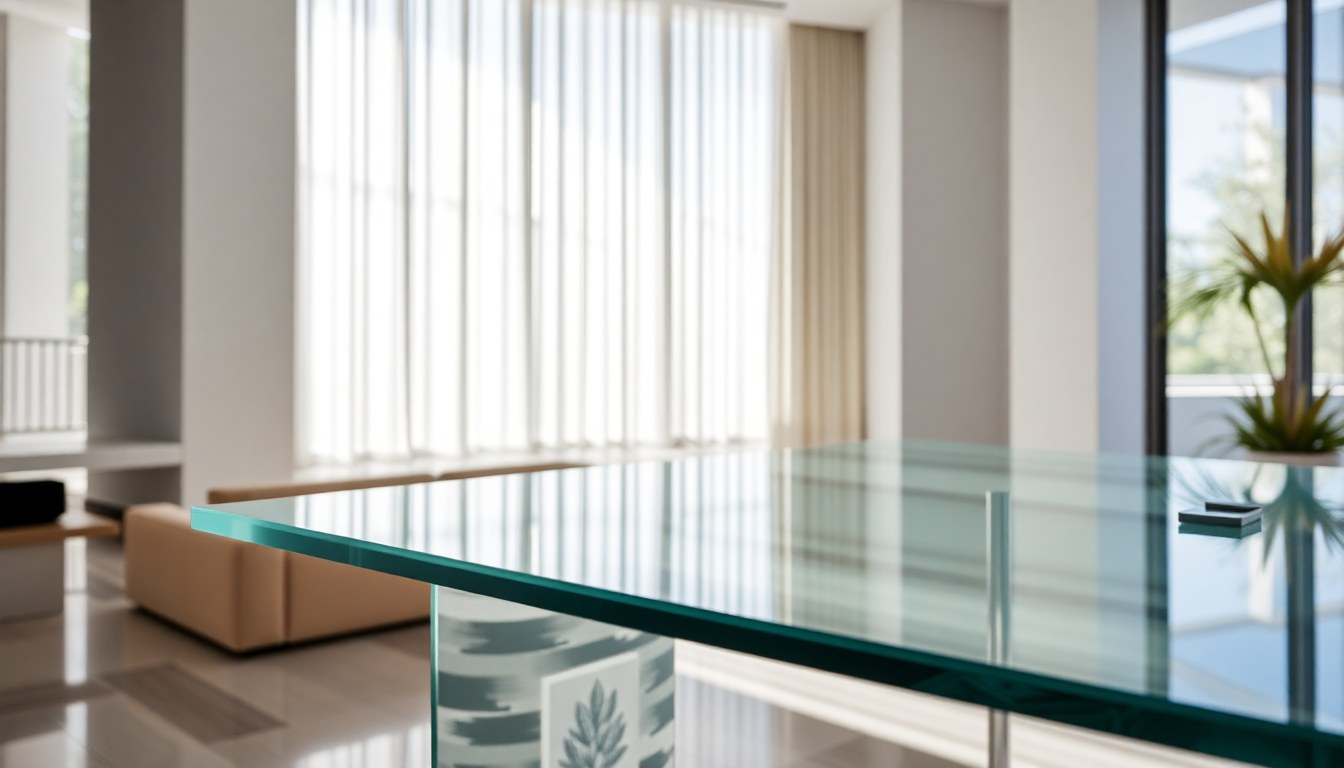
The edge profile of a glass table determines not only its visual appeal but also its safety and durability. Whether you're installing a new dining table, coffee table, or office desk, selecting the right edge treatment—flat polished, pencil rounded, beveled, or decorative ogee—affects how the piece looks, feels, and performs in daily use. This comprehensive guide walks you through each edge type, grinding techniques, cost considerations, and how to choose the best option for your space.
Understanding Glass Table Edge Profiles
Glass edge profiles refer to the shape and finish applied to the perimeter of a glass tabletop during the fabrication process. Raw glass sheets have sharp, dangerous edges that must be ground, polished, and shaped before installation. The edge treatment serves three critical functions: eliminating sharp edges that could cause injury, creating a finished aesthetic appearance, and strengthening the glass perimeter against chips and cracks.
Professional glass fabricators use specialized grinding wheels and polishing compounds to create different edge profiles. The process involves progressively finer abrasives—starting with coarse diamond wheels to shape the edge, then moving through medium and fine grits, and finally buffing with cerium oxide or similar polishing compounds to achieve optical clarity. The complexity of the profile directly impacts both processing time and final cost.
When selecting an edge profile, consider the table's intended use, surrounding décor style, safety requirements (especially important in homes with children), and budget. Commercial establishments often prioritize durability and safety, while residential applications may emphasize decorative appeal. Reputable suppliers like Saint Gobain Glass can provide samples of different edge profiles to help you visualize the final result.
Flat Polished Edge: The Essential Finish
The flat polished edge is the most basic and economical edge treatment. The glass edge is ground flat and perpendicular to the surface, then polished to remove any roughness. This creates a smooth, clear edge with sharp 90-degree corners that are slightly eased (rounded microscopically) to prevent cuts. The flat polished edge maintains the full thickness of the glass and provides a clean, minimalist appearance.
This edge type works well for modern, contemporary interiors where simplicity is valued. It's commonly specified for office furniture, display shelving, and budget-conscious residential projects. The processing cost is lowest among all edge profiles since it requires minimal grinding time and uses standard equipment available at most glass shops.
However, the flat polished edge offers the least protection against chipping at the corners. A sharp impact can more easily damage the 90-degree corner compared to rounded profiles. For this reason, it's best suited for tabletops positioned away from high-traffic areas or where the edges are less likely to experience direct contact.
Typical Applications and Pricing
Flat polished edges are ideal for glass shelves, protective desk tops, and modern minimalist furniture. In Indian markets, expect to pay ₹80-150 per running foot for flat polished edge processing on standard 10-12mm glass, depending on the fabricator and order volume. This represents the baseline cost against which other edge profiles are compared.
Pencil Edge: Rounded Safety and Comfort
The pencil edge (also called rounded edge or C-edge) features a gentle radius along the top and bottom edges of the glass perimeter, creating a smooth, rounded profile. Imagine the curved surface of a pencil—hence the name. This treatment removes the sharp 90-degree corners of a flat edge while maintaining a relatively simple profile that doesn't significantly reduce the glass thickness.
The pencil edge is the most popular choice for residential glass tabletops because it balances safety, aesthetics, and cost. The rounded edges are much more comfortable to touch and significantly reduce the risk of cuts from accidental contact. This makes pencil-edged glass ideal for dining tables, coffee tables, and any surface where people regularly rest their hands or arms.
From a fabrication standpoint, creating a pencil edge requires specialized grinding wheels with the appropriate radius. The glass edge passes through progressively finer wheels that shape and polish the curved surface. Standard pencil edge radii range from 3mm to 6mm, with 4mm being most common for tabletops. The processing adds approximately 20-40% to the cost of flat polished edges.
Durability and Maintenance Benefits
Beyond comfort and safety, pencil edges are more resistant to chipping than flat edges. The rounded profile distributes impact forces more evenly and eliminates vulnerable 90-degree corners. This durability advantage makes pencil edges suitable for high-use areas like restaurant tables and conference room surfaces. Cleaning is also easier since there are no sharp corners where dust and grime can accumulate.
Beveled Edge: Elegant Light Refraction
A beveled edge features an angled cut along the perimeter of the glass, typically at 45 degrees, creating a framed appearance. The bevel width usually ranges from 12mm to 25mm, with 19mm being standard for most tabletops. This angled surface catches and refracts light, creating a prism-like effect that adds visual interest and a sense of luxury to the glass.
Beveled edges are associated with traditional, classic, and upscale interiors. The light refraction creates subtle rainbow effects under certain lighting conditions, making the glass appear more dimensional and precious. This edge treatment is frequently specified for formal dining tables, executive desks, and high-end residential furniture where the glass itself is meant to be a decorative element.
Creating a beveled edge is more complex than flat or pencil edges. The fabricator must precisely control the angle and width of the bevel while maintaining consistent depth around the entire perimeter. This requires skilled operators and specialized equipment. The bevel surface must be polished to optical clarity to achieve the desired light refraction effect. Interior designers such as Nidhi Mehta Interior Design often incorporate beveled glass tables as statement pieces in their projects.
Cost and Design Considerations
Beveled edges typically cost 60-100% more than flat polished edges, with pricing in India ranging from ₹150-300 per running foot depending on bevel width and glass thickness. The wider the bevel, the higher the cost. Keep in mind that beveling reduces the effective thickness of the glass at the edge, so thicker glass (12mm or more) is recommended for larger tabletops to maintain structural integrity.
Ogee Edge: Decorative Sculptural Profiles
The ogee edge represents the most elaborate glass edge treatment, featuring an S-curved profile that creates a sculptural, furniture-like appearance. This complex shape typically combines concave and convex curves in a flowing pattern that adds significant visual weight and traditional elegance to the glass. Ogee profiles vary in complexity, from simple wave patterns to elaborate multi-curve designs.
This edge type is most commonly specified for high-end residential furniture, antique reproduction pieces, and luxury commercial installations where the glass tabletop serves as a focal point. The ogee edge transforms glass from a simple transparent surface into a decorative architectural element that complements traditional wood furniture, ornate metal bases, and classical interior styles.
Fabricating an ogee edge requires specialized CNC (Computer Numerical Control) grinding equipment and highly skilled technicians. The complex curves must be precisely shaped and polished to maintain consistent profile depth around the entire perimeter. Any variation in the curve pattern becomes immediately visible and detracts from the piece's quality. Due to this complexity, ogee edges are the most expensive edge treatment option.
Applications and Investment
Ogee edges are ideal for statement dining tables, antique furniture restoration projects, and luxury residential installations. Expect to pay ₹300-600 per running foot or more for ogee edge processing, depending on profile complexity. Lead times are also longer—typically 2-3 weeks compared to a few days for simpler edge profiles. This edge type is an investment in aesthetics and craftsmanship rather than a practical necessity.
Selecting the Right Edge Profile for Your Project
Choosing the appropriate edge profile depends on several factors working together. First, consider safety requirements. Homes with young children, elderly residents, or high-traffic commercial spaces benefit most from pencil edges that eliminate sharp corners. Budget constraints often determine whether decorative profiles like beveled or ogee edges are feasible, or whether flat polished or pencil edges provide better value.
The interior design style should guide your aesthetic choice. Modern, minimalist spaces pair well with flat polished or subtle pencil edges that don't compete with clean lines. Traditional, classical, or luxury interiors can accommodate the visual weight of beveled or ogee edges. Consider the table base design as well—ornate bases call for more elaborate edge treatments, while simple bases look better with understated edges.
Glass thickness also influences edge profile selection. Thinner glass (6-8mm) works best with simple flat or pencil edges since there isn't enough material for substantial bevels. Standard tabletop glass (10-12mm) accommodates all edge types. Thicker glass (15-19mm) showcases beveled and ogee profiles most dramatically since there's more edge surface to shape and polish.
Practical Decision Framework
- Flat polished: Budget projects, modern aesthetics, low-contact applications
- Pencil edge: Family homes, dining tables, balanced safety and cost
- Beveled edge: Formal spaces, executive furniture, traditional elegance
- Ogee edge: Luxury installations, antique reproduction, statement pieces
Grinding Techniques and Quality Standards
Professional glass edge fabrication follows a systematic grinding and polishing sequence. The process begins with rough grinding using coarse diamond wheels (typically 60-120 grit) to establish the basic edge shape. This removes significant glass material and creates the fundamental profile geometry. Next, medium grinding (200-400 grit) refines the shape and removes scratches left by coarse grinding.
Fine grinding (600-800 grit) further smooths the edge surface, preparing it for polishing. The final polishing stage uses felt or cork wheels with cerium oxide slurry to achieve optical clarity. Each stage must completely remove scratches from the previous stage, or they'll remain visible in the finished edge. Quality fabricators inspect edges under strong lighting to ensure no grinding marks remain.
For complex profiles like beveled and ogee edges, CNC grinding machines ensure consistent geometry around the entire perimeter. Manual grinding by skilled technicians can produce excellent results for simpler profiles but may show slight variations. Always request samples or visit the fabrication facility to assess quality standards before placing large orders.
Frequently Asked Questions
Which glass table edge is safest for homes with children?
The pencil edge (rounded edge) is the safest option for homes with children. The smooth, curved profile eliminates sharp 90-degree corners that could cause cuts during falls or collisions. The rounded surface is also more comfortable to touch and less likely to chip, maintaining its safety characteristics over time. While all polished glass edges are safer than raw glass, the pencil edge provides the best combination of safety, durability, and reasonable cost for family environments.
How much does edge profile affect the cost of a glass tabletop?
Edge profile significantly impacts glass tabletop pricing. Taking flat polished as the baseline, pencil edges add approximately 20-40% to edge processing costs, beveled edges add 60-100%, and ogee edges can double or triple edge processing costs. For a typical dining table with 15 feet of perimeter, this translates to differences of ₹1,500-6,000 or more just for edge treatment. However, edge processing usually represents only 20-30% of total tabletop cost, with glass material, thickness, and size being larger factors.
Can edge profiles be applied to tempered glass?
No, edge profiles must be created before glass tempering. The tempering process involves heating glass to approximately 620°C and rapidly cooling it, which locks in internal stresses that give tempered glass its strength. Any grinding, cutting, or edge work after tempering will cause the glass to shatter immediately. All edge profiling, holes, cutouts, and finishing must be completed on annealed (non-tempered) glass, which is then sent for tempering as the final fabrication step. This is why design changes cannot be made to tempered glass tabletops.
Do beveled edges make glass weaker?
Beveled edges slightly reduce the effective glass thickness at the perimeter, but this doesn't significantly weaken properly sized tabletops. The bevel removes material from the edge, creating a thinner cross-section at that point. For this reason, beveled edges are typically applied to 12mm or thicker glass for tabletops larger than small side tables. The bevel width should be proportional to glass thickness—wider bevels require thicker glass. When properly designed with appropriate glass thickness for the table size and support configuration, beveled edges don't compromise structural integrity.
How do I maintain and clean different edge profiles?
All polished glass edges clean the same way using standard glass cleaner and soft cloths. However, complex profiles like ogee edges have curves where dust can accumulate, requiring slightly more attention during cleaning. Avoid abrasive cleaners or scrubbing pads that could scratch the polished edge surface. For beveled edges, clean the angled surface specifically to maintain its light-refracting clarity. Pencil and flat edges are easiest to maintain since they have simple geometries. Inspect edges periodically for chips, which should be professionally repaired to prevent injury and further damage.
Selecting the right edge profile enhances both the safety and beauty of your glass tabletop. Whether you choose the economical flat polish, versatile pencil edge, elegant bevel, or decorative ogee, quality fabrication is essential. Find experienced glass fabricators and designers in your area through the glassy.in directory, India's comprehensive resource for glass businesses and professionals.