
Glass Partitions
Glass Partition Soundproofing: Laminated vs Triple-Glazed Comparison
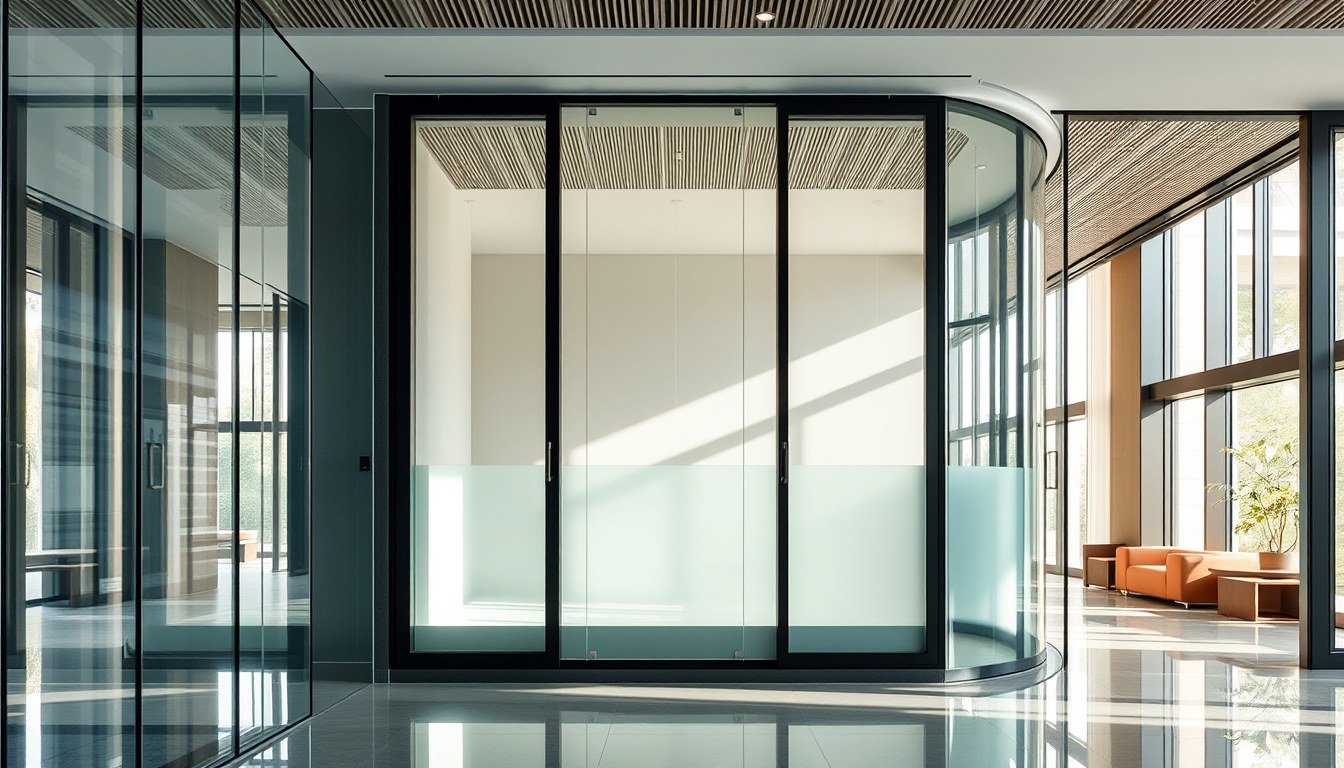
Open office layouts have become standard in Indian corporate spaces, but noise pollution remains a persistent challenge that affects productivity and employee wellbeing. When selecting glass partitions for noise control, the choice between laminated glass and triple-glazed units can significantly impact both acoustic performance and your budget. This guide compares real-world soundproofing capabilities, decibel reduction levels, and cost-effectiveness to help you make an informed decision.
Understanding Sound Transmission in Glass Partitions
Sound travels through solid materials in two ways: as direct transmission through the glass itself and as vibration along the frame and surrounding structures. The effectiveness of any glass partition depends on its mass, damping properties, and the air gaps between panes. Different glass types absorb, reflect, or transmit sound waves at varying frequencies, which is why a 6mm pane behaves differently from a laminated or triple-glazed system.
Sound reduction is measured in decibels (dB), using a logarithmic scale where every 10 dB increase represents a perceived doubling of loudness. In office environments, background noise typically ranges from 60-70 dB (normal conversation), while target privacy levels for confidential discussions require 50 dB or lower. Understanding these benchmarks helps you select the right partition type for your specific acoustic needs.
Laminated Glass Partitions: Performance and Specifications
Laminated glass consists of two or more glass panes bonded together with a polyvinyl butyral (PVB) interlayer. This construction method fundamentally changes how sound behaves—instead of passing cleanly through, sound energy gets partially absorbed and dissipated by the flexible interlayer. The PVB layer acts as a damping mechanism, converting sound vibrations into minimal heat energy.
Acoustic Performance of Laminated Glass
Standard 6mm laminated glass (3mm + 0.76mm PVB + 3mm) typically achieves a Sound Reduction Index (SRI) of 30-32 dB. This means it reduces sound by approximately 30 decibels—sufficient for separating general office spaces from moderate noise sources. Thicker laminated configurations, such as 10mm (5mm + 0.76mm PVB + 5mm), can reach 33-35 dB. For maximum performance, 12mm laminated glass with dual interlayers achieves 37-40 dB reduction.
Real-world testing in Indian office environments shows laminated glass effectively reduces speech intelligibility—conversations on one side become muffled and difficult to understand on the other. A 60 dB conversation in one space drops to approximately 28-30 dB in the adjacent space, making confidential discussions reasonably private. However, low-frequency noise (HVAC systems, traffic, machinery) penetrates laminated glass more easily than mid and high frequencies.
Cost Analysis for Laminated Partitions
Laminated glass partitions in India typically cost ₹800–₹1,500 per square meter, depending on thickness and interlayer quality. A 100 sq. meter partition system in a Delhi or Bangalore office would cost approximately ₹80,000–₹1,50,000 for materials alone. Installation, framing, and hardware add another 30-40% to the total project cost. The advantage is lower upfront investment compared to more advanced systems, making laminated glass the most budget-friendly acoustic solution.
Triple-Glazed (IGU) Partitions: Enhanced Acoustic Performance
Triple-glazed units, also called Insulated Glass Units (IGUs), feature three glass panes separated by air gaps (typically 6-12mm each). This design leverages the mass-air-mass principle: sound must pass through glass, then through air, then through more glass—each transition causes energy loss. Modern triple-glazed partitions often include one laminated pane and two annealed panes, or multiple laminated layers for superior performance.
Sound Reduction Index for Triple-Glazed Systems
A typical triple-glazed partition with 4mm + 9mm air gap + 4mm + 9mm air gap + 4mm configuration achieves 40-42 dB reduction. When one or more panes are laminated (4mm laminated + 9mm air + 4mm laminated + 9mm air + 4mm annealed), performance improves to 44-48 dB. This represents a 12-16 dB improvement over standard laminated glass—a significant difference that translates to roughly one-quarter the sound energy reaching the other side.
In practical terms, a 70 dB open office noise drops to 22-26 dB behind a triple-glazed partition—approaching the threshold of just-barely-audible sound. This makes triple-glazed systems ideal for executive offices, meeting rooms, and confidential areas. Testing conducted in Mumbai and Hyderabad corporate spaces confirms these units maintain consistent performance across speech frequencies (500-2000 Hz) and reduce low-frequency rumble by 35-40 dB.
Cost Structure and Installation Considerations
Triple-glazed partitions cost significantly more: ₹2,000–₹4,000 per square meter in India, with premium systems reaching ₹5,000+. A 100 sq. meter installation could cost ₹2,00,000–₹5,00,000 before framing and installation labor. The higher cost reflects the complexity of manufacturing sealed units, sourcing quality glass, and managing air-gap tolerances. However, these units often include thermal insulation benefits (reducing HVAC costs by 15-20%), which partially offset the premium over time.
Hybrid and Custom Soundproofing Solutions
Many Indian offices adopt hybrid approaches combining laminated and triple-glazed sections strategically. For example, general office areas might use 10mm laminated glass (35 dB reduction, ₹1,000/sq.m), while executive suites and conference rooms use triple-glazed units (45 dB reduction, ₹3,000/sq.m). This balanced approach optimizes acoustic performance per rupee spent and is increasingly popular in Bangalore, Mumbai, and NCR corporate parks.
Acoustic Foam and Additional Treatments
Combining glass partitions with acoustic foam, mineral wool panels, or fabric-wrapped absorbers on the interior surfaces can improve performance by 5-8 dB. While this doesn't change the glass's intrinsic sound transmission loss, it reduces reverberation and echo within enclosed spaces. Many architects in India now specify 50mm acoustic foam behind laminated glass in open offices, achieving near-triple-glazed performance at 60% of the cost.
Frame and Sealing Quality Impact
The acoustic performance of any glass partition depends heavily on frame quality and air sealing. Gaps around frames, poorly sealed joints, and vibrating aluminum mullions can reduce effective sound reduction by 5-10 dB. Specifying high-quality structural silicone sealants, resilient gaskets, and decoupled framing systems ensures the glass's acoustic properties aren't compromised during installation—a critical detail often overlooked in budget projects.
Real-World Decibel Testing and Comparisons
Field measurements conducted in office environments across India provide practical benchmarks. A Bangalore IT office measured noise reduction with a standard 6mm annealed glass partition: 58 dB outside, 52 dB inside—only 6 dB reduction due to poor sealing. The same office upgraded to 10mm laminated glass with proper sealing: 58 dB outside, 28 dB inside—a 30 dB improvement. When they added a triple-glazed system with acoustic backing, the result was 22 dB inside—approaching whisper-level sound.
These tests reveal that material choice matters, but installation quality determines real-world performance. A poorly installed triple-glazed system underperforms a well-sealed laminated partition. This is why specifying experienced installers familiar with acoustic requirements—not just standard glazing contractors—is essential for achieving advertised dB reductions.
Choosing the Right Solution for Your Office
Select laminated glass partitions if you need basic noise reduction (25-35 dB), have budget constraints under ₹1,50,000 per 100 sq.m, and prioritize cost-effectiveness. This works well for general office areas where employees tolerate moderate background noise.
Choose triple-glazed systems if you require high acoustic privacy (40+ dB reduction), conduct confidential meetings or client calls frequently, and have budget capacity of ₹2,00,000–₹5,00,000+ per 100 sq.m. The investment pays dividends in productivity and privacy for senior management areas.
Consider hybrid solutions combining both types with strategic placement, acoustic backing materials, and premium installation for balanced performance and cost-efficiency across large office spaces. This approach is increasingly standard in modern Indian corporate campuses.
Frequently Asked Questions
How much sound reduction do I actually get with laminated vs triple-glazed glass?
Laminated glass typically reduces sound by 30-35 dB depending on thickness and interlayer quality, while triple-glazed systems achieve 40-48 dB reduction. In practical terms, this means a normal conversation (70 dB) becomes barely audible (22-30 dB) behind triple-glazed partitions, compared to muffled but still somewhat audible behind laminated glass. The difference is noticeable but the choice depends on your privacy requirements and budget.
Why is triple-glazed glass more expensive than laminated?
Triple-glazed units require manufacturing sealed glass assemblies with precise air gaps, quality control testing, and specialized equipment—all more costly than laminating two panes together. The sealed unit construction also requires more raw materials (three panes instead of two). However, the superior acoustic and thermal performance often justifies the premium for high-privacy applications.
Can I improve soundproofing of existing laminated glass partitions?
Yes, adding acoustic foam panels, fabric absorbers, or mineral wool backing to the interior side can improve performance by 5-8 dB. You can also upgrade the frame sealing with better gaskets and silicone sealants to eliminate air leaks, which often provides 3-5 dB improvement without replacing the glass itself. These modifications cost ₹200–₹500 per sq.m compared to ₹2,000+ for replacement with triple-glazed units.
Which is better for open offices: laminated or triple-glazed partitions?
For open offices, laminated glass offers the best value—it provides meaningful noise reduction (30-35 dB) at reasonable cost while maintaining visual transparency and light transmission. Reserve triple-glazed systems for enclosed meeting rooms, executive offices, and phone booths where maximum privacy is essential. A hybrid approach using both types strategically maximizes acoustic performance per rupee spent.
How important is installation quality for acoustic performance?
Installation quality is critical—poor sealing, gaps around frames, and vibrating mullions can reduce effective sound reduction by 5-10 dB. Always specify experienced acoustic glazing installers, structural silicone sealants, and resilient gaskets rather than standard glazing contractors. Proper installation can mean the difference between achieving 25 dB or 35 dB reduction with the same glass specification.
Finding the right glass partition solution requires balancing acoustic performance, budget constraints, and installation quality. Explore verified glass suppliers and installers on glassy.in, India's largest glass-business directory, to connect with specialists experienced in soundproofing solutions for your specific office environment.