
Bathroom Glass
Toughened Glass vs Laminated Glass for Shower Enclosures: Which is Better?
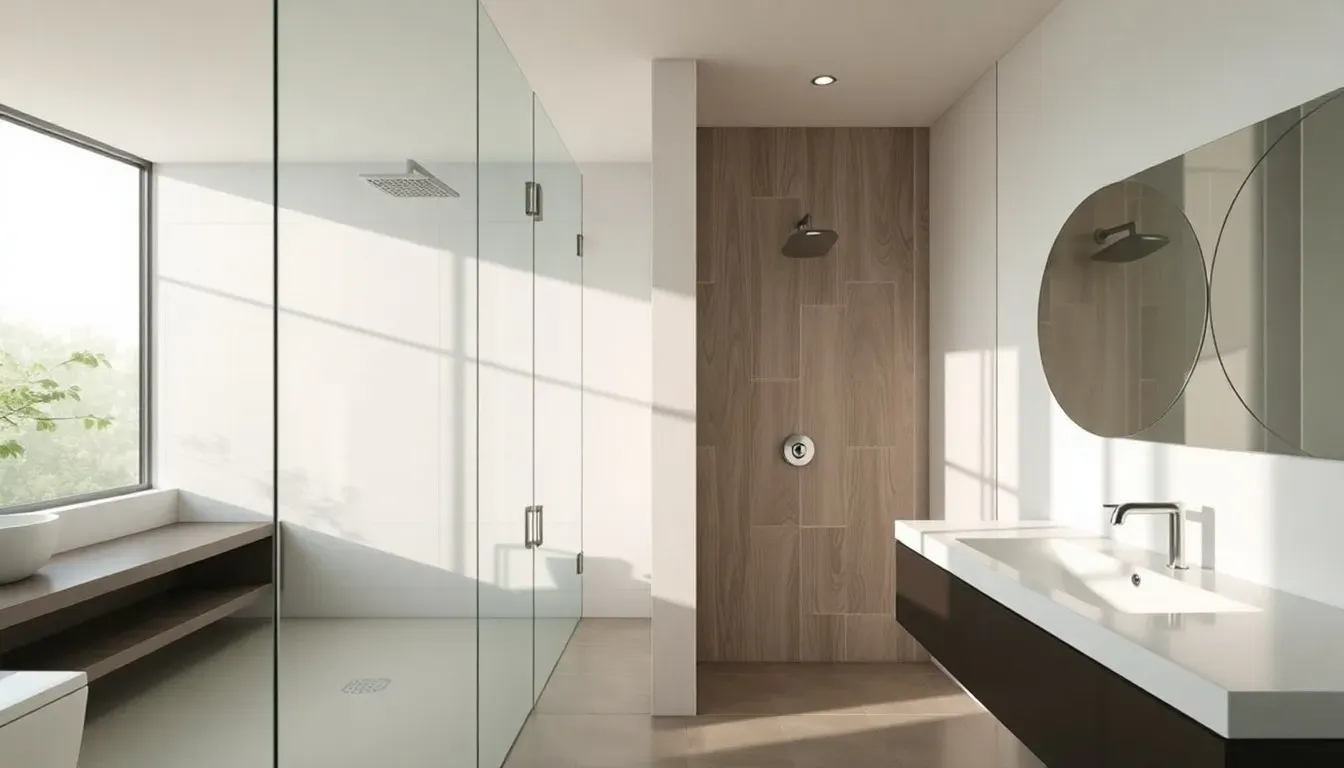
Toughened Glass vs Laminated Glass for Shower Enclosures: Which is Better?
When planning a modern bathroom renovation, selecting the right glass for your shower enclosure is a critical decision that impacts safety, aesthetics, and long-term value. Both toughened glass and laminated glass offer distinct advantages for shower applications, but understanding their fundamental differences will help you make an informed choice that suits your specific needs and budget. While toughened glass dominates the Indian market for shower enclosures due to its strength and cost-effectiveness, laminated glass presents compelling safety features that may justify its premium price in certain situations.
Understanding Toughened Glass for Shower Enclosures
Toughened glass, also known as tempered glass, undergoes a thermal treatment process that makes it approximately four to five times stronger than ordinary annealed glass. During manufacturing, the glass is heated to over 600 degrees Celsius and then rapidly cooled using high-pressure air jets. This process creates surface compression and internal tension, resulting in a material that can withstand significant impact and thermal stress.
The defining characteristic of toughened glass is its breakage pattern. When it does break under extreme force, it shatters into small, relatively harmless pebble-like fragments rather than dangerous shards. This safety feature makes it the most popular choice for shower enclosures across India, from budget apartments in Pune to luxury villas in Gurgaon.
For shower applications, toughened glass typically comes in thicknesses ranging from 8mm to 12mm, with 10mm being the most common specification. The glass can be customized with various finishes including clear, frosted, or patterned designs to suit privacy requirements and aesthetic preferences.
Understanding Laminated Glass for Shower Enclosures
Laminated glass consists of two or more glass layers bonded together with an interlayer, typically made of polyvinyl butyral (PVB) or ethylene-vinyl acetate (EVA). This sandwich construction creates a composite material where the interlayer holds glass fragments in place even when the glass is broken, preventing the entire panel from collapsing.
The manufacturing process involves placing the interlayer between glass sheets and using heat and pressure to fuse them permanently. For shower enclosures, laminated glass typically comprises two layers of 5mm or 6mm glass with a 0.76mm to 1.52mm interlayer, creating a total thickness of 10.76mm to 13.52mm.
While less common in Indian shower installations, laminated glass offers superior post-breakage safety. If impact occurs, the glass may crack but remains largely intact within the frame, eliminating the risk of sudden collapse that could cause injury. This characteristic makes it particularly valuable in situations where maximum safety is paramount, such as homes with elderly residents or young children.
Safety Comparison: Which Glass Protects Better?
Both glass types meet safety standards for bathroom applications, but they protect users differently. Toughened glass prevents injury primarily through its breakage pattern—the small, cube-shaped fragments are far less likely to cause deep cuts compared to the long, sharp shards produced by ordinary glass. However, when toughened glass breaks, the entire panel disintegrates within seconds, potentially causing minor cuts from falling fragments and leaving the shower area completely exposed.
Laminated glass takes a different approach to safety. While the glass layers may crack upon impact, the interlayer keeps everything held together. This means you won’t experience the sudden shower of glass fragments that occurs with toughened glass. The broken panel remains in place, maintaining privacy and preventing water spillage until replacement can be arranged.
Real-World Safety Considerations
In Indian bathrooms where space constraints often mean shower enclosures are positioned close to other fixtures, the contained breakage of laminated glass can prevent glass fragments from spreading across the entire bathroom. This is particularly relevant in compact bathrooms common in Mumbai and Bangalore apartments where a 4×4 feet bathroom may house the toilet, sink, and shower in close proximity.
For households with children who might accidentally impact the glass with toys or during play, laminated glass provides an extra margin of safety. Similarly, in areas prone to seismic activity, the structural integrity of laminated glass after cracking offers advantages during and after tremors.
Cost Analysis: Investment and Value
Toughened glass shower enclosures represent the more economical option, with prices typically ranging from ₹350 to ₹650 per square foot for 10mm clear glass, depending on quality, location, and supplier. A standard 4×6 feet frameless shower enclosure using toughened glass might cost between ₹25,000 to ₹45,000 including hardware and installation in major Indian cities.
Laminated glass commands a premium, generally costing 40-70% more than equivalent toughened glass installations. Expect to pay ₹600 to ₹1,100 per square foot for laminated glass panels. The same 4×6 feet enclosure could cost ₹40,000 to ₹70,000 or more. The higher price reflects the more complex manufacturing process, additional materials, and specialized handling requirements.
Long-Term Value Considerations
While initial costs favor toughened glass, consider the replacement scenario. Toughened glass breakage, though rare, results in complete panel loss requiring immediate replacement. Laminated glass may continue functioning even after damage, allowing you to schedule replacement at your convenience rather than as an emergency.
Insurance considerations also play a role. Some premium home insurance policies in India now offer better coverage or lower premiums for bathrooms fitted with laminated glass due to reduced injury risk, though this practice is not yet widespread.
Maintenance and Durability in Indian Bathroom Conditions
Indian bathrooms face unique challenges including high humidity, hard water, and significant temperature variations between hot showers and air-conditioned spaces. Toughened glass handles these conditions exceptionally well. Its thermal treatment makes it resistant to thermal shock, allowing it to withstand the temperature differential when hot water hits cold glass on winter mornings.
Hard water staining affects both glass types equally, requiring regular cleaning with vinegar solutions or specialized glass cleaners to prevent mineral buildup. Neither glass type is inherently more resistant to water spots, soap scum, or limescale—maintenance requirements are virtually identical.
Laminated glass does present one additional consideration: the interlayer edges must be properly sealed during installation. In high-humidity environments, inadequate edge sealing can allow moisture to penetrate between the glass layers, causing delamination or clouding over time. Quality installation and appropriate sealants prevent this issue, but it represents an additional point of potential failure not present in monolithic toughened glass.
Cleaning and Care
Both glass types can be cleaned using the same methods and products. A squeegee after each shower prevents most water spotting. For deep cleaning, a mixture of equal parts white vinegar and water effectively removes hard water deposits common in cities with mineral-rich water supplies like Delhi, Chennai, and Hyderabad.
Neither glass type requires special chemical treatments or protective coatings, though optional nano-coating treatments (available for both types at additional cost) can make cleaning easier by creating a hydrophobic surface that repels water and reduces spotting.
Making the Right Choice for Your Bathroom
For most Indian homeowners, toughened glass remains the practical choice for shower enclosures. It offers excellent safety, proven durability, wide availability, and competitive pricing. The extensive network of fabricators and installers familiar with toughened glass across Indian cities ensures easy sourcing, competitive quotes, and reliable installation.
Laminated glass makes sense in specific scenarios: homes with young children or elderly residents where maximum safety justifies the premium cost, luxury projects where budget is secondary to safety features, ground-floor bathrooms in areas with security concerns where the glass also serves as a barrier, or situations where building codes or insurance requirements specify laminated glass.
Consider your specific circumstances including household composition, budget constraints, local availability, and personal risk tolerance. In cities with established glass suppliers, obtaining quotes for both options allows direct cost comparison. Factor in not just material costs but also installation expertise—laminated glass requires installers experienced with the material’s specific handling requirements.
Frequently Asked Questions
Can laminated glass be toughened for shower enclosures?
Yes, laminated glass can be made from toughened glass layers rather than annealed glass, creating a product that combines the strength and thermal resistance of toughening with the post-breakage security of lamination. This combination offers maximum safety but comes at the highest price point, typically 80-100% more than standard toughened glass. It’s rarely specified for residential shower enclosures in India due to cost but may be used in commercial or luxury applications.
How long do toughened and laminated glass shower enclosures last?
Both toughened and laminated glass shower enclosures can last 20-30 years or more with proper installation and maintenance. The glass itself doesn’t degrade over time, though hardware components like hinges, handles, and seals may require replacement every 10-15 years. Laminated glass may experience edge delamination after 15-20 years in very humid environments if edges weren’t properly sealed during installation, but quality installation prevents this issue.
Is 8mm toughened glass safe enough for shower enclosures?
While 8mm toughened glass meets minimum safety standards for shower enclosures, 10mm is recommended for better stability and durability, especially for frameless or minimally-framed designs. The 8mm thickness works adequately for fully-framed enclosures where the frame provides additional support. For panels exceeding 6 feet in height or width, 12mm thickness provides better rigidity and reduces flexing.
Which glass type is better for frameless shower enclosures?
Toughened glass is the standard choice for frameless shower enclosures in India due to its strength, rigidity, and cost-effectiveness. The 10mm or 12mm thickness provides sufficient structural integrity for frameless designs. Laminated glass can also be used for frameless enclosures but requires careful specification of total thickness and may need additional support due to the slight flexibility of the interlayer under stress.
Does laminated glass provide better sound insulation in shower enclosures?
Yes, laminated glass offers marginally better sound dampening than toughened glass due to the acoustic properties of the PVB or EVA interlayer. However, the difference is minimal in shower applications and rarely justifies choosing laminated glass solely for sound insulation. For significant noise reduction, acoustic laminated glass with specialized interlayers would be needed, which is not typically specified for residential shower enclosures.
Choosing between toughened and laminated glass for your shower enclosure depends on your specific safety requirements, budget, and installation context. For expert guidance and connections to verified glass suppliers and installers across India, explore the comprehensive business directory at glassy.in, where you can find qualified professionals who can assess your needs and provide detailed quotations for your bathroom project.